avatarJason Chenard

Free AI web copilot to create summaries, insights and extended knowledge, download it at here

1468

Abstract

allows them to constantly deploy a winning team of the course of a long season.</p><p id="3723">Here is an easy way to draft your pharmacy depth chart, allowing you to sketch out what you have, what you don’t and what you need to find.</p><figure id="db24"><img src="https://cdn-images-1.readmedium.com/v2/resize:fit:800/1*b8xArFydpfjaC2rq-QZIzg.png"><figcaption></figcaption></figure><p id="2d13">First, list the various roles within your pharmacy from highest responsibility to lowest. Then plot the names of all the staff within those roles.</p><p id="fb08">In a column to the right, list their approximate expected longevity in your pharmacy. For example, pharmacist Raph might be with you six months while pharmacist Leo might stay around for five to seven years. Chart this all the way down the chain of staff.</p><p id="b25d">Next, in another column further to the right, jot down any potential vulnerable gaps within those longevities. These can include anything that brings a potential significant disruption in their continuance of labour. For example, any types of leave, their frequent sick time or anyone who likes to take say four consecutive weeks of vacation or more.</p><p id="ba91">Now you have a one-pager of what you have and what you are missing. It is time to devise a plan to connect the dots. What internal people need coaching to fill future gaps? Do you need to recruit those people externally? Do you need additional people in a certain rol

Options

e to cover all the vulnerabilities the current workers give. What people within the same role have overlapping vulnerable gaps?</p><p id="6705">The succession plan isolates your strengths and weaknesses, or <i>depth</i>, while putting you in control of your destiny. Since you are in the driver’s seat, you will have confidence in knowing there is a plan.</p><p id="9267"><i>Onto paper and out of your head.</i> Assessing your line-up, who are your putting on the ice?</p><p id="5767">How deep is your team?</p><p id="71cd">Do you have a succession plan? Is it the right one?</p><figure id="6950"><img src="https://cdn-images-1.readmedium.com/v2/resize:fit:800/1*3wI1lQwvMNfGfmqiIc5gQg.png"><figcaption></figcaption></figure><div id="7c51" class="link-block"> <a href="https://medium.com/subscribe/@jason_7469"> <div> <div> <h2>Get an email whenever Jason Chenard publishes.</h2> <div><h3>Get an email whenever Jason Chenard publishes. By signing up, you will create a Medium account if you don't already…</h3></div> <div><p>medium.com</p></div> </div> <div> <div style="background-image: url(https://miro.readmedium.com/v2/resize:fit:320/0*AYExT6WvxuZVlWV-)"></div> </div> </div> </a> </div><p id="2e2e"><a href="http://www.layeredleadership.ca">www.layeredleadership.ca</a></p></article></body>

How Deep Are You?

Your Non-Lame Pharmacy Succession Plan

Photo by Jakob Boman on Unsplash

On paper and out of your head. That’s the simplest way of icing the concerns that we rehearse in our heads about our pharmacy hiring challenges and long-term staffing problems.

What is there was a one-pager that once drafted, would cure the rehearsal of negative thoughts you have about hiring and developing the right people in your pharmacy today (and tomorrow)?

There is one. Every professional hockey team has one. It’s called a depth chart and serves as a map of your future pharmacy workforce. It is a succession plan of where people can take you and a well-designed one allows for seamless interruption of patient care along decades of people and profession-induced change. In hockey, a depth chart gives coaches a summary of who they have in their line-up, from their top players, down to their future prospects. The deeper they are, the longer the gradient of talent on the team, the more confident and capable they are in navigating the future. Essentially, it allows them to constantly deploy a winning team of the course of a long season.

Here is an easy way to draft your pharmacy depth chart, allowing you to sketch out what you have, what you don’t and what you need to find.
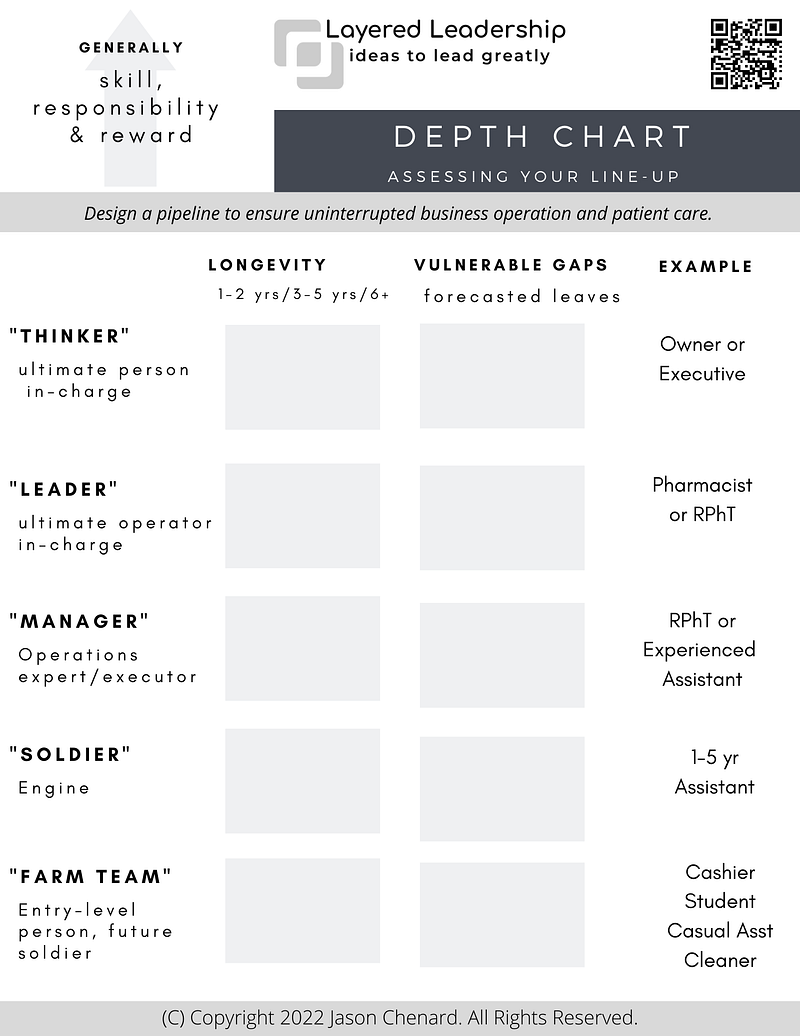
First, list the various roles within your pharmacy from highest responsibility to lowest. Then plot the names of all the staff within those roles.

In a column to the right, list their approximate expected longevity in your pharmacy. For example, pharmacist Raph might be with you six months while pharmacist Leo might stay around for five to seven years. Chart this all the way down the chain of staff.

Next, in another column further to the right, jot down any potential vulnerable gaps within those longevities. These can include anything that brings a potential significant disruption in their continuance of labour. For example, any types of leave, their frequent sick time or anyone who likes to take say four consecutive weeks of vacation or more.

Now you have a one-pager of what you have and what you are missing. It is time to devise a plan to connect the dots. What internal people need coaching to fill future gaps? Do you need to recruit those people externally? Do you need additional people in a certain role to cover all the vulnerabilities the current workers give. What people within the same role have overlapping vulnerable gaps?

The succession plan isolates your strengths and weaknesses, or depth, while putting you in control of your destiny. Since you are in the driver’s seat, you will have confidence in knowing there is a plan.

Onto paper and out of your head. Assessing your line-up, who are your putting on the ice?

How deep is your team?

Do you have a succession plan? Is it the right one?

www.layeredleadership.ca

Succession Planning
Business Development
Hiring
Pharmacy Practice
Staffing And Recruiting
Recommended from ReadMedium