
How Deaf People Were Left Behind In the Pandemic
Or, why I don’t trust hearing people anymore.
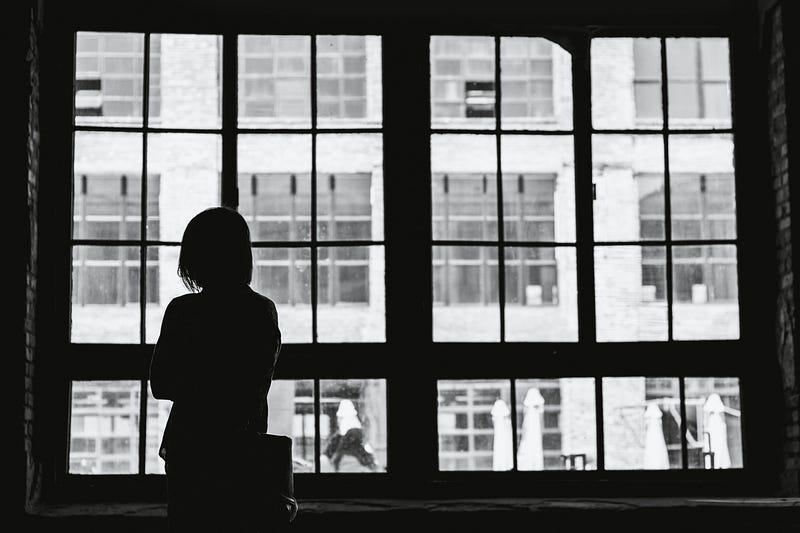
That little strip of fabric has dismantled my entire future. They say we shouldn’t dwell on the would’ve, could’ve, should’ve’s, but I can’t help but wonder how differently my life would look if the pandemic never happened.
The phrase “First fired, last hired” rang in my head as the door hit me on the way out of my college hotel job in March of 2020. Even after five years of cleaning disgusting bodily fluids and crumby floors, the unemployment benefits I collected for the summer paid more. Contrary to the metaphorical door-hitting mentioned before, I was actually notified via text message while at an ENT appointment for my grating tinnitus.
At first I was more than happy to get my fair share of government handouts. I was living at home with no bills, and now I could continue to save for the move to Japan (a financially privileged position, I know). Until the months started rolling by, and then I graduated college remotely, and the time that I was supposed to move to Japan gave me the middle finger as it passed on by. I existed in a parallel state: yearning towards my suspended new life across the world, and crushing post-graduate emptiness.
I eventually searched for jobs in the local area, but it was fruitless. When I took my “mental health walks” down the streets of my suburban hometown in Michigan, there were more Trump signs than there were people wearing masks. Yet every job description required them, barricading me from communication, and subsequently, work.
Each time that COVID was declared a non-emergency by the CDC, I got my hopes up. I made my appointment rounds to make sure there were no health concerns to take care of before I flew to Japan. There were 15 people to talk to in every doctor’s office, and each of them refused to lower their mask or write things down. I was routinely denied access to my own healthcare information, all while my ears were killing me because they are not meant to withstand the hearing aid-glasses-mask strap combo.
Let me take a small detour to state flat-out that I continue to wear my medical-grade mask indoors, have three doses of the vaccine, and paid a small fortune to quarantine when I eventually came to Japan. The pandemic is still going on, and I will not tolerate any anti-maskers or anti-vaxxers in the comments. I am speaking to the inaccessibility caused by the pandemic and intolerance, not to your ableist, harmful positions. With that out of the way, let’s return to our regularly scheduled programing.
My family exacerbated the situation by blaming my lack of independence. If I just tried a little harder, I would be able to lip-read the mumbling behind the mask. If I spoke up more when people were blatantly breaking ADA law in front of me, it wouldn’t happen. Yet they still denied that I was Deaf, or that ASL could have been my saving grace had they allowed me to learn.
All the instances of inaccessibility blur together at this point, but one stands out. I went to the gynecologist to have my regular exam. I typed with the secretary. Throughout all my appointments, I had discovered that if I didn’t speak, staff members usually took my accommodation needs more seriously. Where is oral privilege when I need it? A nurse came into my room, and because I thought she was just checking vitals, I didn’t give the disclaimer. Suddenly she started asking questions, and I balked. On her way out, she asked if I couldn’t hear very well, and I plainly stated that I was Deaf, to which she said “I’m sorry.” Finally, the OB-GYN walked in. She spoke loudly enough that I could pretty much understand her even with the mask. I didn’t think I would need to say anything, but she brought it up first. She asked about my Deafness and if I could understand her behind the mask. My autistic self cannot lie, so I said yes. We were in a small, closed room and she spoke loudly and clearly. The OB-GYN continued on to praise my lack of Deaf accent and attribute it to my hearing aids, all the while maneuvering her tools up into my cervix.
The only positive interaction I had Stateside was at the bank, where the teller immediately lowered his mask as if it were an everyday request. However, I have to remind everyone that both parties are put at higher risk of contracting Coronavirus here. In an ideal world, the teller could take the extra ten seconds to type things out in order for me to fully understand without having to worry about another entitled customer complaining or getting violent. Only 30% of the English language is able to be read on the lips. Writing takes slightly more time, but would make things so much more clear for all customers who have limited hearing, auditory processing disorder, or do not speak English as their first language.
Japanese people have the same reluctance towards writing things down, despite it being the key to preserving Kanji. When I eventually did make it to Japan in the fall of 2021 and applied for forty minimum-wage jobs, I was rejected by all of them. When I asked one cafe if they had a tablet system or if customers could type out their order for me while waiting in line, they responded that that didn’t live up to their name, PRONTO, and proceeded to explain the definition of quick, efficient customer service to me.
Others wrote a string of the formal apologies that Japanese is so famous for, saying the quiet part out loud: they were extremely reluctant to change. Even I as an English major know that innovation is a vital ingredient for the success of a business. When I later on applied for disability positions in office settings, I was still turned away because I could not use the phone.
I am confined to the home, both for work and life purposes. Because Japanese people are still wearing that white strip of fabric across their faces, I cannot advance my career beyond an entry-level teaching position that I was ready to move on from years ago. I am reliant upon my hearing husband to get medical care, because the doctors don’t acknowledge my presence when I ask for my accommodation needs to be met.
I got by with my hearing aids and lip-reading before, but now I’ve had to get used to receiving zero information. Hearing people either don’t believe me, or they don’t respect me enough to let me understand. In the moment, I feel like I am sinking into the floor. I am too livid and too sad to bother speaking up to every single staff member I encounter. No self-advocacy classes could have prepared us for a pandemic.
So now, I don’t trust hearing people. The masks were never the problem. It was your disgraceful ableism that further opened the chasm between us. You are now back into the office, getting promotions and moving up the career ladder, while I have a spotty employment history. I won’t deny that I’m jealous and wounded. I know I certainly wasn’t the only one whose life was greatly impacted by the pandemic, and I won’t make out my suffering to be infinitely greater than the next person’s. At least I learned a lot about myself, but try as I might, self-awareness won’t repair the categorical impact on my career prospects. I keep getting told a better opportunity will come, but I look at the wreckage and see a potential that has been permanently stunted by inaccessibility.
If you liked this article, please give it a clap, comment your thoughts below, and follow me for more stories. Thank you so much for reading and supporting my work!