avatarChristianlauer

Free AI web copilot to create summaries, insights and extended knowledge, download it at here

1268

Abstract

bricks has now acquired startup 8080 Labs, which has developed Bamboolib, an extensible graphical interface for Pandas that enables typical Data Science and Machine Learning tasks [2].</p><p id="6101">Bamboolib picks up on the way of working familiar from macro creation in spreadsheets like Excel. As a GUI for Pandas DataFrames, the library exports production-ready Python code that can be used in Jupyter Notebooks or Jupyter Lab for interactive data analysis. While Pandas and Bamboolib have so far only been designed for single-machine use, Databricks also wants to implement direct connection to larger Spark clusters via the Koala project to enable simplified data analysis even in distributed environments [2][3][4].</p><figure id="225d"><img src="https://cdn-images-1.readmedium.com/v2/resize:fit:800/0*2XG4UTpCZP8AxW6K.png"><figcaption>Bamboolib — Source: <a href="https://bamboolib.8080labs.com/">bamboolib</a> [3]</figcaption></figure><p id="3cd0">As mentioned above, this is not a completely new invention, but it is very interesting for companies, because it allows less skilled employees to perform Data Science solutions without code. Especially practical is that it is based on Python and the code remains available. In addition, I find the integratio

Options

n with Databricks exciting, here users can use this feature in the future relatively easily and it becomes scalable. Especially Microsoft Azure users who can use Databricks relatively easily anyway should be happy about this. Feel free to use the resources below for more information and to stay up-to-date on the topic.</p><h2 id="c572">Source and Further Readings</h2><p id="212c">[1] Microsoft, <a href="https://docs.microsoft.com/de-de/azure/databricks/scenarios/what-is-azure-databricks-ws">Was ist Databricks Data Science & Engineering?</a> (2022)</p><p id="68c9">[2] heise online,<a href="https://www.heise.de/news/Data-Science-Databricks-investiert-in-Low-Code-Know-how-und-uebernimmt-8080-Labs-6211854.html"> Data Science: Databricks investiert in Low-Code-Know-how und übernimmt 8080 Labs</a> (2021)</p><p id="beef">[3] bamboolib, <a href="https://bamboolib.8080labs.com/">Data Analysis in Python — without becoming a programmer or googling syntax </a>(2022)</p><p id="e122">[4] Databricks, <a href="https://databricks.com/blog/2021/10/06/bringing-lakehouse-to-the-citizen-data-scientist-announcing-the-acquisition-of-8080-labs.html">Bringing Lakehouse to the Citizen Data Scientist: Announcing the Acquisition of 8080 Labs</a> (2021)</p></article></body>

How Databricks want to enforce the Citizen Data Scientist

Data Science via Drag and Drop?

Photo by Barney Yau on Unsplash

One must admit that the idea is not entirely new, because solutions such as KNIME and talend or Google Data Prep, to name just a few, are supposed to provide the user with Data Analytics and Data Science and engineering via UI without code or with low code.

Databrick’s Data Science & Engineering is an Apache Spark-based analytics platform. You can integrate it for example in Azure to provide a workplace for Data Scientists and Engineers [1].
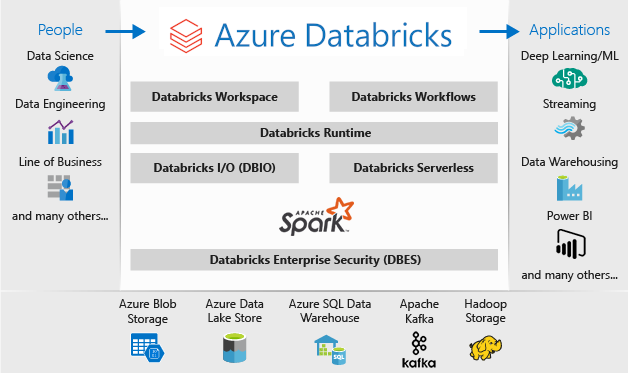
Architecture of Databricks within Azure — Source: Microsoft[1]

Databricks has now acquired startup 8080 Labs, which has developed Bamboolib, an extensible graphical interface for Pandas that enables typical Data Science and Machine Learning tasks [2].

Bamboolib picks up on the way of working familiar from macro creation in spreadsheets like Excel. As a GUI for Pandas DataFrames, the library exports production-ready Python code that can be used in Jupyter Notebooks or Jupyter Lab for interactive data analysis. While Pandas and Bamboolib have so far only been designed for single-machine use, Databricks also wants to implement direct connection to larger Spark clusters via the Koala project to enable simplified data analysis even in distributed environments [2][3][4].
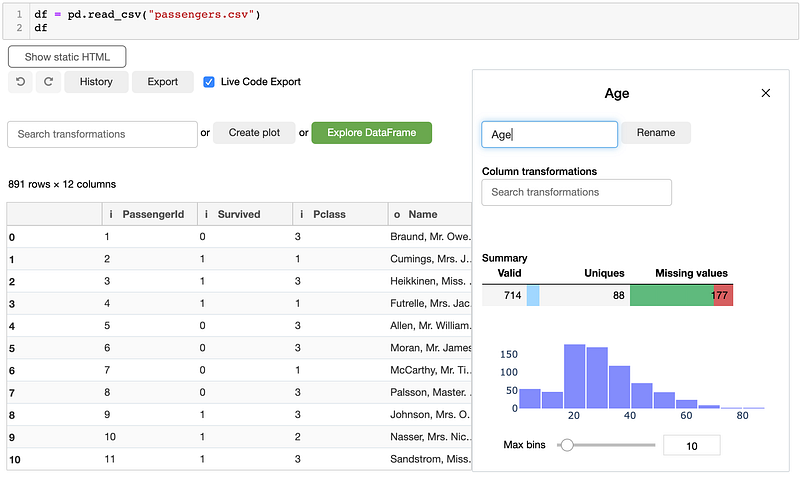
Bamboolib — Source: bamboolib [3]

As mentioned above, this is not a completely new invention, but it is very interesting for companies, because it allows less skilled employees to perform Data Science solutions without code. Especially practical is that it is based on Python and the code remains available. In addition, I find the integration with Databricks exciting, here users can use this feature in the future relatively easily and it becomes scalable. Especially Microsoft Azure users who can use Databricks relatively easily anyway should be happy about this. Feel free to use the resources below for more information and to stay up-to-date on the topic.

Source and Further Readings

[1] Microsoft, Was ist Databricks Data Science & Engineering? (2022)

[2] heise online, Data Science: Databricks investiert in Low-Code-Know-how und übernimmt 8080 Labs (2021)

[3] bamboolib, Data Analysis in Python — without becoming a programmer or googling syntax (2022)

[4] Databricks, Bringing Lakehouse to the Citizen Data Scientist: Announcing the Acquisition of 8080 Labs (2021)

Data Science
Python
Databricks
Azure
Technology
Recommended from ReadMedium