
How could a Hotel in Boston take Advantage of All the Renewable Incentives that the City has to Offer?
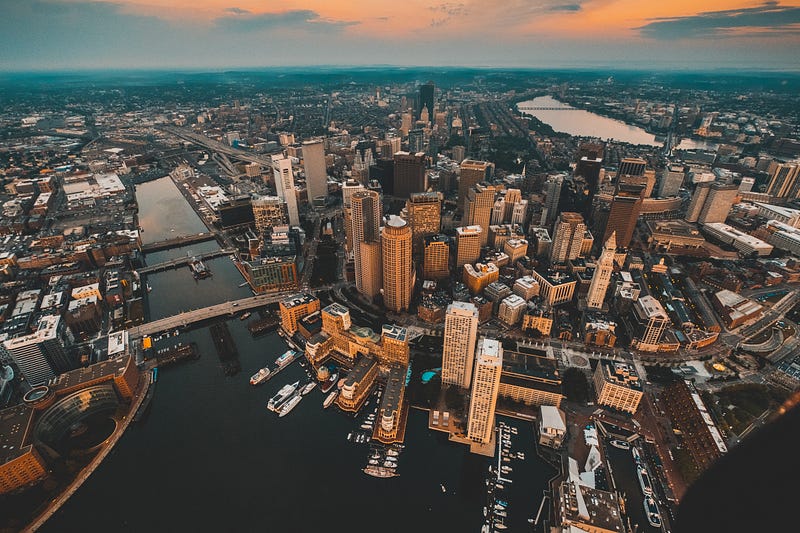
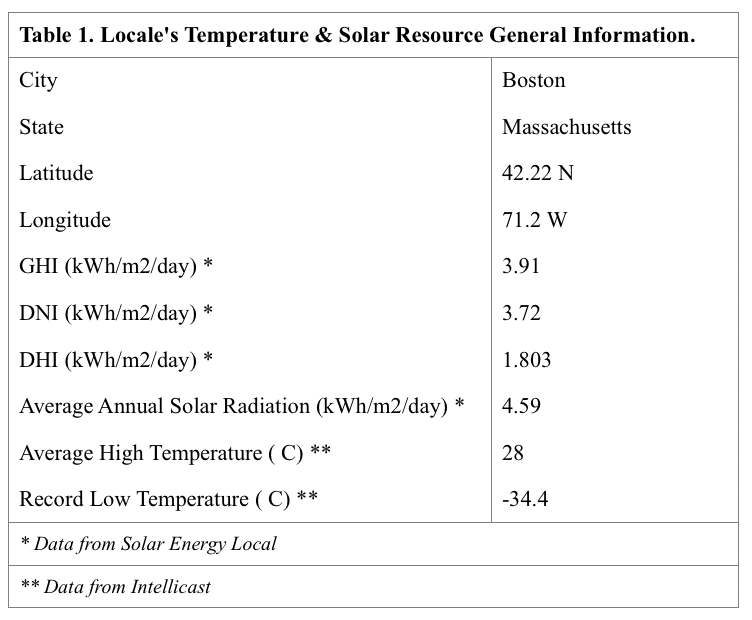
This article will examine a hypothetical proposal for a possible solar project for a hotel located in Boston, Massachusetts. The city of Boston has friendly policies towards renewables for which has been named a Solar America City by NREL. Boston’s solar resource information is displayed in table 1 where we can see that it is located at one of the higher latitudes of the United States where greater weather variability through the year is expected.
Boston has seen a surge in solar installations and has positioned itself as one of America’s hotspots for the industry. The city has many incentives for solar energy, out of which the following are displayed on the DSIRE website for a commercial system like the one which will be discussed in this report.
Alternative Energy and Energy Conservation Patent Income Tax Deduction (Corporate)
Net Metering, Renewable Energy Property Tax Exemption
Green Communities Grant Program
Excise Tax Deduction for Solar or Wind Powered Systems
Leading By Example Solar Photovoltaic Canopy Grant Program
Mass Solar Loan Program
Renewable Portfolio Standard
Interconnection Standards
Renewable Energy Equipment Sales Tax Exemption
Local Option — Energy Revolving Loan Fund, Mass Save — HEAT Loan Program
Solar Renewable Energy Certificates (SREC-I)
The locale for the project will be a hotel located at Boston, MA. The hotel and its location are displayed in figure 1 of this report, this map was taken from Google maps, and a compass was added for reader comprehension. As seen from this aerial view it is an old building which has been modified to hold a hotel and other services like restaurants.
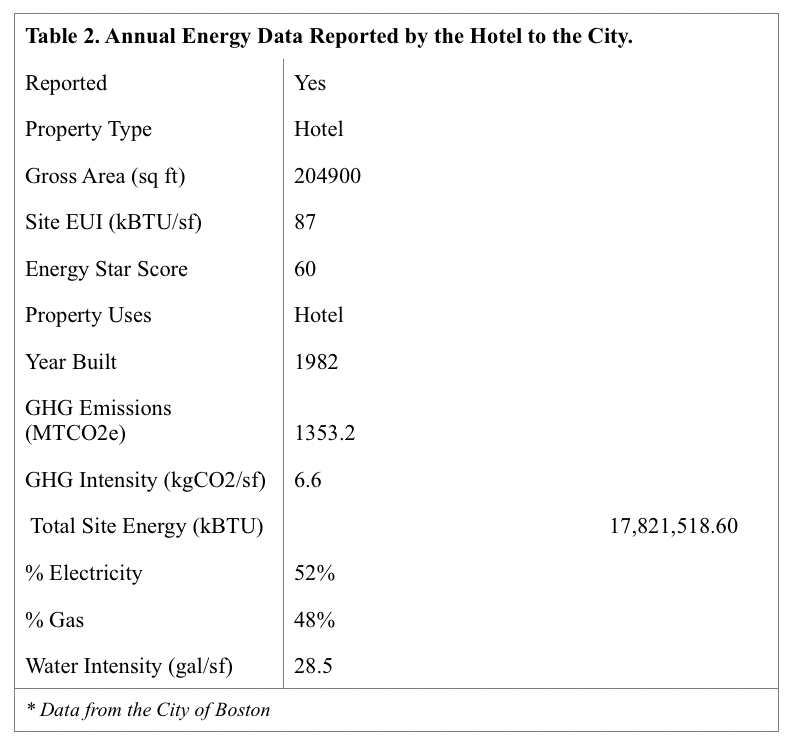
The building’s architecture is maintaining a colonial style but renovating the envelope inside shares many of the sustainability ideas which would work great with solar. In table 2 the hotel’s energy information is displayed in further detail. This information will be vital to test many of the project’s assumptions aiding thus in design.
The data provided by the hotel to the city of Boston was combined with the typical hotel energy behavior taken from a case study from Pacific Northwest Laboratory to further increase our understanding of the locale’s energy demands. The building reported a total amount of energy used per year in kBTU, which using stoichiometric conversions was converted to kWh for both electricity and gas energy usage.
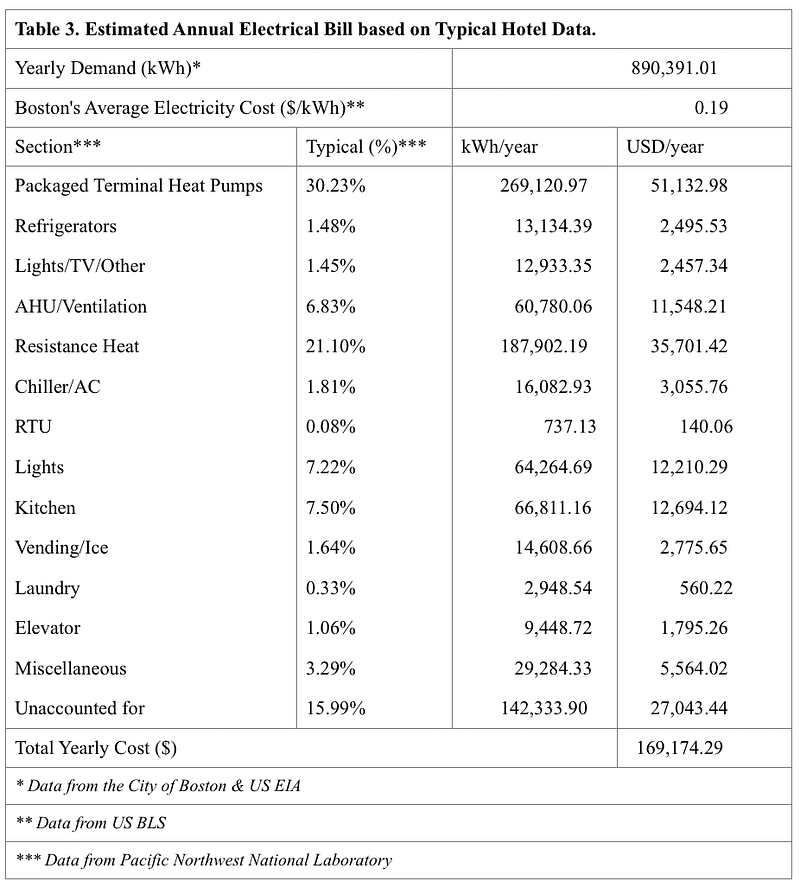
In table 3 it is displayed the results of the described data manipulation of the city’s data with a typical hotel electricity usage to estimate the amount of electricity used annually by each section of the hotel. To further increase our comprehension of yearly hotel energy consumption we utilized the average cost of power in the Boston area provided by the Bureau of Labor Statistics. Using the per energy unit price with the average burden of each of the hotel’s sections provided by Pacific Northwest Lab we observe that the highest electricity costs for this locale are related to space heating.
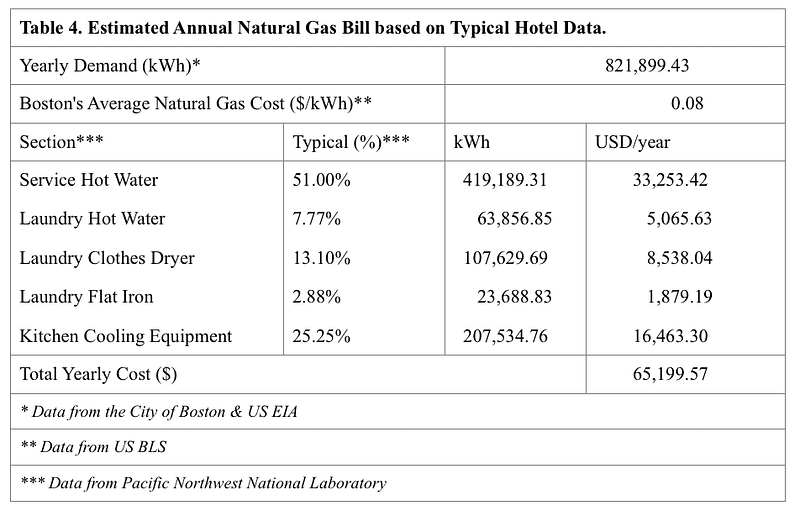
To comprehensively understand the hotel’s energy profile, we also estimated the yearly natural gas consumption from the data reported to the city of Boston by the building and the average hotel energy data from Pacific Northwest Laboratory. Just like with electricity, the data was converted to equivalent units by use of stoichiometric conversions so that we could better compare with electricity data. The average price of natural gas for Boston from the Bureau of Labor Statistics was used to monetize all the data. As seen in Table 4 most of the bill is spent on service hot water for the Hotel.
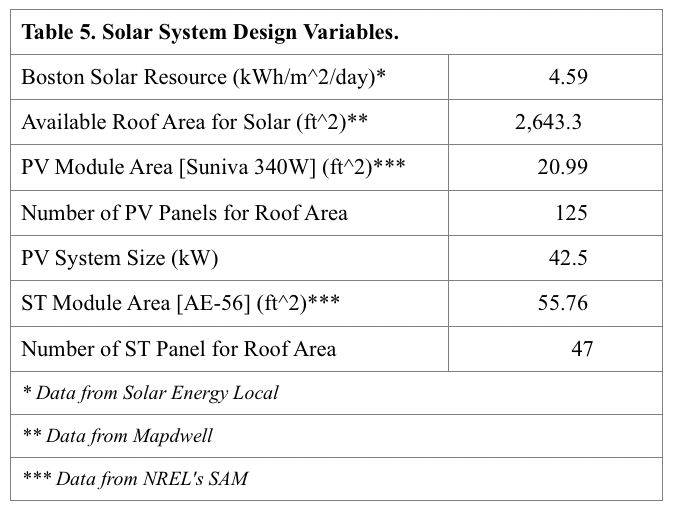
At first glance, it would have seen evidence that this proposal would focus on photovoltaics give the higher energy and monetary consumption of electricity over natural gas yearly for the building. Nevertheless, it is not in the client’s best interest to jump into conclusions for system design just based on assumptions. To test our hypotheses we created comparable solar designs utilizing online tools like mapdwell to estimate the available roof area for solar development, as well as solar resource data from Solar Energy Local and module information from NREL. As seen in table 5 the solar resource from Boston would be sufficient for either solar thermal of photovoltaic development. The number of modules for each type of system will, however, differ from one another due to design constraints which make solar water heating take up more space per module than the selected PV technology. Both the solar thermal and photovoltaic modules are high-quality ones manufactured in the United States which will ensure our client maximizes available local resources for a longer time.
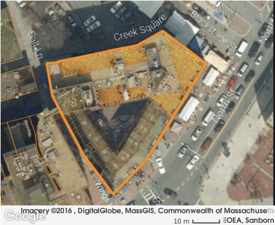
To visually display the available roof area available for development we included figure 2 which shows filled in orange dots the locations for system installation. The map displayed was obtained from mapdwell, and a compass was added to increase reader’s comprehension of the system further. The selected roof area has little shading and consist of the hotel’s concrete flat roof. Some of this roof area was not used as it is already being occupied by pipes and equipment. The adjacent building structures’ roofs were not selected because it does not seem to have much space and the installation of any system would be more difficult and costly.
Using the roof area information from mapdwell, as well as the building’s energy information reported by the building to the city, and the annual electrical and natural gas consumptions we were able to create both Solar Hot Water (ST) and Photovoltaics (PV) models for this scenario. In this model, the PV system design was based on the roof area obtained to create a grid-tied system which would lower electric bills with clean energy production. All electrical bill information for the building described previously in the report was thus utilized here. The ST design was also done taking into account the roof area, but also the daily water needs reported by the building to the city as input for system modeling. For the ST section, we utilized the available data kBTU and therms and converted it to a kWh equivalent to use as input in SAM.
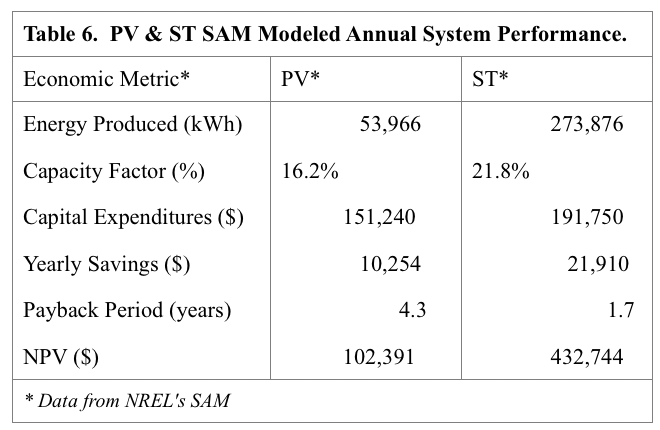
Both PV and ST system modeling results using NREL’s SAM are available in table 6 of this report. The comparative results for these solar systems were somewhat surprising given the higher electricity bills, a higher amount of incentives for PV over ST, and higher cost of Solar Thermal Systems. Modeled ST systems which would help in reducing hot water heating needs for the hotel is therefore determined as the most profitable type of system to be deployed locally to maximize the utility of the local solar resource. We believe that the 47 module ST system would produce much more equivalent energy than its’ PV counterpart because it utilizes solar radiation of a much higher spectrum than PV, which depends mostly on indirect beam irradiance for energy production thus having a shorter payback period.
System modeling has already helped us determine the best possible solar design and technology to meet our client’s needs, but it is important also to discuss other small improvements which would help improve energy efficiency and decrease loads for the building’s envelope.
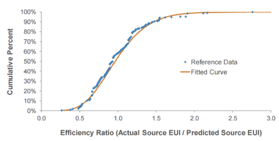
The building’s reported Energy Star rating to the city was of 60, which translates into a cumulative percent equivalent of 40%. From Energy Star’s Data displayed in the graph in figure 3, we can conclude that the building is average in energy efficiency, which confirms our case for improvement. This rating could be bettered by making improvements to insulation and lighting systems, as well as by replacing old equipment for newer and more efficient ones.
Designing system improvements for a hotel is not easy, and aesthetics should always be considered as an essential variable. The environmental impact for this hotel’s commercial rooftop project is not many since it is located in the Boston urban area; however, stakeholders should be aware of the potentially negative interactions with local birds and minor increases in urban heat island effects. Since solar is already gaining momentum in the city, the system should not face much opposition from local authorities having jurisdiction, but it is essential to include them as well.
A hotel pursuing this project should also seek other certifications, such as LEED to facilitate the integrative design process for the hotel to implement a comprehensive building sustainability approach to the project. LEED certification has proved to be helpful for hotels as reported by Cornell’s University hospitality management case study. In fact, in this case, study it is stated that 354 out of the 455 LEED registered or certified buildings were hotels, which equates to about 78%. Many interesting findings from this report can be taken into consideration for this project as LEED not only proved to lower costs but also to increase revenues for hotels pursuing the certification. LEED is an excellent fit for the project since many of the solar system improvements like the ST system, as well as other passive solar additions to the design can be implemented for credits as part of the certification investment. Other non-solar improvements like better plumbing will also aid in reducing energy demands and thus lower costs and increasing profitability, as well as revenues.
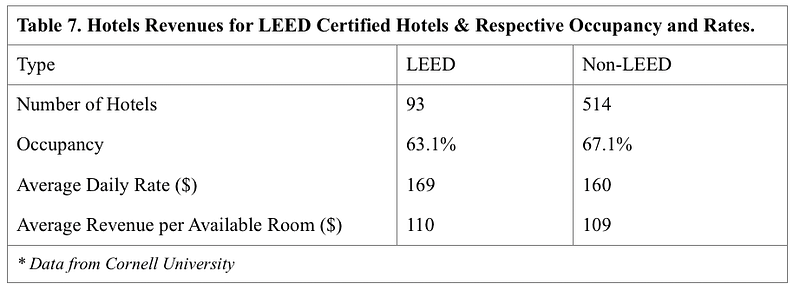
As seen in table 7, LEED certification increases revenues for hotels even though occupancy rates can be lower, due to the higher daily rate per night at which certified hotels are able to charge guests. We can, therefore, assume that guests are willing to pay more for LEED-certified hotels. Since LEED certification also requires sustainability improvements which will lower operating costs, then we can also safely assume that not only will revenues go up but profits for these hotels as well. Occupancy for LEED-certified hotels is lower probably due to higher prices which hotels need to charge to pay for the certification capital investments; however, it should not decrease enough to lower expected yearly revenues at higher rates.
Other integrative design recommendations which can be included for this proposal and used for LEED certification as well involve the use of passive solar design improvements. Noticeable improvements like using insulated thermal curtains, and utilizing only LED lights would also be helpful. Some of the recommendations which we would give the hotel to decrease heating loads will be simple changes that would increase the buildings absorptance of solar radiation. Low-cost solutions like painting the south facing façade and room walls with darker colors will aid much in retaining heat from the sun, thus reducing heating needs. Other more expensive solutions like increasing south facing windows area while decreasing north windows area would also help the building, but doing so would be more costly and complicated. It is important not to overlook the benefits from adding occupancy sensors to improve lighting and heating controls in every room of the hotel, just as many LEED-certified hotels have already done.
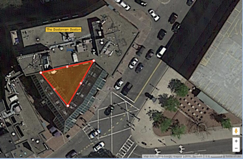
There are also some small design elements which could be added to the hotel’s structure that are costly, and that would change the hotel’s architecture a little, but that is relatively easy to implement. One of such added elements that could decrease the hotel’s energy loads is displayed in figure 5 as a red triangle drawn over a map utilizing Gmapgis. This red triangle attempts to represent a project that would involve roofing this central area of the hotel using a transparent insulating material such as glass or plastic. The newly added seamless insulated roof design would also require darker painted walls and a white sand floor so that the solar radiation is absorbed by the walls and not by the story, keeping the microclimate cool in the day and warm at night. Like Heather Duncan explains in her blog, adding a glass surface can be great to make an outside space comfortable for the summer and winter. The glass roof would, like it does for Duncan’s gardens, keep warm air from getting into the building over the summer while providing a warming greenhouse effect for the inside over the winter.
Passive Solar Designs such as the proposed roof project are much harder to model and implement, as they involve interdisciplinary variables and require experts from diverse fields such as architecture and civil engineering. Nevertheless, the benefits from such designs outweigh the benefits of any competing energy sources or traditional energy companies. This proposed improvements would not only pay for themselves but also increase the comfort and quality of life for guests and staff.
Boston is an excellent city for solar, and a hotel could really take advantage of this geographical advantage by making the most out of local energy incentives and policies. Both the PV and ST systems would be profitable, but we would recommend an ST system given its quick payback and higher returns, even though it is a little more expensive upfront. Small design improvements like changing the painting color in south-facing walls would help the building reduce energy bills while being low cost and easy to implement. Other more complex system additions like the proposed roof or a LEED certification should also be considered to reduce energy costs and increase the hotel’s image and stakeholders’ quality of life. Although integrative design improvements would be of great benefit, they should be planned and developed over a longer period with a design team involving expert of numerous fields to ensure proper implementation and maximization of clients’ solar utility for their locale.
References
- US DOE,. Challenges And Successes On The Path Toward A Solar-Powered Community. 1st ed. Boston, MA: N.p., 2011. Web. 17 Nov. 2016.
- City of Boston,. “Building Energy And Water Use Metrics | City Of Boston | Open Data.” City of Boston. N.p., 2016. Web. 3 Dec. 2016.
- Google Maps,. “Boston, MA.” Google.com.gt. N.p., 2016. Web. 3 Dec. 2016.
- Hammel, Lisa. “BOSTON’s NEW OLD HOTEL.” Nytimes.com. N.p., 1983. Web. 3 Dec. 2016.
- l4at,. “Solar Radiation Data.” I4at.org. N.p., 2016. Web. 3 Dec. 2016. NC Clean Energy Technology Center,. “DSIRE”. Programs.dsireusa.org. N.p., 2016. Web. 3 Dec. 2016.
- Pacific Northwest National Laboratory, et al. Energy End-Use Patterns In Full-Service Hotels: A Case Study. 1st ed. ACEEE, 2016. Web. 3 Dec. 2016.
- Solar Power Rocks,. “Boston Solar Power For Your House — Rebates, Tax Credits, Savings.” Solar Power Rocks. N.p., 2016. Web. 3 Dec. 2016.
- Stuart, S Fay MD et al. “Solar Energy And Solar Power In Boston, MA.” Solar Energy Local. N.p., 2016. Web. 3 Dec. 2016.
- The Weather Company, LLC,. “Intellicast — Boston Historic Weather Averages In Massachusetts (02128)”. Intellicast.com. N.p., 2016. Web. 3 Dec. 2016.
- Energy Star,. ENERGY STAR Score For Hotels In The United States. 1st ed. US EPA, 2014. Web. 5 Dec. 2016.
- Esswein, Mertz. “Guide To Solar Incentives In America’s 12 Biggest Cities”. www.kiplinger.com. N.p., 2015. Web. 5 Dec. 2016.
- Mapdwell,. Solar Electric Potential Report — 24 North Street, Boston MA 02109. 1st ed. 2016. Web. 5 Dec. 2016.
- Neagle, Emily. “Hotels Worldwide Are Going Green With LEED | U.S. Green Building Council.” Usgbc.org. N.p., 2016. Web. 5 Dec. 2016.
- Understand Solar,. “Going Solar In Massachusetts 2016”. Understand Solar. N.p., 2016. Web. 5 Dec. 2016.
- Walsman, Matthew, Rohit Verma Verma, and Suresh Muthulingam. Cornell Hospitality Report — The Impact Of LEED Certification On Hotel Performance. 1st ed. Cornell University, 2014. Web. 5 Dec. 2016.
- US BLS,. “Average Energy Prices In Boston-Brockton-Nashua — October 2016: New England Information Office: U.S. Bureau Of Labor Statistics”. Bls.gov. N.p., 2016. Web. 10 Dec. 2016.
- US EIA,. “How Much Coal, Natural Gas, Or Petroleum Is Used To Generate A Kilowatthour Of Electricity? — FAQ — U.S. Energy Information Administration (EIA)”. Eia.gov. N.p., 2016. Web. 10 Dec. 2016.
- Duncan, Heather. “Microclimates: How To Change Your Garden’s Climate.” Gardendesigncourses.blogspot.com. N.p., 2016. Web. 10 Dec. 2016.
- Gmapgis,. “Google Maps — Advanced: Draw, Save, Reload & Share Maps: Gmapgis.” Gmapgis.com. N.p., 2016. Web. 10 Dec. 2016.
- Phelps, Virginia. “LEED Platinum Hotel — Proximity Hotel In Greensboro, NC.” Proximity. N.p., 2008. Web. 10 Dec. 2016.
- Wellman, Kal. “Green Hotel Case Study: The Shore Hotel Santa Monica | U.S. Green Building Council.” Usgbc.org. N.p., 2012. Web. 10 Dec. 2016.
Please follow up with any feedback or doubts about this article, thanks.
~Roberto Baldizon