
How Costco Used Psychology To Become the World’s Third-Largest Retailer
The science of free samples and cheap hot dogs
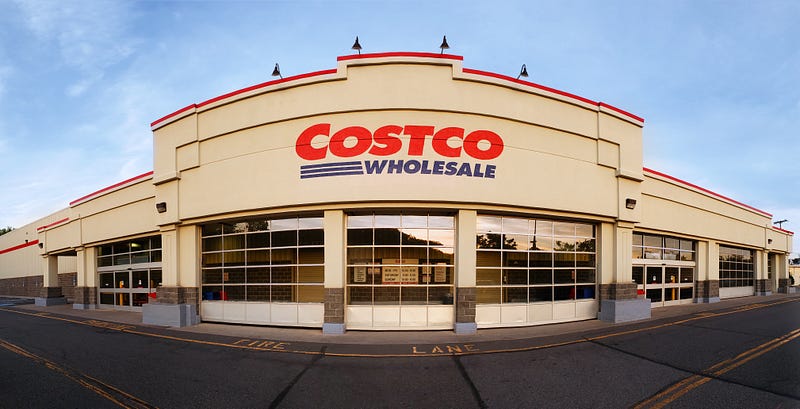
What if I told you that the world’s third-largest retailer was a members-only bulk-buy warehouse?
It’s hard to believe, but according to Deloitte’s 2021 Global Powers of Retailing report, Costco is the third-largest retailer in the world, trailing only Walmart and Amazon. The brand brings in an incredible $152.7 billion every year, despite limited advertising and an annual membership fee of between $60 and $120.
Costco’s business model is counter-intuitive:
- It charges people to shop.
- The store experience is best described as “bare bones.”
- Most products are sold in laughably large amounts.
Nevertheless, as FastCompany put it “[Costco] succeeds because of its adeptness in breaking the rules of retail common sense.”It’s a brand that, as FastCompany put it “succeeds because of its adeptness in breaking the rules of retail common sense.”
Costco “succeeds because of its adeptness in breaking the rules of retail common sense.”
So how did Costco become the world’s third-largest retailer?
Well, it’s partly down to the brand’s use of behavioral science and psychology. Principles like scarcity, the Sunk Cost Fallacy, and reciprocity are at work everywhere in Costco’s experience.
1. How Costco Applies Scarcity Through Its Membership Scheme
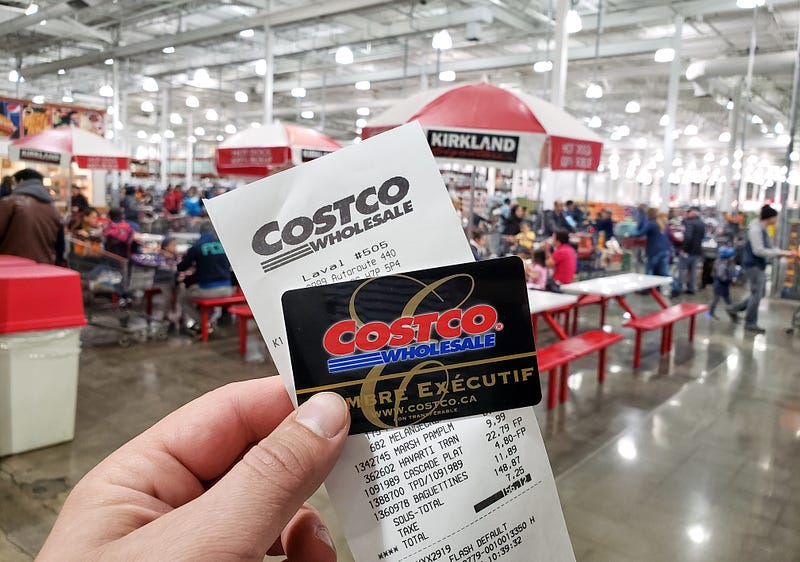
To shop at Costco, you have to be an annual member. For between $60 and $120, you can unlock the ability to shop in its stores. And people happily pay. In 2020, the brand had 105.5 million members, and annual fees generated $3.5 billion that fiscal year.
Not only are people happy to pay membership fees, but they stick around. According to CNBC, Costco’s member renewal rate in the U.S. and Canada is an incredible 90%. But why would people want to pay to shop in a warehouse, when they could visit Walmart without paying a fee?
First, memberships give Costco’s deals a feeling of scarcity. When paying a fee to access the store, people feel like they’re getting exclusive values and sales not available to the general public. Only members can get these limited-time deals.
What is Scarcity?
This effect says that humans place a higher value on items that are scarce. Cialdini described scarcity this way:
“When our freedom to have something is limited, the item becomes less available, and we experience an increased desire for it.
However, we rarely recognize that psychological reactance has caused us to want the item more; all we know is that we want it.”
When your neighbor gets a killer deal on paper towels that’s only available for Costco members, you start to want it more. Why? Because it’s a scarce, member-exclusive deal that you can’t get anywhere else. You’re more likely to pay for the membership when it’s giving you access to something other people can’t get.
2. Why Costco’s Memberships Drive Sales
Not only is Costco making more money than its competitors, but if you compare revenues by the square foot, you’ll find that Costco is also better at selling to customers when they’re in the store.
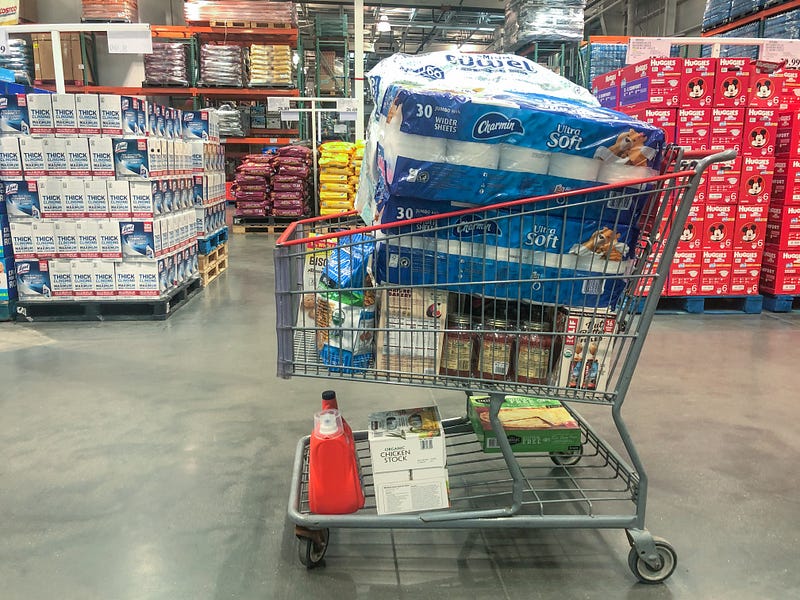
The brand makes $1,124 per square foot, while competitors like Target and Sam’s Club bring in only $308 and $650, respectively. Psychology principles like the Sunk Cost Fallacy are drivers of that effectiveness.
What is the Sunk Cost Fallacy?
The Sunk Cost Fallacy states that people are more likely to commit to an activity if they’ve made a significant financial or time investment. This can be summed up by the saying, “throwing good money after bad.” Your investment might not be paying off, but when you have a sunk cost you start to mentally justify your continued involvement.
How does Sunk Cost grow Costco’s sales?
When someone pays a membership fee to Costco, they want to get their money’s worth. They’re likely to buy things they otherwise wouldn’t. Marketing professor Kusum Ailawadi illustrated Sunk Cost at work in customers’ minds this way:
“I’m going to make sure I get my money’s worth [from this membership fee] by shopping in the club store every chance I get.”
The Sunk Cost Fallacy helps drive Costco’s bottom line. A 2017 study found that people who shop at club stores, like Costco, end up visiting the store more frequently and spending more than they would if they weren’t a member.
3. Reciprocity Principle in Costco’s Free Samples
If you’ve ever visited a Costco, especially on the weekend, you’re familiar with its free sample stations dotted around the store. But why does Costco give up so much floor space to free samples when they could use it to sell products instead?
It’s because companies know that sampling can drive a host of benefits — from creating new customer habits to driving sales. A study of grocery store samples showed they drove product sales by as much as 2,000%.
It’s clear that sampling drives sales, but why? It’s down to a psychology principle known as reciprocity.
What is Reciprocity?
Reciprocity is the social norm of responding to a positive action with another positive action. It’s why you feel indebted when someone does you a favor.
Reciprocity is why you feel indebted when someone does you a favor.
Made famous by Robert Cialdini in his book Influence: The Psychology of Persuasion, Reciprocity can be summed by the saying, “You‘ve got to give to get.” For example, in one of Cialdini’s studies, customers were 42% more likely to make a purchase if they got a free piece of chocolate when entering a store.
A Real-World Example of Reciprocity
A famous example of reciprocity in action is the Hare Krishnas and their free flowers. After coming to the United States in the 1970s to grow their religious sect, the Hare Krishnas faced an issue. They needed donations to operate, but were unsuccessful in their attempts. Frustrated, the sect tried a new tactic — reciprocity.

The Hare Krishnas began giving out books, religious texts, and flowers to each passerby. After they started giving out free gifts, the group found that donations suddenly skyrocketed.
Why? Because reciprocity was at work. Now, instead of just ignoring the Hare Krishnas, people felt the need to return the free gift in kind, in the form of a monetary donation.
As Professor Dan Ariely put it,
“Reciprocity is a very, very strong instinct. If somebody does something for you, you really feel a rather surprisingly strong obligation to do something back for them.”
The Bottom Line
Costco isn’t just great at getting people to buy. Its customer experience creates brand fanatics. As Patricia Hong, partner at consulting firm A.T. Kearney, told CNBC:
“Some of their customer base is absolutely addicted to Costco — absolutely addicted to the experience and the brands and the thrill of going to Costco.”
Although it might be savvy in its use of applied psychology and behavioral science, consciously applied or not, Costco never sacrifices brand love for a sneaky sale. And that’s their secret to long-term growth — Costco balances psychology, customer experience, and deals to build customer relationships for the long term.


