
How Companies Shorten Product Life to Force Consumers Buy New Models
The European Union has struck a massive blow for the right to repair and reuse
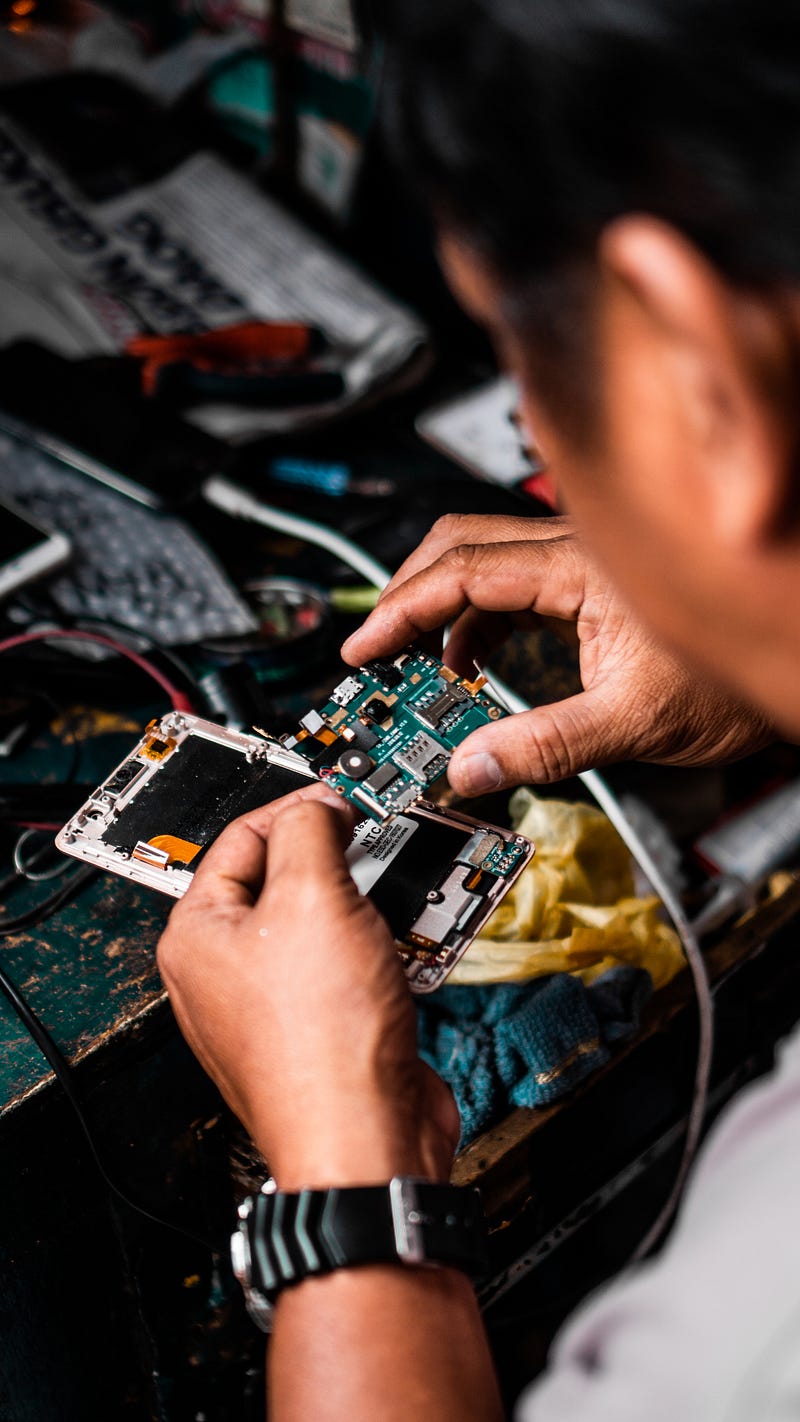
“Our whole economy is based on planned obsolescence….we make good products, we induce people to buy them, and then in the next year we deliberately introduce something that will make these products old-fashioned, out of date, obsolete.” (Brooke Stevens, American industrial designer)
We marvel at technology’s ability to reinvent, reimagine and recreate, so it churns out an endless supply of new devices and gadgets to satisfy our needs and wants.
Little do we care about how manufacturers hold and manipulate technology levers to impose their profit-making and environmentally wasteful product designs on the consumers.
In the pre-television days, radio ruled as the king of entertainment and education. In our home, we had a radio set that worked without any hassle for about twenty years.
Can you imagine using a smartphone or a computer for twenty years without an upgrade? Imagine taking a five-year-old laptop to a repairing shop and returning happy after fixing your problem.
I had a microwave oven that lasted for about five years, which seemed a record according to the dealer who refused to repair it when it developed a snag. He said the company had stopped producing the particular model, and there was no way he could get the spare parts for replacement.
I felt an impotent fury because there was nothing I could do. India’s consumer protection laws kicked in only when there was a problem with a new product. I had been hoodwinked by the South Korean manufacturer's subliminal ad that boasted that its products were built to last. How long its products lasted was left to our imagination?
I gave the oven away to a strap dealer for a pittance.
Planned obsolescence
We view technological obsolescence as a natural adjunct to progress. We celebrate when new technologies appear.
Technology is not a living entity where wear and tear occur organically. It’s human-made, where the creators write their own rules and build their own designs.
Every year, we generate millions of tons of e-waste when we throw away our smartphones, computers, and other household appliances like washing machines and dishwashers.
Companies design their products to shorten their working lives. This is called planned obsolescence. The companies know exactly when their products will stop working in the normal course. They design their products in ways that foreclose the options for repair and maintenance.
It is challenging to open a laptop without damaging it. For example, a laptop is designed to last for about five years. Its parts are often soldered and glued together, so it is difficult to disassemble without damaging it.
Planned obsolescence is the lifeline of the smartphone market. Companies bring out new models with ‘improved’ features every year. It’s becoming increasingly difficult to use the same phone for more than, say, three years because companies have designed it so.
Planned or artificial obsolescence discourages repair and reuse because companies will profit less if people start using gadgets for extended periods.
The curse of artificial obsolescence is pervasive, and no household gadget is free from it.
The right to repair, reuse and recycle
People, organizations and governments have finally woken up from their slumber of indifference to and complacency with manufactured obsolescence. Organizations like iFixit, which has about a million followers worldwide, have been campaigning long for consumers' right to repair, reuse and recycle products.
In November 2020, the European Union (EU)Parliament passed a resolution asking the European Commission to prepare a framework to make routine repair of everyday products easier, systematic and cost-efficient.
The EU has eco-design regulations intended to improve the energy efficiency of products sold in the EU. In March this year, the first design regulation, mandating manufacturers of washing machines, dishwashers, refrigerators and monitors to ensure that components are replaceable with common tools, came into force. Instruction manuals must be accessible to companies specialising in repair. Producers must supply spare parts within 15 days.
The EU’s new law doesn’t apply to cell phones, computers and tablets, which constitute the bulk of the toxic e-waste clogging the landfills. However, individual countries are moving ahead with their own regulations to reduce the generation of e-waste and establish the consumers’ right to repair and reuse their products.
For example, France has proposed to introduce an anti-waste law with a repair code. Washing machines, laptops, smartphones, TVs and land mowers will display a label with a grade of 1 through 10. The rating will use the ease of disassembly, repair information, price and availability to grade the products.
The right to repair has reached a tipping point
The Do-it-yourself movement leaders like Ifixit have a lot to cheer about these days. Big companies looking for profit-maximation at every opportunity are slowly sensing that the winds are blowing in favour of consumers' rights.
Apple has launched a repair programme for independent businesses. Companies will get Apple parts, tools, training, service guides, diagnostics and resources to perform many out-of-warranty repairs.
Electrolux, a leading manufacturer of electrical appliances, is preparing to comply with the EU’s new regulation. According to its senior official, Viktor Sundberg:
“We will now ensure that the specific parts, according to the legislation, will be available directly to consumers. And we will make the repair information available to independent repairers for the categories requested.”
Framework, a laptop manufacturer, recently launched a DYI laptop and supplied it along with a screwdriver to open it up.
Final thoughts
Planned obsolescence is a manufacturer’s ploy to reduce product life. Consumers are forced to discard their devices and appliances and buy new ones after a few years. The pro-repair and reuse movement has got a shot in the arm. The EU is kicking off regulation to make manufacturers facilitate the repair and reuse of products for an extended period.
The costs to corporate bottom lines have been offset by reducing environmental pollution as the generation of toxic e-waste will be reduced considerably.
If you are a DIY enthusiast and possess the ability to disassemble gadgets and repair them, an opportunity is emerging to monetize your skills.
Thanks for reading.
Sources:


