
BROWN EGGS AND HAM
How Color Blind Glasses Can Transform How You See the World
Viewing the world through someone else’s lenses
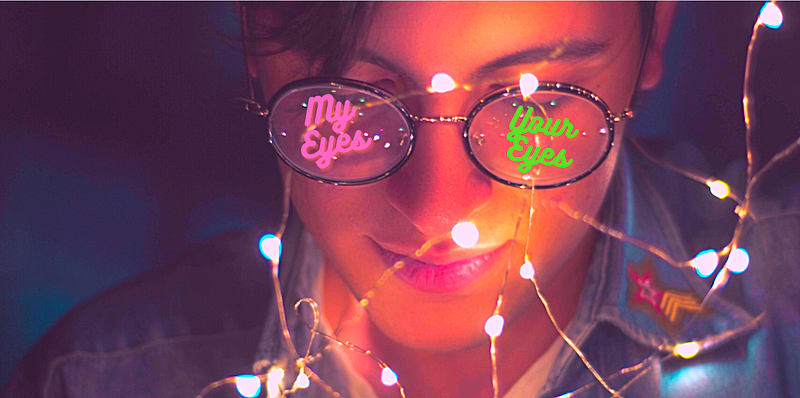
Our son mixes up his greens and browns. His color-blindness is called Deuteranomal. It is the most common type of red-green color blindness. It makes green look redder. Until yesterday, what he saw and what we saw were completely different.
When he was 8, the optometrist told him he couldn’t be a pilot. She’d seen Little Miss Sunshine and anticipated a more gut-wrenching response.
That’s okay, our son said. I’m afraid of heights. I don’t even like flying.
I met my husband when he was a studio-art student at college. Even though my husband codes now, he’s a visual problem solver. As soon as we got home, my husband took out a box of crayons. He started drawing trees.
What color is this? He asked our son, pointing to the trunk.
Green, our son said.
Then my husband pointed to the leaves. What about these?
Brown, he answered.
I pointed to our wood floors.
Green, he said.
I was briefly jealous. Green floors. Cool. I was bored with our ordinary brown wood slats. I was one of those people who always wanted a red sky even if it meant the end of the world.
But then I thought about food. Green hamburgers. Green pretzels. Brown lettuce. Yuck. I thought about Doctor Zeuss. Green Eggs and Ham. Green eggs and ham weren't unusual to my son at all.
Initially, our son was delighted with this quirky newly discovered aspect of him. It was a fun game. It made us laugh. What color is this? What color is that? We thought nothing of it. We moved on. He didn’t want to fly planes. What difference did it make?
Two weeks ago, my husband and son were searching for something on the internet. They looked excited. Our son couldn’t sit still.
What are you guys looking at? I asked.
Color blind glasses, they said.
That’s a thing? I asked. I hadn’t heard of it.
Mom! our son said. I’ll be able to see colors better. There are some people that can’t see any color at all and once they wear these, they start weeping. You should see the video.
I was suspicious. I probably would have snuck a zip of Jesus’s wine water before I fell for that farse. Even if I had to claw my way through those gullible acolytes, I would have wanted to taste the miracle.
My husband and son ordered the color blind glasses from Amazon. Big mistake. Our son was incredibly excited, but Amazon sent fakes. They were janky. The lenses were fragile mirrors so acutely reflective you could have seen them from space.
When our son looked through them, everything was pink. Talk about fake rose-colored glasses. I thought about all the people who wouldn’t mind looking at the world as if it were pink. They’d love those glasses. Not my kid. He wanted green.
We didn’t know they were fake right away. It didn't take long to figure that out once they compared them to the ones in the description. They weren’t the same frame shape, the lenses were too reflective, seeing color didn’t mean only seeing pink. These were from Amazon Fakehouse. I hate that place.
Our son was devastated. He wanted to be one of those people who put on glasses and saw the world more beautifully. He wanted to weep. Who didn’t want that?
They decided to order the glasses from the mothership, the business that invented them. It took longer and they cost more because the place they ordered them from wasn’t a slave-driving, product-before-human operation, that made fake stuff. It took two weeks — like the old days.
This month has sucked. Massive shootings, nooses found in our neighborhood. my son got a concussion, he’s still reeling from his grandfather’s funeral. Life ain’t rosy and the rose-colored glasses we ordered were fakes. We needed a win.
When the glasses arrived, we were suspicious. We didn’t want to be disappointed again. Our son had to wait 15 minutes after he put the glasses on to calibrate them or something like that.
After 15 minutes, he started to look around. He looked at everything — the furniture, the walls, the rugs, through the windows. Nothing was as it previously appeared.
Our green cabinets were now brownish-red. Our green wood floor turned tan. Our red rugs were redder. No, not that. He couldn’t think of the word. Not redder. Richer? Denser?
Let’s go outside, he said. Oh my god, he yelled. The trees are so green.
What did you think they were? my husband asked.
Brown. You should see it out here, he said.
We can. We do, we said. But we didn’t. Not how he was seeing it because he was seeing it for the first time. He was in love with the colors of the world previously kept from him. We took it for granted. Blue sky, green trees, no biggie.
It made me think about the lenses we look through as we walk through life. Who knows how anyone else is seeing the world. Who knows how their sight affects their days, their lives, and their point of view. Not me. Not you. Not them. We’re all strangers through each other’s eyes.
Maybe when we’re trying to walk in someone else's shoes, we need to also look through someone else’s eyes.


