
How Chasing ‘The Spark’ Can Sabotage Finding Lasting Love
A baseline of physical attraction and shared values are enough for a deeper relationship to grow.
I’m in my early 30s now, and I remember the first time I dated someone who in retrospect seemed “emotionally available.”
It was back in college, following a slew of disappointing dating situations. The woman projected maturity and confidence. She seemed to have her life together. Her forthrightness was refreshing.
In summary, she seemed good for me and I was excited to see where things would lead.
After we’d been seeing each other for a few weeks, she asked if I’d be her girlfriend — and I said yes.
Not long in though, I started feeling disconnected. Boredom replaced my initial excitement. Even though she embodied so many positive qualities, I felt like something was missing. Yet I couldn’t put my finger on what, exactly.
What confused me was that I had been interested for our first several dates. What had happened? What changed?
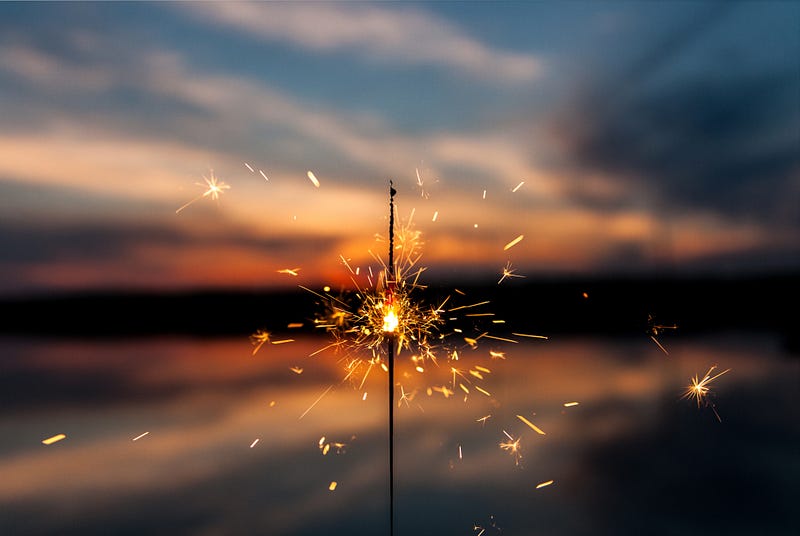
That “spark” between that woman and me never lit — or at least, it flickered out for me pretty quickly.
Let’s un-pack that spark.
What is it? Why do some people make us feel it where others don’t?
It goes beyond mere physical attraction. Roxy Zarrabi has encouraged her readers to “think about [their] attachment style as the blueprint for the partners [they] are drawn to and how [they] relate in [their] relationships.”
“If you have an anxious attachment style, you may be prone to being drawn to emotionally unavailable people,” she wrote.
Expert Amir Levine specifies further, that those with an anxious attachment “will often rule out a secure partner too early thinking that they do not feel a romantic spark.”
He writes:
“The romantic spark they are actually subconsciously looking for is the anxiety of an activated attachment system. Not having to second guess someone means their attachment alarm system is not triggered, and they will mistakenly believe that the secure person is too boring.”
As psychologist Nicole LePera put it, “We can confuse predictable, steady love with a lack of excitement or ‘passion.’”
In my experiences with people I did feel a spark with — one week the person would open up. It’d feel like I’d really seen them, and they’d seen me. Words came easily. We’d talk about vulnerable things, but could also laugh and enjoy the lighter aspects of life. They were my type physically.
The next week they’d pull back (even in the seeming absence of overt conflict). The contrast was painful. The shift felt jarring.
And yet the “connections” felt so hard to disentangle from once formed.
I think the highs and lows excited my heart. Like broccoli, the less sparky option even felt boring, or constricting.
There’s a certain safety with an avoidant. They won’t care if you give them too much space. You don’t have to worry about hurting them. Less is at stake. With them, maybe you feel endlessly free.
Free until you start to fall and realize there’s no one there to catch you.
Thomas P. Seager wrote that the “romantic partner with whom you feel such extraordinary chemistry is exactly that person your brain has selected to recreate your trauma.”
Freedom is important. And yet I’ve found the truest and most rewarding form of it comes from reciprocal connection to others. It comes from loving and being loved. It comes from staying connected in meaningful ways.
All that time spent chasing an avoidant, my energy was focused less on connecting with them than on winning their attention. Or gaining it back after I’d perceived it to have been temporarily lost. What felt like connection mimicked more of a drug high. And as Annie Wegner put it, “Dopamine is unsatisfactory long-term. You will feel alone, even with a human beside you.”
The spark is overrated; I’m confident in the truth of this now.
As love philosopher Alain de Botton put it:
“You’ve probably met someone who’s quite nice, and everybody is right enough at some level. If you find them attractive, you get on with them, they like you, etc, that’s going to be as good as you need, and the real challenge is therefore to know how to make a relationship work rather than keep searching on and on for this ever more finely tuned ‘rightness’.”
I’m not saying don’t trust in any instant connection — nor that a spark present on date one is bad. Plenty of couples connect instantly and stay together for many years, if not a lifetime.
Plus, sometimes personalities just aren’t compatible, regardless of attachment style.
What I’m saying is that not all healthy and sustaining relaitonships start out with that “you know when you know” feeling. And that just as often as those instant firecrackers lead to enduring relationships, they combust, flicker out, and leave ashes of disillusionment in their wake.
As Logan Ury recommends:
“The important thing to remember is that [the spark’s] absence doesn’t predict failure, and its presence doesn’t guarantee success.” As my mathematician client said to me once, ‘The spark is neither necessary nor sufficient for long-term relationship happiness.’”
What I’ve found generally helpful as a person with a history of anxious attachment is to really give a connection time to unfold.
I ask myself: What do I like and dislike about them? How do I feel around them? Do I feel calm around them? Bored?
Do they bore me because our personalities genuinely don’t vibe, or is my attachment system flaring? It’s not easy to tell. Sometimes you just won’t know.
As far as the “spark provokers” – what keeps me going back to them? What am I getting from them that these more level people aren’t providing? Is it just that I’m more physically attracted to them, or does it go deeper?
Ideally the value of a partner wouldn’t come from the fact that we “won” them. It would come from the realization that the prize was innately valuable on its own, whether or not it had to be worked for. Without any chasing or running through hoops involved.
So I pay attention now to that value in others. I realize that qualities like kindness, consistency, and self-awareness make someone so attractive. They’re just as important as the shinier ones that often win out in the fast-paced, instant gratification oriented modern dating climate.
And I definitely don’t believe that an absence of immediate fireworks is a sign of “not right” or “not meant to be.” A baseline of physical attraction and shared values are enough for a deeper relationship to grow. Calm can make for a solid starting point.