
How Certain Emotional Traits Can Make Someone Smarter
Emotions can determine how we apply our intelligence, and this can determine the ultimate impact of our intellect
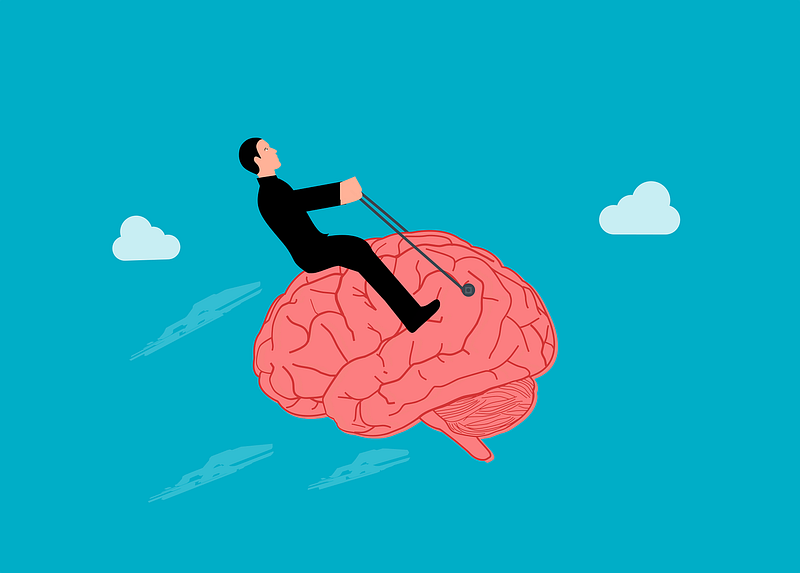
Fydor Dostoyevsky wrote, in Crime and Punishment, that “It takes something more than intelligence to act intelligently.” One doesn’t have to be human for very long to recognize that there are countervailing forces within us, and that though we may be able to see the best way to act, we are often drawn to the less prudent course nonetheless. Self-control is far from absolute, and our rationality is weakened by hunger, sleepiness, overthinking, rampant emotions, etc. It is clear how the emotions can work against our intellect. However, what I have rarely seen discussed is how our emotions can amplify our intellect, and that is the focus of this article.
Anxiety
I believe that anxiety is the source of most of the good in people. The hardest-working person in the office, the organized homemaker, the obsessive innovator, the ever-considerate associate, the bleeding-heart philanthropist, and so on, are all driven by this nagging sense that things are not good enough and can and should be better. The fear of unknown mishaps keeps the anxious planning. Their relatively low self-esteem keeps them humble and concerned with whether or not they’re doing enough in their careers, and relationships, and in regards to the world at large, to be worthy of happiness. It’s a somewhat dour view to take, as having anxiety can be very uncomfortable, but much of the good we see — in the way of moral behaviors and strong work ethic — is a byproduct of the emotional state we call “anxiety.”
Anxiety has an important interplay with intelligence as well. Namely, anxiety makes us self-reflect. If you’ve ever experienced social anxiety, it can engender what psychologists refer to as the “spotlight effect”: the feeling that everyone is watching you and judging you. When we describe the diffidence that a person with anxiety feels when interacting with others, we usually say they’re feeling “self-conscious.” Perhaps it is the commingling of that sense of worry with the already present factor of the ego that leads to a stream of reflections on self. But whatever the explanation, anxiety speaks to us about ourselves: “Am I doing enough in pursuit of my goals?” “Am I enough for my romantic partner?” “Do people like me?” In this way, anxiety promotes self-reflection.
Self-awareness is a critical awareness. To be intentional and practical in the usage of one’s intellect, one must have a developed sense of self-awareness. There’s a famous line from the movie “Forrest Gump” that goes, “Stupid is what stupid does.” Self-awareness is the bridge that allows intelligent thought to translate into intelligent behavior. It is a recursive awareness that makes for more efficient application of our cognitive abilities.
A person with a powerful and fecund mind can form opinions on any number of occurrences in the world. For example, any thinker is likely to have some feelings on the state of the economy where they reside, as it is a relevant issue to most everyone. First order thinking is to have the opinion itself. However, if we add self-awareness to the equation, that mind can now reflect and say to itself, “But I have not studied economics or looked over the data, neither that which has just recently been released nor the historical record (for a frame of reference), so what is the real worth of my opinion?” If nothing else, only self-awareness can give us a view of what it is we do not know, and this is a powerful edge in rational decision-making. It also allows us to monitor our performance and adapt. It gives us context for the role we occupy, so that we can act with a metacognition that makes true intentionality possible. The smartest individual, without self-awareness, wields the tool of the mind in a crude way, no matter how sophisticated and powerful that tool may be. Self-awareness refines the usage, allowing the intellect to be used in a more practical and intentional manner. Anxiety begets self-awareness, and in all real-world applications of intelligence, self-awareness is critical. Thus, though an emotion, anxiety has the ability to bolster the intellect.
Curiosity
Curiosity is a yearning, a hunger even. Though intelligence and curiosity tend to come hand-in-hand, there is nothing to curiosity itself that can be said to belong to intelligence. It is not the ability to memorize, or imagine, or problem solve, or integrate or dissect systems, etc. Curiosity is an emotional drive. However, if we consider memorization an intellectual function, what beyond the actual ability itself would have a bigger impact on what we memorize, and how much, than one’s drive to consume information? Is there anyone who could argue that a few points off an intelligence quotient wouldn’t be amply compensated for with an increased amount of curiosity? The intellect is something of a processing plant. If it is not given the raw material of information, it can do nothing.
We live our lives between competing desires to do and to rest. The densest sources of information may be the most important to consume when it comes to developing the intellect, but they can be prohibitively difficult to understand. Some of the weightier books in this world serve as a great example: The brilliant works of philosophy, history, science, mathematics, etc., are all challenging to read through and digest. No one would ever invest the necessary energy into the task of studying them without some drive of sufficient strength to overcome the arduousness of the undertaking. For this reason, most people go their whole lives without putting forth the effort to uncover the treasures within the masterworks that are readily available to us all. And if we take two people of equal intelligence, and feed them informational diets of the most varying degrees — one, perhaps, we give only reality TV and Instagram reels, and the other all the storied works of fiction, science, and philosophy that humanity has accumulated over its history — who will come out, in all practical matters, more intelligent on the other side?
If we can expand curiosity into a broader desire for intellectual stimulation, we can include something like enjoying puzzles, word games, trivia, etc. All of these combined can be summed up as a desire to employ the intellect. While not intellect itself, what could be more central to the development of an intellect than the presence of this drive?
Focus
The inability to focus our mind can be construed as a kind of excess of curiosity. A mind that is constantly requiring new information and continually shifting to something different is demonstrating a scattered interest in the same way that the drive of curiosity does, but here to one’s detriment. An extreme inability to focus, as seen with ADD and ADHD, is now a well-known mental condition. However, every person’s ability to focus can be catalogued on a spectrum, with their attention span being either more or less enduring. This capacity to focus is ultimately a measure of how long one can apply their intellectual functions, making it another inflection point at which intelligence is able or unable to manifest in one’s actual behavior.
To be fair, the ability to focus is something one might be able to classify as a purely intellectual ability. However, those things that make it difficult to focus — perhaps a mercurial emotionality that never ceases to draw away one’s attention — would not be. It’s a bit of a tricky line to walk, so let me add an analogy: To memorize many words and develop a good understanding of the rules of grammar may be an intellectual ability, but to speak well in a stressful and distracting environment is likely not. In both our example and the aspect of focus we’re discussing, it is more likely an emotional force interrupting the rational processing than it is anything to do with the actual rational capacity.
Again, something seemingly not classifiable as intellect itself, can be a major factor in the functional role of intellect. A powerful mind that is either not backed by sufficient motivation to maintain its consistent application, or that is otherwise easily drawn awry by sporadic emotional impulses, is made increasingly useless by the severity of the trait.
Bonds
If I can draw on some anecdotal evidence for a moment, haven’t you noticed in your experience that many of the most intelligent people tend to have some intense draw to fiction? The classic idea of a nerdy person has them, over the generations, variously gathered around the Dungeons & Dragons roleplaying game, or perhaps at a Renaissance fair, or obsessed with video games, books, anime, comics, or some fantasy-based or sci-fi-based epic, such as Lord of the Rings, Harry Potter, Star Wars, The Matrix, etc. Just drawing on our lived experience and cultural cliches, there seems to be some relationship with intelligence and an attraction to imagined worlds.
This ability to feel an emotional response to imagined things is another important way by which emotional factors play into intelligence. What are mathematics, philosophy, or science really? They are imaginings. One never sees gravity, or values, or atoms, directly. How does one invent something new and marvelous? They fall in love with an idea, and they obsess over it to such an extent that they pour an enormous amount of effort into bringing it into reality. The drive to create is ultimately predicated on a bond with what is imagined. What is so different about feeling a visceral response to a fantasy weapon like the lightsaber versus someone like Nikola Tesla feeling a visceral connection to the prospect of creating an alternating current (or, even more directly comparable, the futuristic weapons he worked to invent)? This slight disconnect from reality that allows one to feel emotional about what is really only ever reached in their imagination is an understated but potent factor in the application of intelligence.
Coming at this from another side, we could construe this as not cause but as consequence of another aspect of the emotional profile: Perhaps people who find themselves feeling an inordinate emotional connection to things imagined wound up that way because they felt in someway disconnected from the physical world around them. Many great thinkers, for example, have also felt rejected by others and been drawn to solitude. That sense of rejection would fit in line with feelings of anxiety. It could also be that being more intelligent leads one to act differently, and in turn experience rejection, and ultimately to move towards self-isolation. If this is the case, then we can still add that the emotional response to feeling rejected, if it leads to the attachment to the imagined, acts to ultimately bolster the intellect nonetheless, even if it is a downstream consequence of intellect itself.
Regardless of cause, to be able to obsess over a figment of the imagination is the key to bringing what is conceptualized into reality. Many people have great ideas but never commit themselves to bringing them to fruition. Generating ideas we can assert is an intellectual function. But falling in love with an idea, and having sufficient faith in it to commit oneself to its pursuit, that is something beyond intellect. What is the creative capacity without this drive? It is yet another nexus between mind and reality that determines the functional outcome of intellectual ability, and one that is driven not by intellect itself but by emotional idiosyncrasies.
Conclusion
I could not argue that any of these emotional factors are intellectual in nature, but I would certainly argue that to have them present and active in one’s personality serves to make the individual more intelligent than they otherwise would be. Humans have a natural propensity to believe that life rewards us based on merit. It gives us a sense that we deserve our good fortune, and more importantly, that by our hard work we can change our bad fortune. For this reason, we love stories where by enormous effort someone overcomes the odds, stories wherein an underdog triumphs by the sweat of their brow over someone with all the natural advantages. I see something of that in looking at this approach to intelligence. Ultimately, the drive to work hard is an emotional one, not a factor in intelligence directly. We can imagine someone who, though not as naturally gifted intellectually, has an emotional profile that works to push the intellect in the most practical and prudent of ways, and thereby becomes the most functionally intelligent. Taking these factors into account has the potential to change the way we look at intelligence, as well as the way we look at ourselves and our idiosyncrasies.
Maybe it’s not always who’s smarter, more skilled, or even more credentialed, but a view into the emotional profile of the individual that will ultimately determine a person’s potential. And what other factors beyond those listed here constitute the ideal emotional profile to augment intelligence?
Enjoy this article? If you have Amazon Prime, you might, for a short time, have access to the digital versions of my books for free. Click here to find out.