
How can we use machine learning to predict the sales of a new product?
Are you trying to launch a new product but struggling to predict sales accurately? It’s a common challenge for businesses, but fear not! With the power of machine learning, you can develop a highly accurate model to forecast sales with confidence.
Using machine learning to predict sales is a game-changer for businesses of all sizes. By analyzing data on similar products, sales history, and marketing variables, you can develop a model that’s tailored to your unique needs.
The result?
A more accurate sales forecast that helps you make better business decisions and plan for success.
But don’t take our word for it. Many businesses have already seen the benefits of using machine learning to predict sales. From small startups to large corporations, machine learning is transforming the way businesses operate and helping them achieve their goals.
So what are you waiting for? Harness the power of machine learning today and start predicting sales like a pro.

Predicting Sales with Machine Learning: An Overview
One approach would be to use historical sales data to train a predictive model, such as a decision tree or a random forest. The model can then be used to make predictions about future sales based on various factors, such as the time of year, promotional activities, and competition. Another approach would be to use natural language processing to analyze customer reviews and social media posts to gain insights into consumer preferences and sentiment.
This information can then be used to inform product development and marketing strategies. Additionally, you can also use computer vision to analyze images of the product and identify patterns that are indicative of high sales.

Using Python and Machine Learning to Predict Sales of a New Product
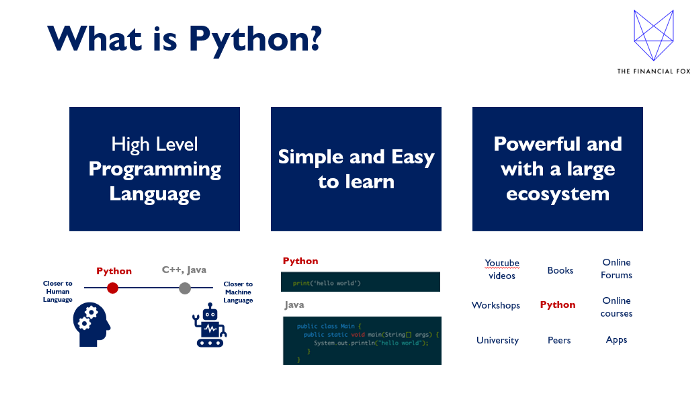
Are you tired of complicated programming languages that feel like they’re in a different galaxy from human language? Well, say hello to Python!
Python is a high-level programming language that’s as close to English as you can get. Unlike old-school languages like C++ or Java, which are closer to the binary code, Python is a breeze to learn and use.
Let’s take a simple example: printing the words “hello world.” In Python, it’s as easy as typing “print(“hello world”)”. But in Java? Well, let’s just say it’s not so simple.
But don’t let Python’s simplicity fool you. It’s also incredibly powerful and has a vast ecosystem of resources to help you learn and grow. From YouTube videos to online courses, workshops to peer support, there are many ways to learn Python.
Here is an example of Python code that demonstrates how to train a simple decision tree model to predict sales of a new product using historical data:
import pandas as pd
from sklearn.tree import DecisionTreeRegressor
from sklearn.model_selection import train_test_split
from sklearn.metrics import mean_absolute_error

# Load the historical data into a pandas DataFrame
data = pd.read_csv("historical_data.csv")
# Define the features (predictors) and the target variable
features = ['promotion', 'competition', 'season']
target = 'sales'
# Split the data into training and test sets
X_train, X_test, y_train, y_test = train_test_split(data[features], data[target], test_size=0.2, random_state=0)
# Train the decision tree model
model = DecisionTreeRegressor()
model.fit(X_train, y_train)
# Make predictions on the test set
y_pred = model.predict(X_test)
# Calculate the mean absolute error of the predictions
mae = mean_absolute_error(y_test, y_pred)
print("Mean Absolute Error:", mae)
In this example, the historical data is loaded into a pandas DataFrame and the features used to predict sales are ‘promotion’, ‘competition’ and ‘season’.
The target variable is ‘sales’. Then, the data is splitted into training and test sets. Then, a decision tree regressor is trained with the training set and predictions are made on the test set. Finally, the mean absolute error (MAE) is calculated as a measure of model performance.
Please note that this is just a simple example and the performance of the model may not be good enough for real-world use cases. Also, you should tune the model hyperparameters and feature engineering to improve the performance.

How to explain a Python Machine Learning Model to Business People?
When explaining this decision tree model to business people, it’s important to keep in mind that they may not have a technical background in machine learning.
Here are some ways you can explain the model in a clear and concise manner:
- Start by explaining the problem you are trying to solve: In this case, you are trying to predict the sales of a new product.
- Explain the decision tree: A decision tree is a type of model that can be used to make predictions based on a set of input variables. It is a tree-like structure, where each internal node represents a test on an input variable, each branch represents the outcome of the test, and each leaf node represents a prediction.
- Explain how the model was trained: You used historical sales data to train the model, which included information on promotions, competition, and the season. The model learned patterns from this data and can now make predictions about future sales based on these patterns.
- Explain how the model makes predictions: When presented with new data, the model follows the branches of the tree to make a prediction. For example, if the new data shows that there is a promotion and low competition, the model will follow the branch that leads to a prediction of high sales.
- Explain the model performance: You used a measure called mean absolute error (MAE) to evaluate the performance of the model. The MAE measures the average difference between the predicted values and the true values. A lower MAE indicates a better model performance.
- Emphasize on the benefits: Decision trees are easy to interpret and can be used to identify the key factors that drive sales, which can inform product development and marketing strategies.
It is important to keep in mind that this is a simplified example and the model may not perform well on real-world data. Also, explain the limitations of the model and the need of further improvement.

7 Steps to create a Machine Learning Algorithm to Predict Sales
Predicting sales for a new product can be a challenging task, but machine learning can help in developing an accurate model to forecast the sales. Here are the steps to develop a machine learning model for sales prediction:
- Collect and preprocess the data: The first step is to gather data on similar products and their sales history. You can collect this data from various sources like sales records, customer reviews, social media platforms, etc. Once you have the data, you need to preprocess it, clean it, and remove any irrelevant or inconsistent data.
- Select the features: Once you have preprocessed the data, the next step is to select the relevant features. These features can include product characteristics such as price, brand, quality, and marketing variables such as advertising spending, promotional offers, etc.
- Split the data: The data is then split into training and testing sets. The training set is used to train the machine learning model, and the testing set is used to evaluate the model’s performance.
- Choose a suitable machine learning algorithm: There are several machine learning algorithms you can choose from, including regression, decision trees, neural networks, etc. Regression models are particularly useful for sales prediction, as they can predict continuous values.
- Train and evaluate the model: Once you have selected a suitable algorithm, you can train the model on the training set. After training, you can evaluate the model’s performance on the testing set using metrics such as mean absolute error, mean squared error, etc. You can also perform cross-validation to ensure the model’s stability and generalizability.
- Make predictions: Once you are satisfied with the model’s performance, you can use it to make predictions on the new product’s sales.
It’s worth noting that machine learning models are not perfect, and they require continuous updates and improvement. Therefore, it’s essential to monitor the model’s performance and fine-tune it regularly to ensure it remains accurate over time.


