
How Can We Tell When the Fall of Civilization Has Begun?
It will be hauntingly familiar to some of us
During the height of the pandemic we experienced shortages. Much of this was due to lockdowns and hoarding. The start of collapse will be similar but for different reasons. And it won’t be just shortages.
It has already begun.
It won’t be a dramatic overnight thing. It will be gradual. Like climate change, there will be periods of intensity followed by lulls where you can almost pretend things are normal. But they’re not.
The cost of raw material will have an increasingly pronounced effect on the quantity and price of goods. We have quickly, on an historic scale, used up the good stuff. Ore grades are declining. As they decline, more and more energy is required to dig them from the earth and transport them to processing plants and smelters. The processing plants require more energy to concentrate the ores. At the same time, energy costs are going up. Iron ore quality is already putting kinks in the plans for “green” steel.
Regional political strife is affecting the Suez Canal. It is causing ships to divert around the southern tip of Africa, costing shippers up to a million dollars more each trip in time and fuel. It is costing the U.S. government two million dollars to take down every twenty thousand dollar drone attempting to destroy a freighter in the canal.
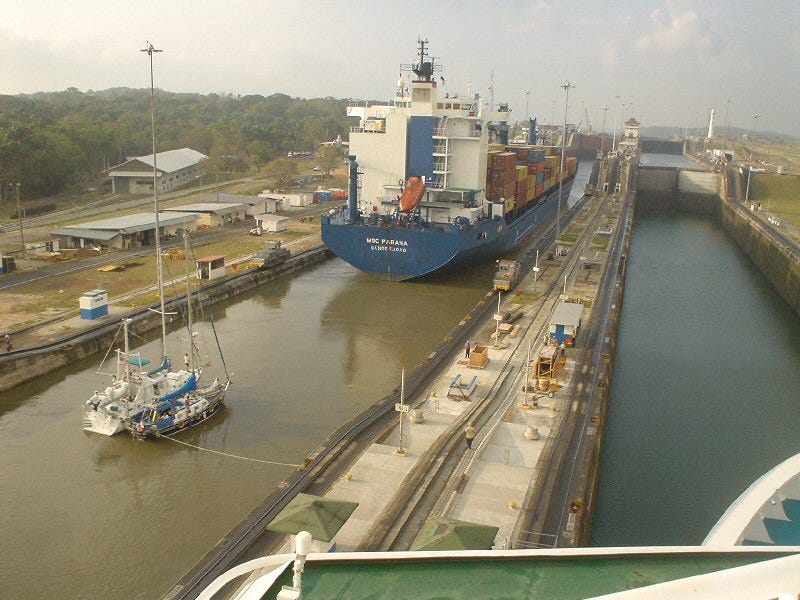
Climate change is responsible for drying up the Panama Canal. The backup in shipping is so severe, one ship recently paid nearly four million dollars to jump the queue. Some ships are going around the tip of South America. Climate change is getting worse and more unpredictable.
Restraints on shipping will affect price and availability of products in stores.
Increasingly, political strife and climate change will twine themselves inextricably together like a vine crawling up the walls of our fragile social and logistical constructs, exploiting cracks and crevices until what we know as civilization fails.
The cost of energy is affecting the production and transportation of food and goods across the planet. It will only get worse as oil wells get deeper, more remote, and require fracking or massive injections of water.
The cost of oil production will inflate the price of everything in society. The price of diesel will increase. This is important. Diesel powers agriculture, transportation, and mining. The more diesel costs, the less profitable these endeavors become. This means many companies will have to file for bankruptcy. They can’t just raise the price of their products enough to cover their costs. Their customers would simply not be able to afford the product. Pointless to stay in business.
We supposedly have 40 years of oil reserves. According to some, that’s inflated (by the various oil companies) by about 30%. Besides, we are supposed to leave half of that in the ground because of climate change. Unfortunately, no provision has been made to power the machinery of mining and agriculture and transportation with anything other than oil.
Oil is a double whammy. It’s advent exacerbated climate change. It’s exit will bring down modern civilization as we know it.
Unemployment will creep up as companies can’t afford to stay in business due to energy inflation. Soup lines may return. The wealthy may insist on the government not helping out as it did during the Great Depression. They will publicly claim the private sector can take care of it while privately giving politicians money to maintain their monopolies and hefty tax breaks. And then do nothing to help the hungry.
As municipal tax bases contract, the defund police movement will take an organic twist, decimating forces across the nation. Communities will begin to police themselves. Nobody, especially the media, will discuss the glaring drop in police shootings. Minorities will find relief from constant harassment.
Fire departments and other community services backed by city tax coffers will also suffer cutbacks.
That millionaires can’t take their yachts out of harbor because of the price of diesel will not garner much sympathy from the general public. Billionaires may do it anyway because they can still afford it, and the middle of the ocean will be a safer place for them to be.
Energy inflation will affect supply lines and the quantity and price of goods available to you, the consumer. The cost of consumer energy will climb.
The long gas lines of the 70s may return. Rationing will be implemented.
Wood-fired stoves and outdoor kitchens will make a comeback in rural communities.
The beginning of the end of civilization will be marked by inflation and scarcity. People living on the margin now will add to the population of burgeoning tent cities.
People begging for money in public will increase. Petty theft will rise.
Gun sales will go up. The people that can afford guns will get them and carry them.
Multi-generational housing will become more popular.
There will be more communal type living arrangements in housing and land use to save money and for more security.
Social media will become more strident in blaming minorities, immigrants, LGBTQ, and other nations for society’s problems.
The decline in ore quality and rising cost of extracting oil was inevitable in our technically advanced civilization. Instead of planning for this eventuality and making resources last for several thousand years, we opted for an extremely aggressive, largely unplanned expansion of human civilization that will result in our resources effectively used up in the span of about four hundred years.
Had we taken the more cautious and less expeditious route, technology, given enough time, may have saved us. Even then we would need a more prudent economic and political system to make it work. There are some that rail against the realities of what we have done, claiming technology will yet save us. Given our track record, lack of accord, and current political/economic system, it is too late.
After the fall of this civilization there will be historians, hopefully living in more sedate and sustainable times, surmising our fall was not due to the lack of intelligence in the human species but the blinders of crass greed and terminal denialism.
Who could imagine the world wasn’t big enough to hold all eight billion and more of us? Who could imagine exponential growth was not possible in a finite world? Who could imagine we would run out of oil someday without having something else ready to take its place? Who could imagine the failure of a sophisticated technological civilization?
A few people. Just not the right ones and not nearly enough of them.
I would agree with those future historians that greed and denialism may have a large part in what is taking place, but there is another factor. The biggest nail in the coffin.
It is a lack of imagination.


