
Fellow Americans: Domestic Violence Awareness Month is For You
The US is caught in a cycle of abuse. How can we break free?
Isolation. Control. Gaslighting. Coercion. Economic manipulation. I am a survivor of all these forms of abuse, which have infected the heart of our home, our country. In this divided political climate, We the People share a common experience with victims of domestic violence. We as Americans are facing our darkest corners and finding our guiding lights. Our collective wounds are becoming visible. Now, more than ever, victims should not be left in the shadows. We need to help each other transform the victim mindset into one of a survivor, a thriver.
First, we must accept the truth: Emotional abuse is abuse. Non-physical violence IS violence. “If only my wounds were visible” is the battle cry for my community and now it can be the battle cry for us all.
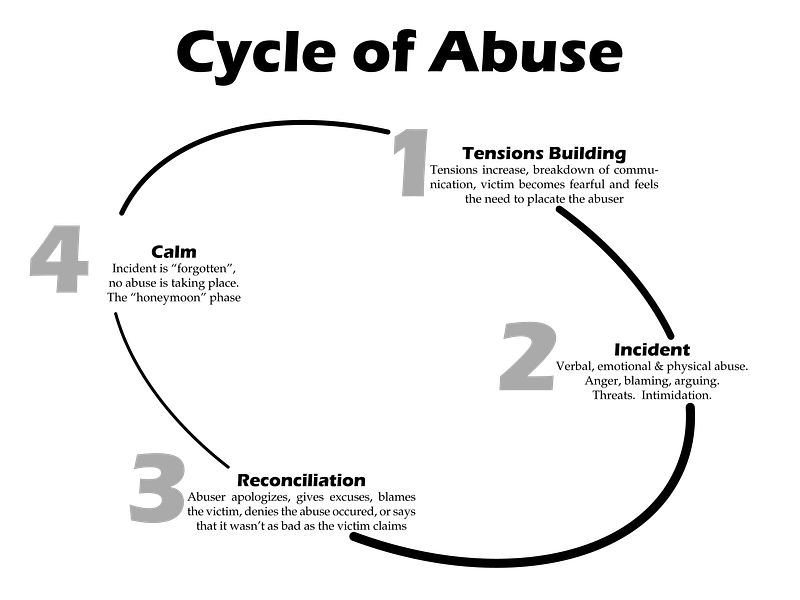
October is Domestic Violence Awareness Month. While unsure if the United States ever had a “honeymoon period,” I am certain that tensions are building, incidents are striking, reconciliation happens, calm cools the fires, and it never seems to end. We are collectively caught in the cycle of abuse. How can we break free from domestic enemies and know the warning signs moving forward?

While creating the future, we can learn from the past and the present. As many as one in four women and one in nine men are quarantined have been quarantined their abusers. Not all homes are safe.
Obscured by grief, victims and survivors seek clarity. That’s why they lean on the U.S. Department of Justice’s Office on Violence Against Women (OVW), which was created after the Violence Against Women Act (VAWA) in 1994. The OVW website used to include both physical and non-physical violence in its definition. In April 2018, emotional, economic, and psychological abuse was quietly removed from the website.
Then came the partial government shutdown. At midnight on Dec. 21, VAWA expired. Victims, survivors, and advocates at shelters were at the mercy of the government. They waited.
VAWA was reauthorized and the funds came through. The U.S. Department of Justice issued the following statement: “In fiscal year 2018, OVW awarded a record $467 million under VAWA. President Trump’s request for fiscal year 2019 OVW funding was the largest ever requested.”
So the support is there. But when to support healing those in the wake of domestic violence should not be up for debate. Helping the abused feel safe within their home should be a priority. We need to be vigilant moving forward. Inclusion, not exclusion, is the answer.
This conversation hits home for me. Paralyzed by fear I stayed in an emotionally abusive relationship with my domestic enemy, the man who wielded words as weapons.
Our story started with charming whispers on a carriage ride beneath the clear lights of the Christmas City. It ended in the dark.
Silence can be just as cutting as a monologue. While I sat in limbo, a counselor sighed on the phone, “Well, I guess you will just have to wait and see what he decides.”
I waited for him to take me back. And he did. Within 24 hours, I’d inhaled a sweet “all that matters is our love,” a roaring demand to clean the bathroom, and finally the stoic “I don’t know if I love you anymore.”
Why had I stayed for so long? Had I let my concern of losing financial prosperity veil our fading love? Sleepless in my childhood bedroom, I searched for an answer and found the key.
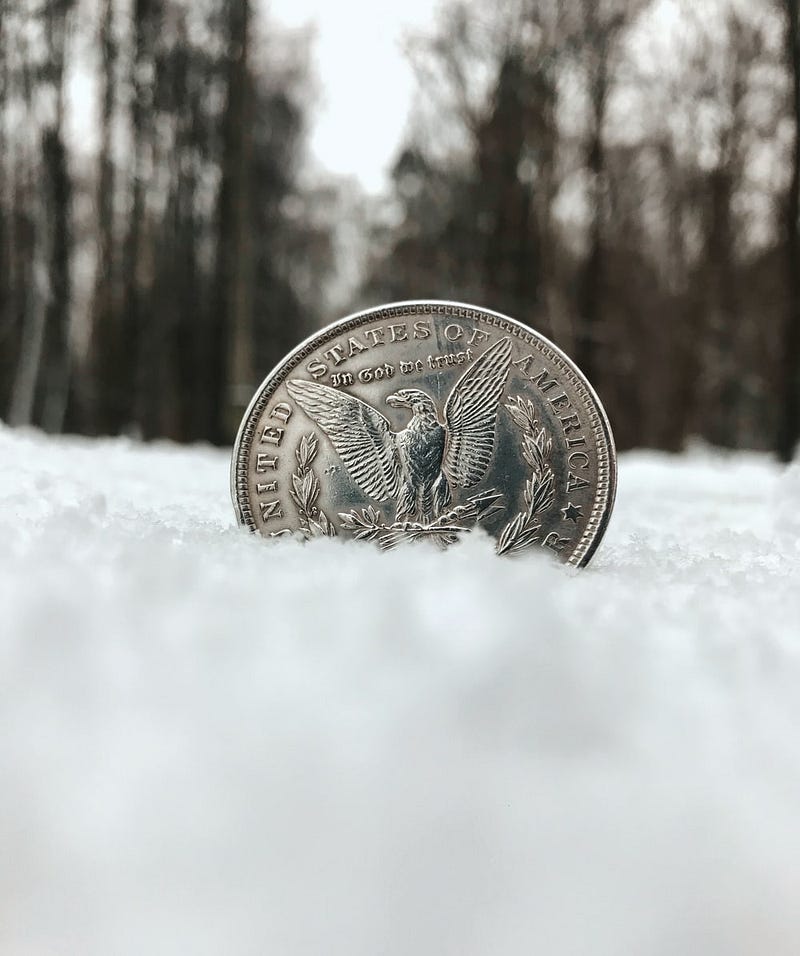
With the click of this silver key I opened my old cash box. Nearly three decades later, it still felt like my ticket out of small-town Pennsylvania. I scooped out crisp $2 bills, a handful of silver half-dollars, and Sacagawea’s shining face on a gold dollar coin.
Meeting my eyes were the man who wrote the Declaration of Independence, the founder of the Peace Corps, and the woman who guided Lewis and Clark. I was struck by nostalgia, by the memory of the person I used to be — generous, driven, and free.
On the bottom of the box was a bent cardstock American flag, my pledge to “defend the Constitution and laws of the United States against all enemies, foreign and domestic.”
Grasping this promise from the past, I felt frightened by another red flag: fear of my own domestic enemy coming for me, and worse, fear that I wanted him to.
Abuse is an assault on the soul. Desperate to revive the ghost in the mirror, I gathered the courage to leave.
My partner scheduled an appointment with a lawyer before I could get to the phone first. It only took a short consultation for this lawyer to suspect my well-being was at stake. He named me the plaintiff and my partner the defendant.
“You need to be protected,” he said to me in private. After defending my right to be heard for so long, my words mattered. Moving forward, my decisions steered the relationship to the finish line — proof that the law can work in my favor and empower many more survivors.
The sanctuaries we build with our hearts hold the same if not more value as the ones we build with our hands. Every human being deserves a roof over their head. The real home is to be able to walk outside those four walls, into the rising sunlight, respected, safe, and heard.
Whether I lived in the same house as my abuser or across state borders, my heart — my home — was robbed of the ability to trust. This, I believe, is a form of violence, and until April 2018 the Department of Justice website expressed the same sentiment.
Yet I am comforted by the overwhelming support on the local level. When I walked into the Turning Point Lehigh Valley, I apologized for taking up their time. This non-profit empowers survivors through education on finances and housing, even court advocacy. My wounds battered my mind. Then my new counselor showed me the Power and Control Wheel, a tool for understanding abusive relationships. I checked off nearly every slice, the shaming, the blaming, the mind games.
“Acting like the master of the castle” is spelled out as male privilege. He had smashed the special plates my mother made to dust and left the hammer on the floor for me to find. I thought if I’d cooperated, if I had met all his needs, he wouldn’t have done that. No. According to shelters around the country, breaking objects is more than a symptom of his anxiety. It is intimidation.
So I stomached the truth: I’d been spinning on this wheel believing it was love. But there’s more to an emotionally abusive relationship than biting words. Ours cycled through many honeymoons, the broken pieces put back together and decorated in gold. It’s hard to leave that breathtaking fervor behind.
Nearly half of U.S. men and women who have experienced “psychological aggression” from an intimate partner, according to the Centers for Disease Control and Prevention. Stalking, withholding money, tracking location, using children to relay messages, and isolating a partner from friends and family are all forms of non-physical violence.
Awareness is vital. This abuse is designed to break boundaries, and if it escalates, to break bones.
Now, 2020. Our country’s wounds are becoming visible. Wired to defend ourselves, the blue coats are at odds with the red coats and anyone in between is caught in the crossfire.
Why are we more passionate when polarized?
Abuse is at the core of our country. Many systems in place rupture the hearts of countless communities. Worst of all, in this divided climate we are estranged from people we love.
If we don’t want to be left facing the ghost of our country in a dusty mirror, we need to forsake the past and forge a future where marginalized communities are given the reverence they need to thrive.
I fear our foundation is dependent on an unhealthy relationship with our government, countless officials idealizing and devaluing our country — who will discard us like an object when their power is lost. And in this environment where Trump’s words are deemed “the language of domestic violence” and the DNC seems to have ditched #MeToo, let’s hold our partners and our leaders to the highest standards. Our home should not be built upon settling.
So why do we stay? Because the Power and Control Wheel has a counterpart for us to follow, the Equality Wheel. The spokes of this wheel — respect, honesty, accountability, support and trust — can propel us forward. At the end of the day, I can only point so many fingers without following the others pointing back at me. When I find my heart, I face the woman in the mirror with love and without shame.
Did he really abuse me? Was I allowing myself to be abused? Had I been abusing myself?
Yes. This is hard to accept as a victim, easier to see as a survivor.
Being a victim got me justice but it didn’t grant me healing. Becoming the hero of my own story healed me. Transforming my victim mindset to a victor mindset healed me. Anyone could be the villain in someone else’s story. Only I could claim my own freedom.
Meanwhile, basic human freedoms are in jeopardy. The damage Jeffrey Epstein and Ghislaine Maxwell have done to our children, the pain inflicted through police brutality, and the attacks on our Constitution are all wounds worthy of healing. Throughout the tension, incidents, reconciliation, and calm, there is hope. Collective wounds are becoming visible. In this toxic cycle, I see a nuanced unity. This is ONE collective protest, ONE collective rising, ONE outburst of love if we are willing to follow such guiding light. Love is the best defense.
United We Feel. Together We Rise. Maybe that’s easier said than done. But it’s worth the extra push. America, we deserve better.
This article was slightly edited in October 2020, Domestic Violence Awareness Month.