avatarStella Martann

Free AI web copilot to create summaries, insights and extended knowledge, download it at here

2848

Abstract

eir land with Bayer's <a href="https://en.wikipedia.org/wiki/Roundup_Ready">Round-up Ready</a> (<a href="https://mwi.usma.edu/food-insecurity-the-real-danger-of-monsantos-sale-to-bayer/">formerly sold by Monsanto</a>), to get a much higher yield from the field.</p><p id="a47c">Decades of crop drenchings have now also created "<a href="https://www.ucsusa.org/resources/rise-superweeds">superweeds</a>" — weeds that are more resistant and require even more potent chemicals to kill them.</p><p id="f732" type="7">The more chemicals applied to the plants, the more processing is now required to produce these vegetable oils.</p><h2 id="dd7e">Here are the stages of vegetable oil production — from farm to table: cleaning, pressing, solvent extraction, refining, and packaging.</h2><p id="c596" type="7">Scroll down to view a video of the complete factory process</p><p id="b001">The cleaning stage separates the seeds from any debris gathered during the cultivation process.</p><p id="18ae">The seed is then run over by magnets to remove metal.</p><p id="2d94">Seeds are then skinned and ground up by rollers or hammer mills to increase the surface area.</p><p id="1024">The crushed seeds become a thick sticky "oil cake," which is then heated to very high temps to facilitate the maximum amount of oil extraction.</p><p id="9bee">The next step is subjecting the seed cake to solvents. The solvent treatment involves taking the pressed oil cake and adding the highly toxic solvent <a href="https://saferchemicals.org/get-the-facts/toxic-chemicals/hexane/">hexane</a> to dissolve the oil.</p><p id="add1">Next, <a href="https://www.seedoilpress.com/news/chemical-refining-physical-refining-of-vegetable-oil.html">distillation</a> separates the solvent from the oil, leaving the oil ready to be further refined.</p><p id="0a1c">The oil is heated to185ºF and combined with an alkaline substance.</p><p id="7a6b"><a href="https://www.oil-refinery.com/process-solutions/deodorization-process/">Deodorization</a> now takes place — sending steam through the oil to mitigate the foul, rancid smell created from the high-intensity heat.</p> <figure id="3018"> <div> <div> <img class="ratio" src="http://placehold.it/16x9"> <iframe class="" src="https://cdn.embedly.com/widgets/media.html?src=https%3A%2F%2Fwww.youtube.com%2Fembed%2FCfk2IXlZdbI%3Ffeature%3Doembed&amp;display_name=YouTube&amp;url=https%3A%2F%2Fwww.youtube.com%2Fwatch%3Fv%3DCfk2IXlZdbI&amp;image=https%3A%2F%2Fi.ytimg.com%2Fvi%2FCfk2IXlZdbI%2Fhqdefault.jpg&amp;key=a19fcc184b9711e1b4764040d3dc5c07&amp;type=text%2Fhtml&amp;schema=youtube" allowfullscreen="" frameborder="0" height="480" width="640"> </div> </div> </figure></iframe></div></div></figure><p id="2b63"><a href="https://www.ncbi.

Options

nlm.nih.gov/pmc/articles/PMC8767382/">De-gumming</a> occurs — the processor adds water or acid to the oil. Any gums in the oil will separate, and centrifugal force will remove the dregs.</p><p id="2934">B<a href="https://www.oil-refinery.com/process-solutions/bleaching-process/">leaching</a> is next — de-gummed oil goes through a system of filtration that removes <a href="https://www.sciencedirect.com/topics/agricultural-and-biological-sciences/plant-pigments">pigments</a> and bitterness from the oil.</p><p id="68aa">Some vegetable oils are served chilled, and these oils need to be '<a href="http://www.oilmillmachinery.net/Winterization.html">winterized</a>,' cooling the oil to a low temperature.</p><p id="a797">Next, adding a small amount of citric acid will remove trace metals that may shorten the oil's shelf life.</p><p id="c5ff">Finally, this Frankenfood, commonly known as vegetable oil, is packaged in clear plastic and can conceivably sit on your shelf for years.</p><p id="98bf"><i>I could not find a <a href="https://www.fda.gov/consumers/consumer-updates/confused-date-labels-packaged-foods">"sell-by00 date" or "best used by date"</a> on the bottle in the pic above — is it good forever?</i></p><h2 id="813a">Bottom line, if you use vegetable oil on a regular basis, salad dressings, frying, etc. — do yourself and your family a favor and do not buy this Frankenfood, especially if you have health issues.</h2><p id="253b">Buy organic, cold-pressed extra virgin oils.</p><p id="f3ba">Buy oils that come in very dark glass bottles — the darker the bottle, the better the oil and follow the bottle's storage guidelines.</p><p id="c938"><a href="https://www.chefsresource.com/does-vegetable-oil-go-bad/">Learn to identify rancid vegetable oils</a>.</p><p id="8ff4">If the vegetable oil you are considering is in plastic (clear or colored), it is an over-processed Frankenfood. If the oil is in clear glass, it is also a Frankenfood.</p><p id="1bdb">You are what you eat — please reconsider consuming these over-processed GMO foodstuffs. Your body will love you for it.</p><p id="10d1">I hope you enjoyed reading this piece. If you would like unlimited access to all Medium content — please support the other writers and me and become a member — it's only 5 a month (50 a year). <a href="https://stella-martann.medium.com/membership"><b>Please click this link now to become a member of my Medium family.</b></a></p><p id="297c"><i>I will receive a portion of your monthly or yearly fee if you use my link to join.</i></p><p id="1990"><b><i>Gratefully Yours, Stella</i></b></p><p id="986a">I am a digital nomad; please follow my travels throughout the Pacific Coast of America from the Southern to the Northern borders — Here's<a href="http://bit.ly/myairspace-yt"><b> the link to my YouTube channel</b></a>.</p></article></body>

How Can This Crap Possibly Be Good For You and Your Kids?

It's burned to rancidity and then deodorized to remove the foul smell — a perfect example of a Frankenfood.
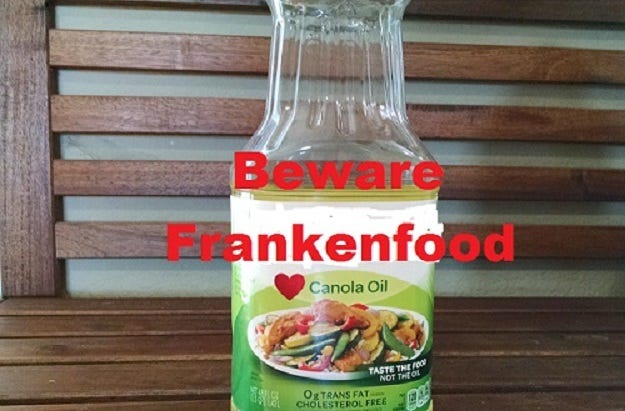
photo by author Stella Martann

Years ago, a friend got her Bachelor's degree in Food Science and went to work for a massive food manufacturing company.

She began her career in the vegetable oil production department. I will never forget when she told me all about her first days on the job. The most memorable was when she described the foul odors from the high heat vats. The vats where they purposely heat the oil to rancidity "to begin the stabilization process."

I had smelled enough rancid oils in my life and could not begin to imagine the stench of that vat area — I would gag.

What she learned in those first few months prompted her to quit her job.

She was disgusted by the smells around her and the knowledge that she was an integral part of the process of making these food "stuffs."

She then went into the organic foods industry and never looked back.

Humans have been making vegetable oil from seeds and nuts for millennia — coconut, olive, soy, and sunflower were some of the earliest oil forms.

In early times the oils were created by heating the plants or beating them into a paste.

Modern-day oil extraction processes combine high temperature, mechanical pressing, and solvents (usually hexane).

Many of the seeds used in common vegetable oils are also genetically modified (GMO) to resist toxic herbicides.

How can these plants possibly be nutritious and good for ?

If bugs don't want them and weeds cannot grow near them, why would we want to eat them or feed them and their by-products to our children?

These GMO seeds make it possible for commercial farmers (over $350K annually) to then drench their plants and their land with Bayer's Round-up Ready (formerly sold by Monsanto), to get a much higher yield from the field.

Decades of crop drenchings have now also created "superweeds" — weeds that are more resistant and require even more potent chemicals to kill them.

The more chemicals applied to the plants, the more processing is now required to produce these vegetable oils.

Here are the stages of vegetable oil production — from farm to table: cleaning, pressing, solvent extraction, refining, and packaging.

Scroll down to view a video of the complete factory process

The cleaning stage separates the seeds from any debris gathered during the cultivation process.

The seed is then run over by magnets to remove metal.

Seeds are then skinned and ground up by rollers or hammer mills to increase the surface area.

The crushed seeds become a thick sticky "oil cake," which is then heated to very high temps to facilitate the maximum amount of oil extraction.

The next step is subjecting the seed cake to solvents. The solvent treatment involves taking the pressed oil cake and adding the highly toxic solvent hexane to dissolve the oil.

Next, distillation separates the solvent from the oil, leaving the oil ready to be further refined.

The oil is heated to185ºF and combined with an alkaline substance.

Deodorization now takes place — sending steam through the oil to mitigate the foul, rancid smell created from the high-intensity heat.

De-gumming occurs — the processor adds water or acid to the oil. Any gums in the oil will separate, and centrifugal force will remove the dregs.

Bleaching is next — de-gummed oil goes through a system of filtration that removes pigments and bitterness from the oil.

Some vegetable oils are served chilled, and these oils need to be 'winterized,' cooling the oil to a low temperature.

Next, adding a small amount of citric acid will remove trace metals that may shorten the oil's shelf life.

Finally, this Frankenfood, commonly known as vegetable oil, is packaged in clear plastic and can conceivably sit on your shelf for years.

I could not find a "sell-by00 date" or "best used by date" on the bottle in the pic above — is it good forever?

Bottom line, if you use vegetable oil on a regular basis, salad dressings, frying, etc. — do yourself and your family a favor and do not buy this Frankenfood, especially if you have health issues.

Buy organic, cold-pressed extra virgin oils.

Buy oils that come in very dark glass bottles — the darker the bottle, the better the oil and follow the bottle's storage guidelines.

Learn to identify rancid vegetable oils.

If the vegetable oil you are considering is in plastic (clear or colored), it is an over-processed Frankenfood. If the oil is in clear glass, it is also a Frankenfood.

You are what you eat — please reconsider consuming these over-processed GMO foodstuffs. Your body will love you for it.

I hope you enjoyed reading this piece. If you would like unlimited access to all Medium content — please support the other writers and me and become a member — it's only $5 a month ($50 a year). Please click this link now to become a member of my Medium family.

I will receive a portion of your monthly or yearly fee if you use my link to join.

Gratefully Yours, Stella

I am a digital nomad; please follow my travels throughout the Pacific Coast of America from the Southern to the Northern borders — Here's the link to my YouTube channel.

Health
Nutrition
GMO
Disease
Cooking
Recommended from ReadMedium