avatarBrenda Mahler

Free AI web copilot to create summaries, insights and extended knowledge, download it at here

1167

Abstract

ntinue until one sentence states what your paper is about. Keep an open mind as you experiment and revise until the target is hit and an sufficient topic statement appears.</p><h2 id="b3c2">Examples of narrowing topics</h2><figure id="e439"><img src="https://cdn-images-1.readmedium.com/v2/resize:fit:800/1*cBfMM7l-KNFZpqPlZUrKUw.png"><figcaption>Graphic created by author, B Mahler</figcaption></figure><p id="8cb0">When the writing is deemed complete, return to the original statement of purpose and determine that each sentence communicates and supports the original statement. Revise when the text is confusing or the reader is confronted with contradictory information. In this way the final piece remains focused and powerful.</p><div id="dd94" class="link-block"> <a href="https://bmahler-55533.medium.com/membership"> <div> <div> <h2>Join Medium with my referral link - Brenda Mahler</h2> <div><h3>Read every story from Brenda Mahler (and thousands of other writers on Medium). Your membership fee directly supports…</h3></div> <div><p>bmahler-55533.medium.com</p></div>

Options

     </div>
          <div>
            <div style="background-image: url(https://miro.readmedium.com/v2/resize:fit:320/0*xF7sD9I0mIecKi9J)"></div>
          </div>
        </div>
      </a>
    </div><h2 id="b136">Follow Strategies for Writing, a space for writers. A series of posts in a question — answer format support writers with inspiration and responses to those question you’ve always wondered about.

Posts require only 2–4 minutes to read so writers have time to write. Visit often!</h2><div id="f251" class="link-block"> <a href="https://medium.com/strategies-for-writing"> <div> <div> <h2>Strategies for Writing</h2> <div><h3>Since retiring, my attention has turned from teaching writing to students to supporting adults who wish to improve…</h3></div> <div><p>medium.com</p></div> </div> <div> <div style="background-image: url(https://miro.readmedium.com/v2/resize:fit:320/1*Y5lUZ5fAsymlJVYgnBfr8A.jpeg)"></div> </div> </div> </a> </div></article></body>

How Can a Topic be Narrowed to a Manageable Size?

Be cautious not to overwhelm the audience

Photo by Nomadic Julien on Unsplash

Topics often start out broad and need to be pared down to manageable material. Before beginning the first draft, writers benefits if they view the topic as the bull’s-eye on a target.

At first the topic may be too broad if it requires a book of information and you are allowed a page. Then revisions may decrease or even change the message. The power of one word or phrase can drastically alter meaning. But with practice the topic will evolve to a sharp point that bring the idea into focus.

Practice focusing by increasingly narrowing the topic. It is not possible to know exactly how many times the topic will change as it morphs but continue until one sentence states what your paper is about. Keep an open mind as you experiment and revise until the target is hit and an sufficient topic statement appears.

Examples of narrowing topics
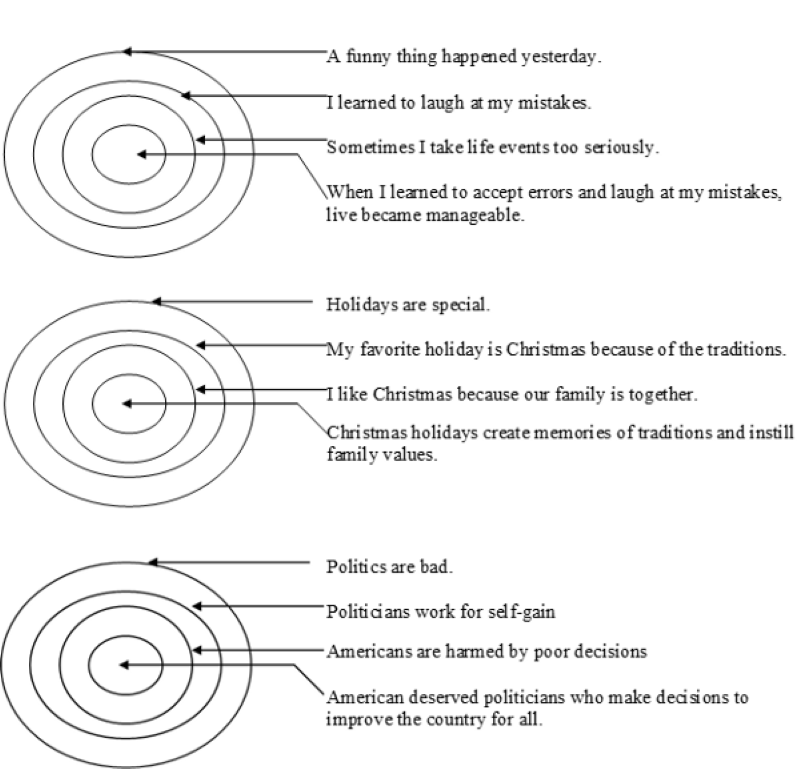
Graphic created by author, B Mahler

When the writing is deemed complete, return to the original statement of purpose and determine that each sentence communicates and supports the original statement. Revise when the text is confusing or the reader is confronted with contradictory information. In this way the final piece remains focused and powerful.

Follow Strategies for Writing, a space for writers. A series of posts in a question — answer format support writers with inspiration and responses to those question you’ve always wondered about. Posts require only 2–4 minutes to read so writers have time to write. Visit often!

Prewriting
Organization
Topics
Audience
Audience Targeting
Recommended from ReadMedium