
How Boomer Mark Tilbury Makes $50K+ per Week in Passive Income
From selling RC toys to 9M+ online followers

Mark Tilbury is a 54-year-old entrepreneur who quit school at 16 and found success in the retail business many decades back. His niche is very specific: remote-controlled scale models, or “big boy toys” as he likes to call them. What’s remarkable about Mark is his ability to adapt and diversify his income channels while staying on top of the latest trends. It’s not every day you find a 54-year-old millionaire CEO with over 9 million followers online, including 7 million on TikTok. Even more impressive: a little over a year ago, Mark’s online presence was almost non-existent.
Mark recently released a Youtube video where he explains how he makes over $50K per week through different income streams. What I like about his breakdown is that none of his income streams include things like investing, cryptocurrency, or big real estate projects which usually require a lot of capital to start with. Almost all of his income channels were created mostly through an investment in time, which is something most people have access to.
As he says himself: “If a boomer like me can do it, so can you.”
1. Selling your own product — $18,750
Mark Tilbury has been passionate about radio-controlled scale models since he was a kid. After quitting his first job paid $2 an hour (making wooden trash cans), he decided to make his dream come true and create his product, from design to manufacturing. He drew out all the designs, flew to China to meet with manufacturers, and set up the whole business pipeline. This required a huge upfront investment in time, but today Mark is reaping the rewards of his hard work through 3 sub-product income streams.
A. Business to business — $5,000
When Mark wants to create a new model, he calls his manufacturers in China and Vietnam, and they start production. With his whole system in place, he only has to order big containers around 12 times a year, and model shops then purchase his products from all over the world.
B. Retail stores — $7,500
Mark also owns stores to sell his products. Earlier in his business journey, he had a cash flow issue because his landlord kept increasing the rent for his store. He eventually got the courage to move out, buy his own premises in another location, and grow from there.
“Retail stores aren’t what they used to be but it doesn’t mean they’re not a good business model. My retail stores still do very well, and I see them as more of a base for online operations as well.”
Mark’s stores make a healthy profit every week, and he has a great motto: great service at internet pricing.
C. Online sales — $6,250
In 2020, online sales surged by 46% due to the covid outbreak. Stores that were already established enjoyed much higher gains than they had seen before, but it also meant that there was an opportunity for aspiring entrepreneurs, people who didn’t have a platform yet.
2 years after the first lockdown, the opportunity is still here. As Mark says, there’s never been a better time to start an online sales business or any online business. He mentions the example of his assistant who started an eBay business with $500 and ended up making over $350,000.
Mark’s online business is almost fully automated, with employees taking care of everything in the background. He sells on 2 platforms: his website and eBay shops.
2. Affiliate marketing —$ 15,000
“Affiliate marketing is an advertising model in which a company compensates third-party publishers to generate traffic or leads to the company’s products and services. The third-party publishers are affiliates, and the commission fee incentivizes them to find ways to promote the company.” — Source
If you don’t want the hassle of selling your products and already have an existing audience, you can promote other people’s products and earn a commission on every sale you generate.
Mark manages to pull in $15,000 per week in affiliate revenue. The most impressive part about it is that he turns down 99% of the deals that come his way because he wants to prioritize the value he gives his audience over the money. The 2 referral programs mentioned by Mark in his video are both from online trading platforms: Freetrade, and Public.
3. Youtube channel — $13,250
“Youtube is like digital real estate. It takes a lot of work to get the video structured and posted, but once they’re up, they can just keep getting views and bringing in income with no further work needed from you.”
The upfront investment in work and time required to start a Youtube channel is huge, and that’s what will stop a lot of people from just trying in the first place. Not only that, you need to clock in 4,000 hours of watch time and 1,000 subscribers before being eligible to make money on youtube (through the Adsense partner program).
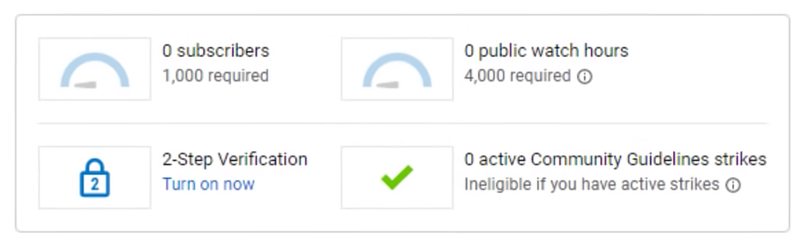
Mark points out that it takes on average 15.5 months and 164 videos to reach that point, but he’s a 54-year-old boomer and managed to get there in a lot less time. If he can do it, why not you?
It’s important to note that not all channels are created equal, and your RPM (Revenue Per Mille) will greatly vary depending on your channel niche/topic. RPM is a metric that represents how much money you’ve earned per 1,000 video views. The more you lean towards the top-performing niches, the higher your RPM will be. Here are a few examples of the most money-making niches:
- Entertainment
- Food
- Gaming
- Beauty and Fashion
- Music
- Sports
Mark’s RPM sits at $20.7 per 1,000 views, which means he earns on average $10,350 for a video with half a million views.
4. Brand deals — $10,000
In the past, the only way for advertisers to reach their intended market was to use traditional media like tv and radio. Nowadays, brands are coming to individuals who have managed to build an audience online, and they’re paying them big bucks to promote their products. Why? Because they get much more return on their investment than with a tv ad.
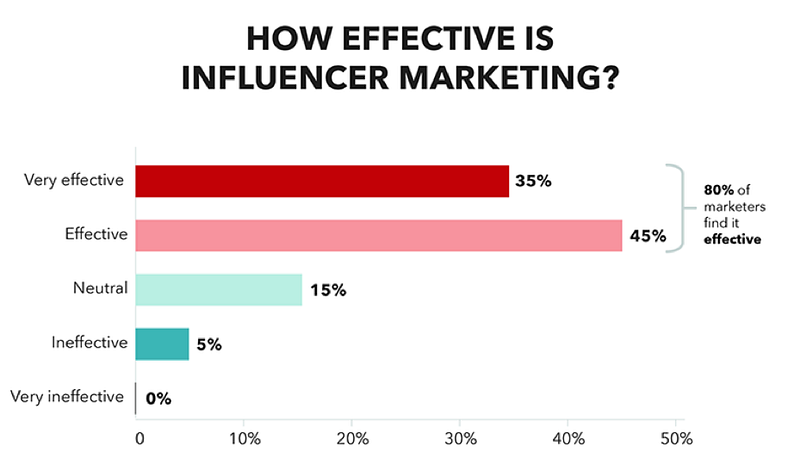
The best part about it is that you don’t need to have a huge online presence to attract brands. In fact, many micro-influencers (with 1,000 to 100,000 followers) have an engagement rate up to 60% higher than the bigger online stars. That’s because influencers with smaller audiences are more relatable and reachable than celebrities with millions of followers.
Mark makes money from brand deals through his Youtube and Tiktok accounts.
5. Real estate — $2,500
Of all the income streams mentioned in this article, this is the least accessible to the average Joe. Even though real estate has a very high leverage potential, you’ll still need $10, $20, or even $30K to get started, and not everyone has that kind of money sitting in their bank account.
“The amazing thing about real estate is that you can multiply your money by leveraging a small amount of cash to take control of cashflow in a property. Think about it, you’re controlling an asset and benefiting from it when you don’t even own it. […] There isn’t really any other way you can put $30,000 down and take control of an asset worth $300,000. By the time the tenants pay it off, chances are it will be worth close to double.”
I would be cautious about Mark’s last 2 sentences here. Leveraging can indeed be a very powerful tool to increase your net worth and/or your financial stability. This is how it works in its simplest form:
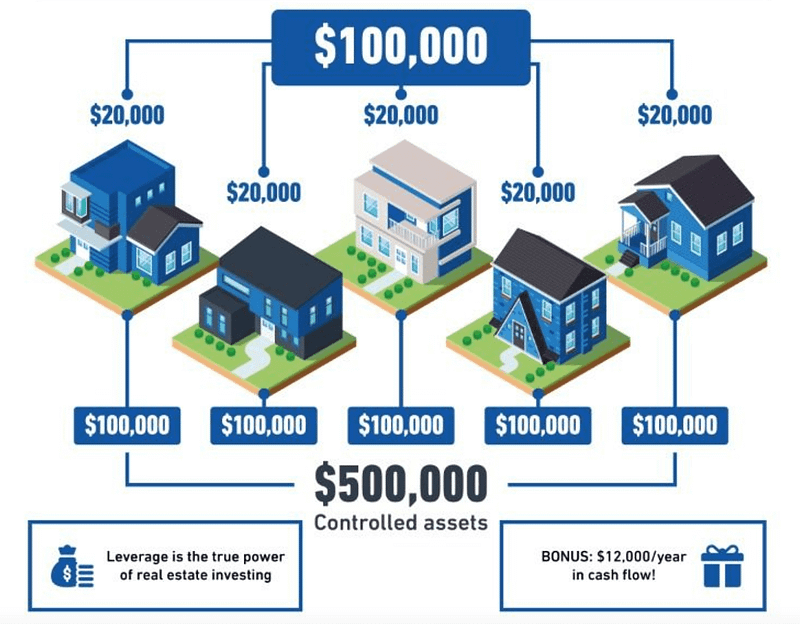
But leveraging can be very risky too, as it amplifies not only the profit but also the losses. What’s more, nobody knows where the market is going. Real estate has been on an insane upward trajectory for the past 10 years all over the world, and people simply expect the trend to continue. But the economy works in cycles, and it will slow down at best, and crash at worst. If the value of your real estate portfolio goes down and you own 5 properties, you’re hit 5 times harder than if you own only one house.
Mark manages his risk exposure by owning mostly commercial real estate. He rents out warehouses to his businesses, which is a very common way of making some extra cash for business owners. A few weeks ago, I wrote about Noah Kagan who does the same thing for his company sumo.com.
If Mark ever wants to sell his business, he will be able to keep the premises, move in a new tenant, and instantly get cash flow from those properties. Businesses also pay higher rents and sign longer leases, which creates more security for the owner.
At the end of his video, Mark points out that he’s been investing in index funds since a very young age, which enabled him to amass millions in his stock market portfolio. That being said, he makes a very valid point about this specific source of wealth: until you sell, it’s not an income, it’s only paper money, and therefore he doesn’t include it in his weekly calculations. I found this approach refreshing because many online entrepreneurs out there claim to make X thousand dollars every month from their investments, while their portfolio could lose value from one month to the next. Getting lucky on the stock market is not a reliable way to make an income.
At the end of the day, it’s about finding the sweet spot between what you love to do and something you can make money from. Passion is the driver of many achievements, but it’s not the only factor at play. As Mark points out:
“A lot of people start a shop through passion which causes them to take their eyes off the numbers. This is the fatal flaw I see in many businesses, which leads to them going bankrupt, or even worse becoming a slave to their own business.”
Make sure there’s a viable business solution for the passion project you choose to start, and remember: brace for the lows, breathe through the highs, and never forget to enjoy the journey.
Thanks a lot for reading! I interviewed 50 productivity/business experts and made a 150+ page guide out of the project. This is road-tested advice from real people who get things done. Get it for free here.


