
How Blockchain is Reshaping the Software Development Industry
By Sajjad Daya on ALTCOIN MAGAZINE
While experts debate whether or not it is necessary for software developers to improve their blockchain knowledge, most agree that blockchain is reshaping the industry. The question, then, is how.
First, it brings in new standards and protocols to learn and incorporate.
Blockchain technology today is in its infancy. Standards and protocols have yet to be formalised or agreed upon, and as such, there is a lot to dig through, experiment with and learn about. Nikhil Bhaskar, founder & CEO of Ulixir, lists some of the platforms and languages blockchain developers get to play with:
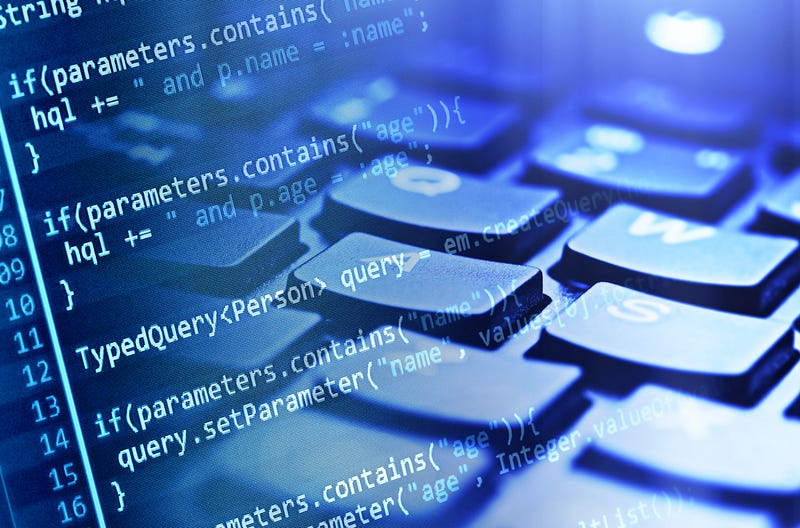
To write smart contracts that can run on Ethereum blockchains, for example, Solidity is commonly used. To bridge the gap between Javascript and Ethereum, a library like Web3 is used. To build a decentralized application with a user interface, a framework like Truffle is commonly used. Truffle combines Web3, Javascript, and Solidity into a seamless environment.
Blockchain is revolutionising file storage protocols, too. The InterPlanetary File System (IPFS) project has developed a way to download pieces of several files from several locations at once, instead of downloading one file at a time, the way HTTP does. In short, it’s providing an alternative to the World Wide Web, and it could revolutionise how our computers access and interact with the internet.
It supports databases that are secure and transparent.
In blockchain databases, what gets recorded stays in the record. And anyone who can see the record can follow it backward and forward, keeping tabs on every item logged. This is especially useful in areas that need to record and interpret huge amounts of data, fast, across global networks (which is to say, most industries today).
For example, manufacturing companies can see where each individual part is along the assembly line. Farming and food preparation companies can track where each piece of produce is. This can revolutionise product recalls in both industries, allowing companies to track where faults got into the system and where faulty products were delivered.
In other words, just about every global industry needs software developers familiar with blockchain to develop and maintain these databases.
It completely opens up the playing field.
Blockchain is affecting the languages and tools developers use, the way databases are used in business, and the way files can be accessed, but it also brings a fundamental shift in the idea of who can be a developer. Companies like Sparkster have developed no-code development platforms that allow anyone who can identify a problem and drag and drop blocks to build smart software. Employees across all departments of a business can now identify a problem or an inefficiency, and they can think of a solution to that based on their area of expertise and how they need to work. Then, the solutions can be run and improved in minutes, in the real world, so the apps they build can be improved on the fly. This, in turn, will result in truly innovative solutions, because as is well documented, diversity of thought drives innovation.
Blockchain isn’t the only new technology software developers need to understand, but it is clearly one that they can’t afford to ignore. For established developers, blockchain offers a new sandbox to play in and an opportunity to find critical roles in a range of different sectors. For everyone else, it gives them the chance to put into practice those ideas that others may have thought were unworkable or impractical. And in the end, that could be the most powerful way blockchain reshapes the software development industry.
Before moving on, make sure to press follow, leave a clap or 46, share today’s highlight and if you missed the last article, click here.
Follow us on Twitter, InvestFeed, Facebook, Instagram, LinkedIn, and join our Discord.
The purpose of ALTCOIN MAGAZINE is to educate the world on crypto and to bring it to the hands and the minds of the masses. This article was written and composed by Sajjad Daya on ALTCOIN MAGAZINE.


