
How Beautiful and Creative The Traditional Chinese Characters Are That I Didn’t Know Before
Some beauty takes time to know how to appreciate it
Recently in my country, Taiwan, we’ve been going through a bilingual education renovation discussion, this is just at the very beginning stage of it. Of course, It is undeniable that English is the common language of the world and a key factor in national competitiveness.
But if this policy is the ultimate goal then will our Traditional Chinese Characters be ignored in the future? How to keep up with the world but at the same time keep our language.
If I had never stayed in London for one year, today I wouldn’t have this kind of concern. The other day I shared that due to the inconvenience of the internet on the Tube in London, I started to read books in English, before that, I barely read any books in English.
After immersing in English for a while. One day, I had to read books in Traditional Chinese again, you know what! All of a sudden, I surprisingly felt and sensed the beauty of our language. I was shocked actually.
I immediately sent a message to one of my Taiwanese friends who’s been working in the U.S. about how I felt about our language and the beauty of the characters. And Yes, she can resonate with my feelings !! Oh, my. You know, it’s like there is something always around you, but when you get used to it, you might not see the great part of it, but when you leave for a while and come back again, you might understand how great it is.
Therefore, today I wanna share the beauty of our traditional Chinese characters with the English world.
For some people, you might know the traditional Chinese Character comes from the image of the meaning. Here, let me show you how interesting they are in the picture below.
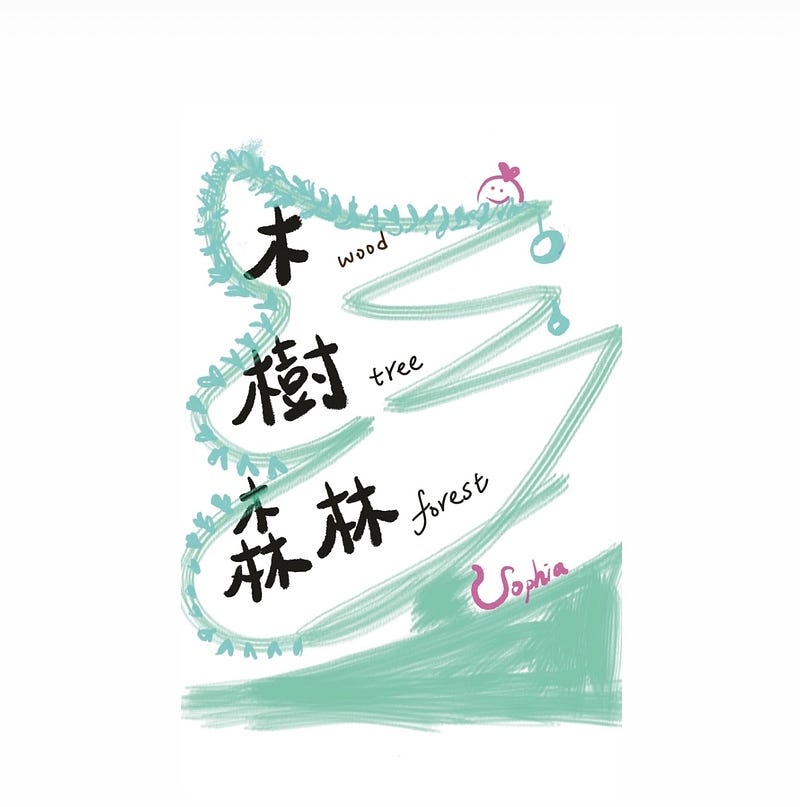
From the top:
- The first word “ 木 “ is a wood. Can you recognize the image of a tree? Yes! Isn’t it?
- The second word “樹” is a tree. The tree is created with wood. The “木“ shows on the left of this character.
- The third vocabulary “森 林” is forest. Well, Because there are plenty of woods, it becomes a forest~~~
How lovely they are!! I love it.
Talking about traditional Chinese characters, we can’t ignore the beauty of calligraphy
Can you guess what the word means below?
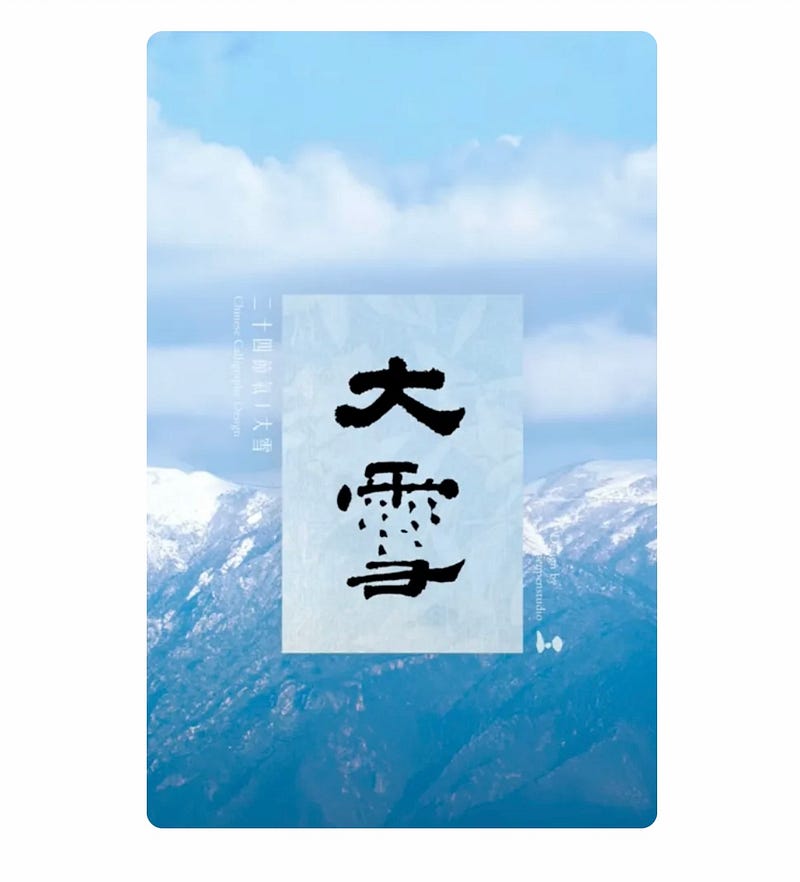
The word “大雪” means big snow, huge snow. In the picture, you can see the creator playing with the word by adding more dots to the word expressing the feeling of heavy snow. How cute it is.
However, some people sense it more like the “ ZEN” sensation from writing the Chinese character by calligraphy.
Some beauty takes time to appreciate it
I liked calligraphy when I was a kid just because I took it as drawing. However, the more I aged, I started to see the ZEN sensation it could bring us. In the Western world, people talk about meditation and mindfulness, I say calligraphy definitely can bring calmness to us as well. What do you think?
So, what’s the difference between simplified and traditional Chinese characters?
Well, it is just as it shows from the name. It’s simplified. In my eyes, it lost the beauty of the image, to be honest. ^ ____ ^
My Chinese name
Since I showed you a bit of the word in Chinese, I would like to share a little story about my childhood while I was learning to write my name.
That time I was practicing, and then I went to complain to my mom, saying “ Mom, why did you select this name for me, it’s so difficult to write it.”
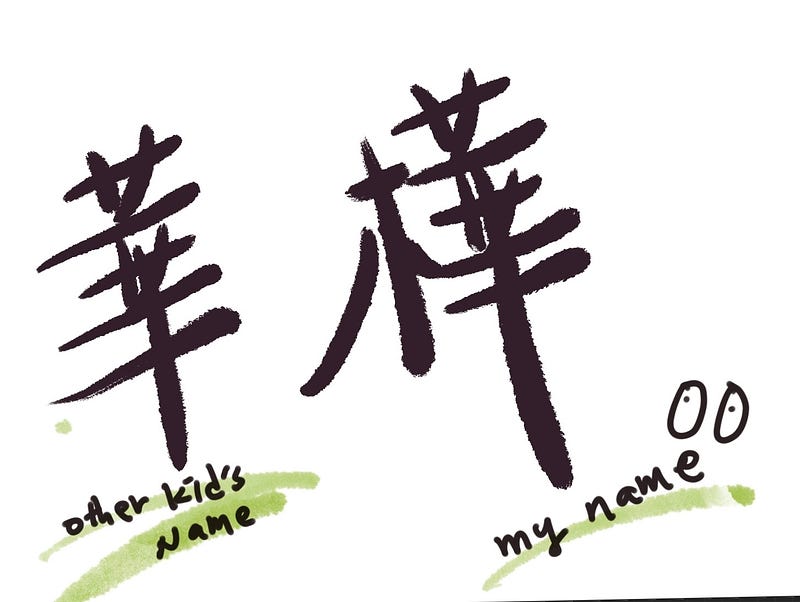
Check the picture below, the right one is one of the words of my name. I was complaining why not choose the left one which is a bit easier!!!!
If you’re the mother, how do you convince your kid to keep practicing?
Well, as a creative person like my mom, she told me: ”See, in your name, there’s a wood, a tree there, the word on the left has only one leg, but your word which has 2 legs so that you can stand more stable compared to the left one.”
Guys, what do you think of this answer?
Ha ha ha, she convinced me though. ^ _________^
Thank you for reading. I hope I get you to be able to see the beauty of our traditional Chinese words as well. ^ ^


