avatarthe metro 88x

Free AI web copilot to create summaries, insights and extended knowledge, download it at here

4365

Abstract

raphed musical numbers, including the all-out Barbie-incited Ken civil war at the end.</p><p id="38a6">This exuberance brought audiences to the theaters dressed up in their Friday Best—kids in their Barbiesque ballerina and girl scout cookie pink—not only kids but adults too, all channeling their inner Barbie.</p><figure id="fc2c"><img src="https://cdn-images-1.readmedium.com/v2/resize:fit:800/0*A9WYY_t50CDaD4wT"><figcaption>Photo by <a href="https://unsplash.com/@noahbuscher?utm_source=medium&amp;utm_medium=referral">Noah Buscher</a> on <a href="https://unsplash.com?utm_source=medium&amp;utm_medium=referral">Unsplash</a></figcaption></figure><h1 id="bcee">The Bad</h1><h2 id="f742">Mix messages</h2><p id="31c7">It’s no secret that <i>Barbie</i> has an underlying message.</p><p id="50e2">Margot Robbie has outrightly <a href="https://www.goodmorningamerica.com/culture/story/barbie-cast-film-reframes-iconic-doll-childhood-101369497">said</a>,<i> “That’s exactly why I wanted Greta to do this movie. I think in a lot of other hands, a Barbie movie would remain surface level. But I knew Greta was gonna have a lot to say, and I knew she was gonna Trojan Horse a lot of — big issues within a very fun world.”</i></p><p id="a274">Among other things, the movie takes swipes at toxic masculinity, gender inequity, the objectification of women, the unrealistic standards of beauty and perfection for women, the patriarchy, and even corporate capitalism—it’s a tall order.</p><p id="1527">Contrary to Whoopi Goldberg’s assurance on The View that <i>“It’s <b>just</b> a movie about a doll!”</i></p><p id="84ec">One of the drawbacks of having so many targets is that there are mixed messages that are often at odds with each other.</p><h2 id="0d94">A tale of two feminisms</h2><p id="e5b3"><i>The mode of feminism that was dominant in the 2010s, a kind of hyperambitious you-can-have-it-all feminism that can be summed up by the label ‘girl boss’... striving and succeeding in a male workplace,” </i>writes<i> <a href="https://www.nbcnews.com/pop-culture/barbie-movie-ushers-bimbo-feminism-hyperfemininity-mainstream-rcna94892"></a></i><a href="https://www.nbcnews.com/pop-culture/barbie-movie-ushers-bimbo-feminism-hyperfemininity-mainstream-rcna94892">NBC</a>.</p><p id="cbdf">Just a decade ago, this girl boss feminism would have been at odds with the sexualization of women, but the current culture is changing with Gen Z’s embrace of TikTok <a href="https://www.vice.com/en/article/4aw4kd/bimbofication-is-taking-over-what-does-that-mean-for-you">bimbofication</a>, promoting a new brand of feminism that celebrates bimbo’s sexualized moniker and characteristics.</p><p id="f76a">This brand, helmed heavily by social media influencers and aptly called BimboTok or hyper-feminism, focuses more on the sexual rather than the intellectual prowess of women, espousing looks over books.</p><p id="0b73">An <a href="https://www.nytimes.com/2022/06/15/opinion/bimbo-tiktok-feminism.html">opinion</a> piece in the <i>NYTimes</i> quotes <a href="https://nypost.com/2022/03/16/this-tiktok-star-is-reclaiming-the-term-bimbo/">Chrissy</a> <a href="https://nypost.com/2022/03/16/this-tiktok-star-is-reclaiming-the-term-bimbo/">Chlapecka</a> as an example of this brand of feminism: <i>“I don’t know what the economy is, I don’t know what supply and demand is. All I know is that our problems would be solved if we’d just print more money.”</i></p><p id="f9a4">Diablo Cody, the screenwriter for <i>“Juno,” </i>who<i> </i>was originally hired to write the Barbie script in 2014, <a href="https://twitter.com/IndieWire/status/1677709185465679873">said</a> she could not have done so at the time because <i>“the culture had not embraced the femme or the bimbo as valid feminist archetypes yet.”</i></p><p id="6c16">It’s interesting to consider that if <i>Barbie</i> had been made ten years ago, feminists would’ve rejected it, and the public discourse around it would’ve been completely different.</p><p id="88b4">Rolling Stone <a href="https://www.rollingstone.com/culture/culture-features/bimbo-reclaim-tiktok-gen-z-1092253/">describes</a> TikTok bimbo feminists as <i>“all-inclusive, gender-neutral leftist icons”</i> who are <i>“staunchly pro-sex work, pro-LGBTQ, pro-BLM, and anti-straight white male.”</i></p><p id="3cf7">Today’s bimbo feminism has paved the way for i

Options

t in its current form.</p><p id="7ebf">Though many people applaud the role reversal portrayed in the movie, even many feminists would not go as far as embracing BimboTok’s brand of feminism.</p><p id="710c">Here are some of the issues I found:</p><h2 id="3d35">1. Selective lenses</h2><p id="4776">Some people have noted that there isn’t a single positive male figure in the entire movie, which is true. There are mothers, but there are no fathers.</p><p id="7f94">These are selective lenses that <i>Barbie</i> tends to look through to make its points. In the movie, for example, Mattel’s board of directors is all men, and nobody can remember the name of the woman CEO they once had—how terrible indeed.</p><p id="56c6">But actually, half of Mattel’s board of directors are women. And Ruth Handler, the original co-founder of Mattel, was its president for the first 25 years.</p><p id="00f6">The movie wants to address patriarchal evils in the world, but its reductivist vision doesn’t allow it to ground itself <i>in</i> the real world. Its depiction of the world is as imaginary as the toy worlds of Barbieland.</p><p id="aea5">The problem with setting up toy problems is that you will only find toy solutions while real problems persist. This is also what we see in the movie: the problem gets resolved in Barbieland but there’s no change in its real world counterpart.</p><h2 id="dc0d">2. Trying to cover all bases</h2><p id="340c">Balancing these clashes and trying to appease different interests presents a problem with the mixed messages in the movie. And contradictions are allowed to exist, such as its criticism of corporate capitalism while at the same time serving as its product placement vehicle.</p><p id="b45d">Alison Willmore, film critic for Vulture, <a href="https://www.vulture.com/article/barbie-review-we-shouldnt-have-to-grade-this-on-a-curve.html">says</a>,<i> “There’s a streak of defensiveness to Barbie, as though it’s trying to anticipate and acknowledge any critiques lodged against it before they’re made, which renders it emotionally inert despite the efforts at wackiness.”</i></p><h2 id="76fa">3. It’s heavy-handed at times</h2><p id="07a3"><i>“As bubbly as the film appears, its script is like a grumpier-than-average women’s studies seminar,”</i> <a href="https://www.wsj.com/articles/barbie-review-margot-robbie-greta-gerwig-ryan-gosling-mattel-256b6688">writes</a> the WSJ.</p><p id="b2a4"><i>“Those who have no particular reason to think women are powerless in American society will be put off by the script’s many broadsides. ‘Women hate women and men hate women. It’s the one thing we can all agree on,’ we are told by an adolescent (Ariana Greenblatt) presented as attuned to the damage Barbie dolls supposedly do to girls’ psyches.”</i></p><figure id="b36f"><img src="https://cdn-images-1.readmedium.com/v2/resize:fit:800/0*FNeurohxFWz1Ra_u"><figcaption>Photo by <a href="https://unsplash.com/@sadswim?utm_source=medium&amp;utm_medium=referral">ian dooley</a> on <a href="https://unsplash.com?utm_source=medium&amp;utm_medium=referral">Unsplash</a></figcaption></figure><h1 id="0be9">The conclusion</h1><p id="5aab">There’s plenty of talent and artistry in <i>Barbie</i>, and it could be a welcome escape from the pandemic winter and a chance to venture to the theaters again.</p><p id="ce29">However, be forewarned: this movie is more than just eye candy.</p><p id="e211"><i>Barbie</i> does not just have <b><i>one</i></b> strong viewpoint; it has myriads of viewpoints—too many to address in an article.</p><p id="24c5">Should you bring your children to see <i>Barbie</i>?</p><p id="f8cb">Obviously, parents should use their judgment on this and other forms of entertainment we all take for granted. Consider that TikTok’s CEO does not even allow his children, ages 8 and 6, to use the app he oversees.</p><p id="d6e9">How much you enjoy the movie will probably depend on where you land on the spectrum of the feminist discourse. In any case, your outfit should <i>always</i> include a thinking cap—pink or whatever color you prefer.</p><p id="77c0" type="7">“I’m not perfect, but i’m perfect for you, Now i’m right on time” — Grace Jones</p><p id="3220"><a href="https://the_metro88x.ck.page/1c59eb889d"><i>If you’ve enjoyed this article, subscribe to<b> my newsletter</b> for more like it.</i></a></p></article></body>

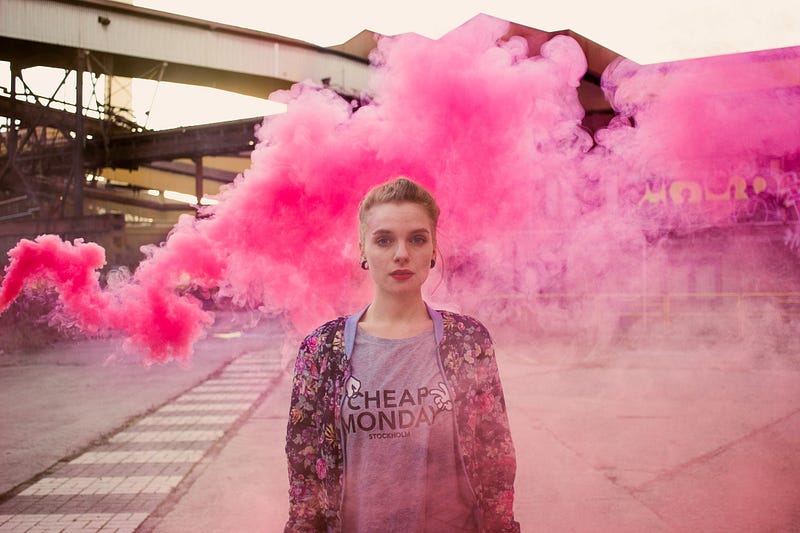
Photo by Quinten de Graaf on Unsplash

How Barbie launched a WMD (weapon of musical destruction) in its opening weekend

Forget Oppenheimer, Barbie is where the real explosives are

She might be pretty in pink, but this Barbie is dressed for war.

It’s no mistake that Barbie was released the same weekend as Oppenheimer—both are out for war. Who knew that math and fashion would cause so much destruction?

Oppenheimer may have given birth to the most destructive bombs to date, yet it’s Barbie that’s causing all the explosive discussions this weekend, sparking heated debates left and right—literally.

Faux mink coats cannot protect you; Barbie has drawn First Blood, and she is coming for you.

The Good

Helmed by the talented auteur Greta Gerwig, who’s known for her clever, low-key observational humor.

With Margot Robbie and Ryan Gosling playing the key roles of Barbie and Ken, along with a list of Hollywood’s who’s who and comic icons, Barbie has had a massively successful opening, grossing $774 million worldwide and $351.4 million domestically to date.

Barbie is the latest of the coveted intellectual property movies to hit the big screen. IP movies are desirable typically because they come preloaded with iconic history and backstory as a diving board for new ideas, and they often already have brand recognition, drawing audiences in.

That’s part of the appeal that brought people to the theaters on opening night. Not to mention, Barbie is the exact splash of kaleidoscopic fun people emerging from the pandemic ice age are looking for.

Beautiful set design

The result is a gorgeous movie with the most fun-filled set and costume design from the talented hands of production designer Sarah Greenwood, set decorator Katie Spencer and costume designer Jacqueline Durran.

The WSJ writes, “Delightful to look at, with its Skittles color scheme and its visual jokes about living in a land of dolls... “Barbie” begins in idyllic, silly Barbieland, where many iterations of the doll live happily in their dream houses. Life consists of dancing, lounging and changing outfits.”

There’s also a hilarious recounting of failed and discontinued Barbie dolls:

  • Ken’s “buddy” Allan (Ken and Allan were thought at one point to be a little ‘too close’ and so Allan got discontinued)
  • Pregnant Midge (a pregnant doll, in hindsight, would probably not be something parents want to give to their kids)
  • Sugar Daddy Ken (pretty self-explanatory why this got discontinued, but how did this idea pass the board of directors?)
  • Earring Magic Ken (some thought this Ken was gay, and so yes, he got discontinued)
  • Growing Up Skipper (Barbie's little sister, who grew up way too quickly)
  • Tanner The Dog (he eats and poops and also presents a choking hazard; discontinued!)

Songs from the movies have hit the Billboard charts and will probably become classics.

  • Dua Lipa’s “Dance the Night”
  • Nikki Minaj, Ice Spice, and Aqua’s “Barbie World”
  • Ryan Gosling’s “I’m Just Ken” (his first ever on the charts)

Lastly, we’re treated to numerous gorgeously choreographed musical numbers, including the all-out Barbie-incited Ken civil war at the end.

This exuberance brought audiences to the theaters dressed up in their Friday Best—kids in their Barbiesque ballerina and girl scout cookie pink—not only kids but adults too, all channeling their inner Barbie.

Photo by Noah Buscher on Unsplash

The Bad

Mix messages

It’s no secret that Barbie has an underlying message.

Margot Robbie has outrightly said, “That’s exactly why I wanted Greta to do this movie. I think in a lot of other hands, a Barbie movie would remain surface level. But I knew Greta was gonna have a lot to say, and I knew she was gonna Trojan Horse a lot of — big issues within a very fun world.”

Among other things, the movie takes swipes at toxic masculinity, gender inequity, the objectification of women, the unrealistic standards of beauty and perfection for women, the patriarchy, and even corporate capitalism—it’s a tall order.

Contrary to Whoopi Goldberg’s assurance on The View that “It’s just a movie about a doll!”

One of the drawbacks of having so many targets is that there are mixed messages that are often at odds with each other.

A tale of two feminisms

The mode of feminism that was dominant in the 2010s, a kind of hyperambitious you-can-have-it-all feminism that can be summed up by the label ‘girl boss’... striving and succeeding in a male workplace,” writes NBC.

Just a decade ago, this girl boss feminism would have been at odds with the sexualization of women, but the current culture is changing with Gen Z’s embrace of TikTok bimbofication, promoting a new brand of feminism that celebrates bimbo’s sexualized moniker and characteristics.

This brand, helmed heavily by social media influencers and aptly called BimboTok or hyper-feminism, focuses more on the sexual rather than the intellectual prowess of women, espousing looks over books.

An opinion piece in the NYTimes quotes Chrissy Chlapecka as an example of this brand of feminism: “I don’t know what the economy is, I don’t know what supply and demand is. All I know is that our problems would be solved if we’d just print more money.”

Diablo Cody, the screenwriter for “Juno,” who was originally hired to write the Barbie script in 2014, said she could not have done so at the time because “the culture had not embraced the femme or the bimbo as valid feminist archetypes yet.”

It’s interesting to consider that if Barbie had been made ten years ago, feminists would’ve rejected it, and the public discourse around it would’ve been completely different.

Rolling Stone describes TikTok bimbo feminists as “all-inclusive, gender-neutral leftist icons” who are “staunchly pro-sex work, pro-LGBTQ, pro-BLM, and anti-straight white male.”

Today’s bimbo feminism has paved the way for it in its current form.

Though many people applaud the role reversal portrayed in the movie, even many feminists would not go as far as embracing BimboTok’s brand of feminism.

Here are some of the issues I found:

1. Selective lenses

Some people have noted that there isn’t a single positive male figure in the entire movie, which is true. There are mothers, but there are no fathers.

These are selective lenses that Barbie tends to look through to make its points. In the movie, for example, Mattel’s board of directors is all men, and nobody can remember the name of the woman CEO they once had—how terrible indeed.

But actually, half of Mattel’s board of directors are women. And Ruth Handler, the original co-founder of Mattel, was its president for the first 25 years.

The movie wants to address patriarchal evils in the world, but its reductivist vision doesn’t allow it to ground itself in the real world. Its depiction of the world is as imaginary as the toy worlds of Barbieland.

The problem with setting up toy problems is that you will only find toy solutions while real problems persist. This is also what we see in the movie: the problem gets resolved in Barbieland but there’s no change in its real world counterpart.

2. Trying to cover all bases

Balancing these clashes and trying to appease different interests presents a problem with the mixed messages in the movie. And contradictions are allowed to exist, such as its criticism of corporate capitalism while at the same time serving as its product placement vehicle.

Alison Willmore, film critic for Vulture, says, “There’s a streak of defensiveness to Barbie, as though it’s trying to anticipate and acknowledge any critiques lodged against it before they’re made, which renders it emotionally inert despite the efforts at wackiness.”

3. It’s heavy-handed at times

“As bubbly as the film appears, its script is like a grumpier-than-average women’s studies seminar,” writes the WSJ.

“Those who have no particular reason to think women are powerless in American society will be put off by the script’s many broadsides. ‘Women hate women and men hate women. It’s the one thing we can all agree on,’ we are told by an adolescent (Ariana Greenblatt) presented as attuned to the damage Barbie dolls supposedly do to girls’ psyches.”
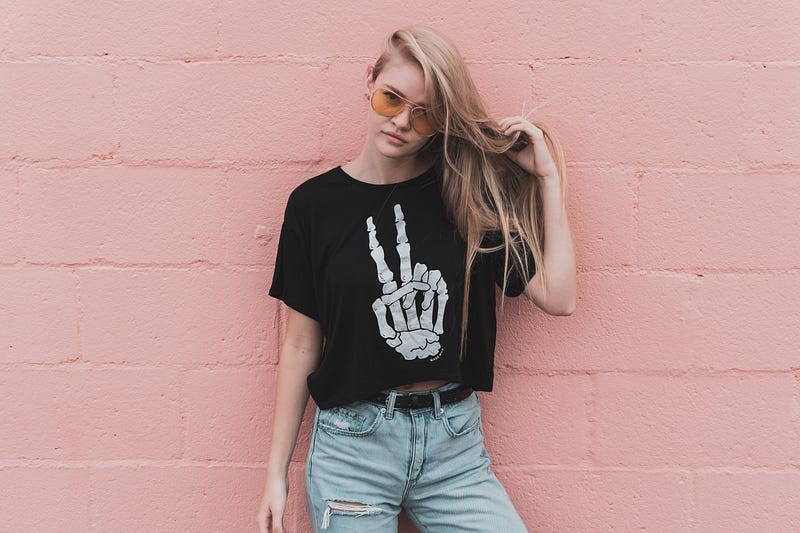
Photo by ian dooley on Unsplash

The conclusion

There’s plenty of talent and artistry in Barbie, and it could be a welcome escape from the pandemic winter and a chance to venture to the theaters again.

However, be forewarned: this movie is more than just eye candy.

Barbie does not just have one strong viewpoint; it has myriads of viewpoints—too many to address in an article.

Should you bring your children to see Barbie?

Obviously, parents should use their judgment on this and other forms of entertainment we all take for granted. Consider that TikTok’s CEO does not even allow his children, ages 8 and 6, to use the app he oversees.

How much you enjoy the movie will probably depend on where you land on the spectrum of the feminist discourse. In any case, your outfit should always include a thinking cap—pink or whatever color you prefer.

“I’m not perfect, but i’m perfect for you, Now i’m right on time” — Grace Jones

If you’ve enjoyed this article, subscribe to my newsletter for more like it.

Barbie
Movie Review
Gender Equality
Film
Fashion
Recommended from ReadMedium