
PSYCHOLOGY & POLITICS
How Bad Politicians Still Get Our Vote
The psychology of bad decisions at the voting booth
_(cropped).jpg)
Why Do We Vote for Terrible Leaders?
Humans have evolved needing charismatic leaders. People who will rally the troops and keep things going when things get bad. Keep the morale up and make quick decisions to instill confidence and keep the tribe alive.
In 2020, we don’t really need that.
The job of a politician is largely an office job, with some time debating and speaking to the public with a few engagements.
They don’t ride into battle anymore.
But our brains haven’t evolved as fast as society, and push us to vote for what we no longer need.
The people who get all the votes are people who’ve made themselves visible — and the people who spend all their time making themselves visible are not necessarily spending their time carefully considering how the world works and how it could be better.
We get people working for promotions, not positive change.
We don’t get to see the inner workings of the minds of the people we vote for. We get shown an image that doesn’t really matter, or shouldn’t.
But as we’ll see now, the small irrelevant things matter far more than we realise. We’re still being led by deep psychological biases and don’t even realise it.
First, some ridiculous things we vote for
Studies in psychology and statistics have revealed the following trends. None of these things should have any influence on our votes – but they do.
Tall candidates
Maybe not deliberately, but we tend to vote for the taller candidates. This isn’t the ideal criteria for voting in a president or prime minister.
Candidates with hair
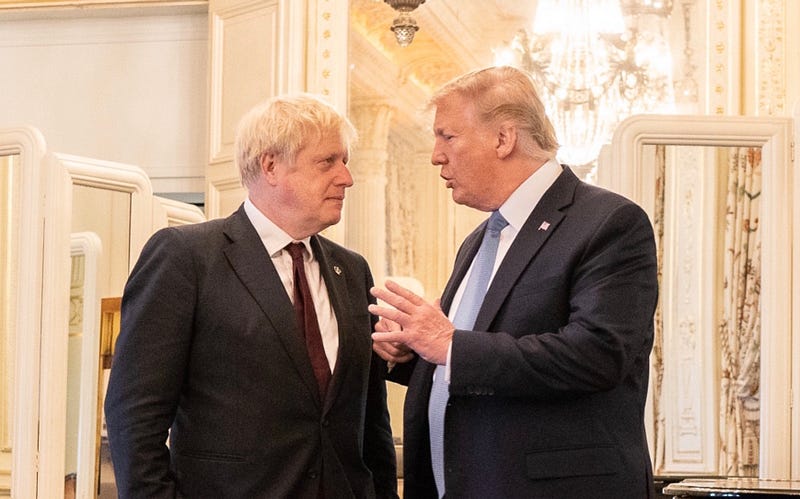
Both Donald Trump and Boris Johnson have full heads of hair, even if some suggest some of it isn’t real. And it turns out, we vote for the guys with more hair.
As one news article puts it, “Americans haven’t voted a bald president into office since the advent of TV.”
Candidates with a low-pitch voice
If a candidate has a lower-pitched voice, they’re more likely to get our vote.
British Prime Minister Margaret worked this out early and had voice lessons from a National Theatre tutor to lower the pitch of her voice.
Candidates with competent-looking faces
We vote for the people with the faces we think look most competent, as if face shape has to do with anything. In one study, children as young as five could predict a winner just by looking at the faces of the candidates.
This effect was found to be three times higher than the effect of a low pitched voice.
Studies also show we vote for the more attractive candidate, more often than not.
The weather on voting day
Think the rest sounds ridiculous? Studies show that when voting day is hot, people are more likely to stick with the party in power.
The order of candidates on the ballot paper
Those listed closer to the top of the ballot paper will get more votes.
Mere Exposure
This doesn’t even take into consideration race and gender, two huge and very important cans of worms that would require detailed articles of their own.
But there’s one more psychological effect that I think has been more in the driving seat recently, especially with Trump and Johnson, and that’s what psychologists call the mere exposure effect.
This effect makes us lean towards the things we’re more familiar with. Applied to politics, it would mean swaying the vote in favour of the person the population is more familiar with. And what do both Trump and Johnson have in common?
A regular job on mainstream TV shows.
What a way to get the nation familiar with you.
Trump was a main face on The Apprentice and The Celebrity Apprentice from 2004–2015 as well as a whole host of other film and TV cameos.
Johnson was a guest and presenter on British TV comedy quiz show Have I Got News For You from 1998–2006 as well as various cameos on shows like Eastenders and Top Gear, but was also well known as a regular columnist in the Telegraph and editor of The Spectator.
How did they get on our televisions? By having traits that get people on our televisions – entertaining, appealing faces and voices, and by being controversial. It worked – their shows were popular and they became popular and familiar characters in our daily lives.
And then they went up for election.
By this point, we were familiar with them, very much so after their years of TV and writing work, which gave them a huge advantage on Election Day due to the mere exposure effect.
Of course, you could argue that people were familiar with Hillary Clinton too, and of course that would be true, but she wasn’t beamed onto TV screens week after week and year after year, gaining more familiarity with every airing.
Confirmation Bias
Having seen who our candidates are and with the mere exposure effect pushing us the way of our familiar candidates, confirmation bias then steps into play.
Confirmation bias is where we, after formulating a belief, seek out only information that supports that belief and disregard anything that goes against it. It’s a well known, well-researched bias that we know to have a huge effect on us.
So having decided we quite like that entertaining guy off the telly, we see bits of information about how they’d do a good job as a leader, and it sticks. All that stuff about racism, sexism and terrible business decisions? That can all slip off like Teflon because of the confirmation bias.
These biases lead to a huge sway in the vote to the entertaining guy from the telly, not the less charismatic but more thoughtful people who don’t get as far in politics.
Cognitive Dissonance
Once we’ve already voted for someone, cognitive dissonance will come along to keep us on their side. Cognitive dissonance protects us from thinking we’re responsible for things that go wrong. It’s using our behaviour as a starting point then working subconsciously to justify it. Essentially, the underlying (bad) logic is that as we voted for them, they can’t be bad, because that would make us responsible. It’s much nicer psychologically to hold on to the belief that they’re doing a good job – and vote for them again.
Party Identity
So often people vote for parties rather than people. The party they always vote for may be a big part of their identity, and in order to preserve that identity, will vote for that party – even if the person currently at the top of that party is blatantly incompetent.
This also brings cognitive dissonance back into play. The underlying process becomes ‘I am a member of party X, this politician is the party X candidate, therefore that candidate must be worthy of my vote.’ It’s not good logic, but it is our psychology.
Power, Corruption, and the Ill-informed
We may vote for people susceptible to corruption and Founder’s Syndrome, though we can’t really be blamed for that. Once people are in power, they can go from good to bad. And then the above returns to play to re-elect them. Two ways this can happen are these:
Corruption
A report looking at three studies looked at the effect of power on corruption and found that corruption is likely to increase with power.
So if we vote in good people but who are prone to corruption, then the power we give them may lead to them becoming corrupt, and now being bad at their jobs, even though they were good before they had the power.
The ill-informed leader
The more power someone has, the more ill-informed they will become. The more powerful someone is, the less others will want to give them bad news and tell them what they want to hear. After all, the shoot-the-messenger phenomenon is very real and if we’re not liked by our boss in politics, our jobs may be at risk. This leads to world leaders being ill-informed when they should be some of the best-informed people on the planet. It’s a result of Founder’s Syndrome – which more often applies to founders of companies but is equally applicable in any organisation with one person well and truly at the top such as government.
If you combine this with someone with the personality of someone like Donald Trump who, by many accounts, needs to hear only what he wants to hear, you end up with a very ill-informed person. Perhaps this is why Trump says so many untruths in interviews. He’s accused of lying a lot – but perhaps he’s saying only what he’s been told by those beneath him who don’t want to give Trump himself the truth.
As politicians rise through the ranks, they gain power — and as a result, become prone to corruption and bad knowledge. Again, our psychology works against us.
Our psychology results in bad politicians being put into power and bad leaders as a result. This leads to times of stress – and in times of stress, our cognitive biases become even worse and risks keeping them there.
People used to think that by trying to take an opposing viewpoint to their own they may be able to overcome some of their biases. But at election times this isn’t the solution. Firstly, it feels uncomfortable and how many people would actually bother to do that? And secondly, research now shows that this doesn’t work anyway and may just entrench us in our views further.
The only way around this is education and self-awareness. If we know what we’re prone to, we keep an eye out for it in ourselves. Beyond that, our own psychology is a thorn in a far from perfect system, which happens to be the best system we have.
There’s a lot to stay alert about, especially around election times, but education about our brains is as important as education about the politics and the people we’re voting for.
We have to stay vigilant with ourselves if we want the best for ourselves and each other.
Alexander M. Combstrong is an actor, screenwriter and film producer writing under a pen name mostly in mental health, personal growth and psychology.
