
How Artificial Intelligence Learns Regardless of Day or Night
An explanation of domain adaptation
Have you ever wondered how you can identify something at night when you have only ever seen it in bright daylight? How do we see and identify things when there is a lot of fog or steam present? Of course, some of it is contextual, but our brain also knows how to adapt to the changing conditions. The challenge comes when we need our camera to be as smart.
This is where the gods of Artificial Intelligence gave us Domain Adaptation. It does what it says: it helps understand the data of one domain (day) in another domain (night).
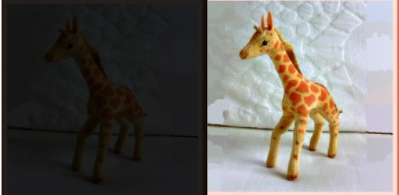
Let’s treat our computer as a child who sees through the camera. But this child has only seen the world in bright daylight. So now it identifies all its toys in the day. But one fine night it wishes to annoy its parents and play instead of sleep. For the first time in his life, he is seeing his toys in the dark. How will this child then find his favorite giraffe? This is where I will teach the child to adapt to his domain…
First I taught the child to identify features invariant to background in everything that it sees. So now it knows that the giraffe has a long neck and dark brown patches all over its body. So under the moonlight, the child could actually find its giraffe.
But now it fancies some candy at night(I know…naughty kid). It finds the box of candies and wants to find the star-shaped candy. He then remembers what I had taught him: color would be of no use when trying to pick a star-shaped candy. So he starts counting the corners and edges of the candy to understand its shape. The child then lived happily ever after with his favorite candy!
Abandoning the analogy, what I mean to say is, I have a piece of code that can detect objects accurately in the day. But I also want this code to work for images of the night. Now I have many images of these objects in the night but they are not labeled. This is where domain adaptation comes in and helps use the knowledge of the day to apply on the night database. This helps us train the code without having to go through the tedious process of labeling each image again.
To get complete use out of what the gods gave us, this algorithm can potentially be used to label all sorts of data present in this world if it gets similar labeled data in a different domain. This is great for image classification, and although it gets tricky for object detection, here we have explained the same in detail.
Another interesting use case for this is in the medical realm, to segment images and find tumors in them. This particular sub-field is known as cross-modality unsupervised domain adaptation. It helps when we have a labeled database of tumors in the lungs, but we desire to use these results to segment images of the heart and check for tumors. This is especially useful because labeling medical images is a very tedious time-consuming and expensive task that can only be done by professionals.
Domain adaptation can also be used in many fields, even if there is no camera involved. Stay tuned to our channel to know more about it!
Become a Medium member to unlock and read many other stories on medium. Follow us on Medium for reading more such blog posts.