
How Art Makes Us Better
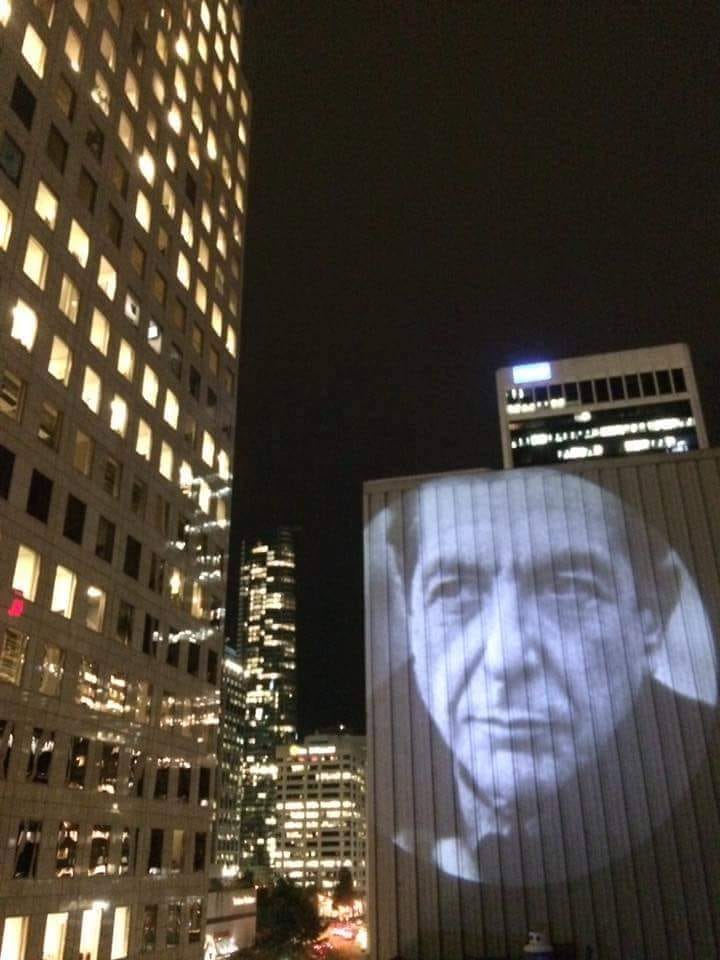
On the day Leonard Cohen died, I was on a train to Naples. It was late. I watched the rain fall in soft sheets from the roof over the dripping platform, the logo of the cement works on the concrete sleepers filling up with rain between the glistening rails. The train was ancient, and half a kilometer long. Hoisting my soggy bag onto the overhead rack, I slumped in my seat, put on some headphones, and watched the parade of distant towns I’ll never visit rise out of the mist and sink back, one by one, into a fold of the mountains.
My legs ached. We had spent the day before wandering the silent ruins of Minturno, where the old temples are abandoned, the stone road smoothed by the centuries but still bearing the wheel ruts of the chariots that used to race from here to Rome. With every year that passes, we feel our bodies more and our souls less. The rivers slow and deposit their silt in our veins, and what used to be a raging torrent becomes a muddy estuary.
It makes you feel. That’s what art does. It doesn’t need to be more complicated than that. It dredges the river. When I was a gloomy teenager, sadness seemed like a virtue, and misery was a mask I wore between myself and the world that called me by name. The sky was the colour of my eyes. The streets formed a map of my bright red veins. But I grew into the shape of a man, armed and armoured, a man the world didn’t recognize. I left. And the space I left behind will stay empty forever.
This is how you enter the Wasteland, one grey day after another. It’s haunted me since the moment the bright constellation of childhood began to fall from my eyes. When the world doesn’t talk to you, and you don’t talk to it. But I was lucky. The sad songs led me past sadness. Each knight enters the forest alone, by a path laid out just for them. It was there before they were born.
The Wasteland flourished again when its king was healed, restored by the weapon that wounded him. Beauty has haunted me, ever since I was old and ugly enough to recognize it. That shattering moment, that blissful annihilation I swayed beneath, a sapling under the storm, as I gazed at Michelangelo’s Pieta, or read Lolita, or listened to Suzanne. I’ve never once in my life been alone, unless I’ve forgotten these things. The secret chart to get to the heart of the matter. The path through the forest.
“Even though it all went wrong,
I’ll stand before the Lord of Song
With nothing on my tongue but Hallelujah.”
The train danced on shimmering rails into the brightening morning, and I remembered something I once heard about eternity: that it has nothing to do with time. Any god worth the name must stand outside of time. If you or I or anyone is ever to meet it, we already have. The Eternal exists now. Or never.
There is a direct line between then and now. Some silver thread that spans distance as easily as time, that runs from the angry boy staring at the snow through the grimy windows of a shed to the entrepreneur taking a minute to listen to Suzanne on his smartphone under the bright sun of Hydra’s harbour to me, now, hunching over a makeshift desk while the windows bleed condensation and the Tyrrhenian sea crashes outside.
We care about art in the same way we care about the poor: because we feel we should. Four-hour lines at the Uffizi Gallery, and how many of these people went to their hometown’s art gallery this year? This is not an argument for snobbery. It’s the opposite. Art is everyone’s business. It belongs to us all.
Either it grabs you, or it doesn’t.
This is what I tell myself. And me and A, we pretend that this is just the way I am, some hobby of mine, the way Sunday football is sacred to millions of men. But that’s not what this is, not exactly. This is darker than that. This is incense and blood. This is chanting from the darkness, the bellowing bull and the flashing blade, a throwback to a savagery 10,000 years of civilization have tried to protect her from. In lightless caves before history, men painted a world on the dripping walls. No one risks life and limb for a hobby. This is more akin to religion, crying Allahu Akbar as my jacket explodes. But where religion divides, art unites. Michelangelo’s Pieta might belong to the Catholic Church, but they don’t own it. The Louvre only holds the Mona Lisa; they can’t contain it. Now more than ever, art is ethereal, non-corporeal, fragmented into megabytes and blasted into the digital ether.
I’ve been haunted by beauty, pursued by it the way God bothered all those marble-skinned saints. But if it ever stopped, I’d turn right around and start chasing it. Bach, when he wrote the Cello Suites, was considered a skilled tradesman, qualitatively no different from the guy who laid the floors in the salons he played. Now things have come full circle. There is no art, there is only entertainment. Songs are meant to be heard, not listened to. We don’t have films, we only have movies. Every book is a series, every series a movie, every movie a cinematic universe devoted to selling merchandise.
It’s sad when an artist passes, because there is no one to replace them. I’ve never been the type to bewail the present and paint the past in pastel colours. Previous generations had more than their share of forgettable dreck too. But I can’t imagine what will last from these flimsy decades. Innovation has been abandoned for prolificity. Profundity runs shrieking from marketability. No one wants to listen, they just want to dance. Or worse. They want a beat to chop vegetables to.
I used to think that all this mattered, and then I decided it didn’t. People can live however they want, and it’s not for me or anyone else to decide what others should like. But like all healthy impulses, this one can go too far. Until you find yourself denying the truth, pretending that there is no such thing as quality and that the squawk of an autotuned Disney idol is the same as the skilled expression of a master. It’s not. Quality exists, and it matters. Because art, real art, is not an adornment to life, much less an entertaining distraction. It is life. In and of itself. A great painting, a great song or a great novel does not reflect the world. It is the world, a world all of its own. And those songs will follow you forever, woven into your dreams, harder to forget the faces of the dead you once loved.
The gloomy little 15-year-old who found solace for the disappointments of his working-class life in the songs of a Jewish Canadian poet is still here, somewhere. And the songs are still here too, raising the hairs on the back of my neck now just like they did then, though every cell of my body has changed. A wave crosses the entire world, even if the water doesn’t. And a sliver of the same eternity hangs on the point of my pen.
When an artist dies, it matters. Because like Damascus steel, like Greek fire, we’ve forgotten how to make them.