
The Art of Persuasion
How Aristotle’s “Rhetoric” Can Help You Become a Better Writer, Speaker, and Beyond
Follow this ancient advice and master the art of persuasion — in writing, life, and beyond.
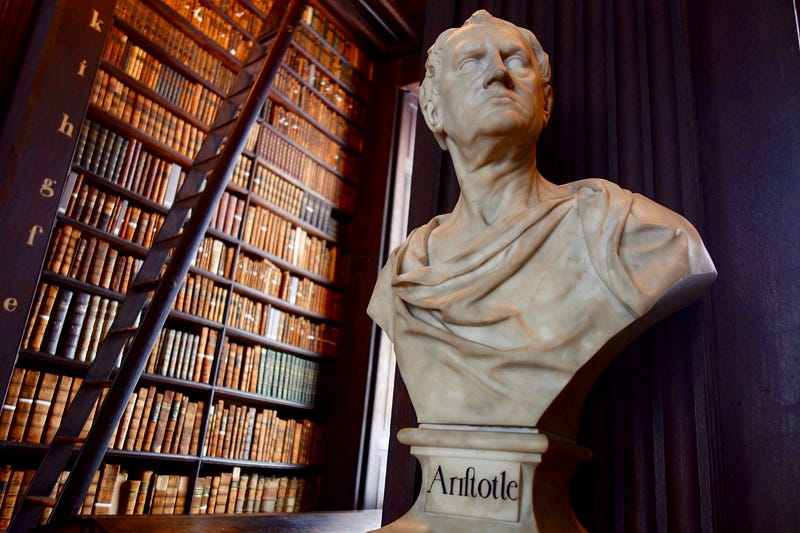
It’s amazing how some things in life can remain universal. Aristotle’s ancient wisdom of rhetoric is one of them.
The word “rhetoric” comes from Greek which means “speaker.” If you go over the dictionary, you’ll find the definition of rhetoric as “language that is used to inform, persuade, or motivate audiences.”
Basically, rhetoric is the art of persuasion. But it’s much more than just being persuasive. In writing, especially, it’s about conveying imaginative thinking delivered in a rational framework. It’s about combining creativity with logic.
We often think of creativity and logic at the other end of the spectrum, but this isn’t true. The two, along with other things, can definitely go hand in hand.
As we know, Aristotle was the founder of rhetoric. For millennia, this concept has been used to provide cognitive features of language and style in three dominant forms: logos, ethos, and pathos.
In my 8 years of writing journey, I also have been using it to deliver more comprehensible and persuasive writing — whether to help the readers learn something new, get inspired to do something, or become a slightly less terrible human being for the next 5 minutes (or more, hopefully).
Using rhetoric can help us get whatever we want in life through effective communication. This quote by Aldous Huxley represents the power of rhetoric at its best:
“Words can be like X-rays if you use them properly — they’ll go through anything. You read and you’re pierced.”
How to Maximize the Use of Aristotle’s Rhetoric in Your Writing and Beyond
As humans, we express thoughts by communicating.
Unlike lizards, we don’t chirp and squeak, rather, we communicate by using “symbols” — sounds, gestures, objects, or written words that have specific meanings.
Here are three major principles of Aristotle’s rhetoric you need to keep in mind to become a better writer, speaker, and beyond:
1: Logos — It’s about what you say
Logos means logic or reason. Aristotle cared a great deal about having sound arguments. Logos is about what you say.
How to maximize the use of “Logos” in your writing and beyond:
Don’t just describe — educate.
Don’t merely “describe something”, rather, aim to educate. Imagine you’re telling a child or someone much younger than you.
This can be a bit tricky. So here’s an example.
Let’s say you want to write about tips on how to be more healthy by eating vegetables.
You can tell your arguments by giving a long-winded explanation about what are carbohydrates, proteins, and types of vegetables in twelve perfectly structured paragraphs.
Then, just wait for your audience to tip into a total state of unconsciousness within minutes.
Great, you’ve successfully put them to sleep.
To not do that, try to say something more like,
“Broccoli is the most potent anti-cancer compound on Earth. It is extraordinary terrific that even Johns Hopkins University tried to sue over and patent that poor vegetable... so you better eat it while you still can. Here are 18 cool benefits of eating — not suing — broccoli.”
Which one do you think is better and catches more interest?
Aristotle’s key message here is that you need to keep your point brief, reasonable, and within your audience’s grasp.
Adapt your argument to the level of understanding of your audience. Create frameworks (outlining), use logical connections in your writing, and give reliable facts or statistics to back them up.
2: Ethos — It’s about who you are
Ethos means ethics. It’s the appeal applied to your character and credibility. Aristotle believed that good rhetoric not only provides information but also moves people to act on it.
If Logos is about the “what”; Ethos is about the “why.”
Why would your audience want to read or listen to you? Why should they trust what you say or write? And why you, of all people?
No matter how good your arguments are; if you can’t convince your audience that you’re the person they should listen to — it will give little or no impact on them.
How to maximize the use of “Ethos” in your writing and beyond:
Don’t just persuade — inspire.
Being persuasive is good, but aim to inspire.
When I first started writing on this platform, I began with literally zero followers. None of my friends knew I write here until recently.
I’m a relatively new writer here as it’s only my third month. But I’m not new to writing.
I’ve blogged for 6 years before and have written over 500 blog posts. I also have written 7 novels, 5 novellas, and 52 short stories so far. And, from the 40 English articles I’ve published here, 24 of them (60%) were curated.
What I’m trying to say is, you need to show your audiences that you actually know what you’re saying.
If you want to catch their best interests at heart, don’t just point to your expertise — show them you share their values and mission, and draw on experiences to represent your authenticity.
Ethos is about who you are. Just be you and be real.
3: Pathos — It’s about how you make them feel
Pathos means emotions. As human beings, our emotions play a critical role in our decisions. A study says that up to 90 percent of the decisions we make are based on emotions.
Aristotle argued that it’s important to know how to get your audience in the right mood to get them to make the decisions you want. Pathos is about the “how” — how your message moves the audience.
How to maximize the use of “Pathos” in your writing and beyond:
Don’t just tell — connect.
In my late teens, most people think my life is “perfect”.
I started my business at 18 and have been financially independent since then. I graduated from the top University in my country with a quite good GPA and have built a good portfolio with some strong work experience.
But despite all the “achievements” I have made in life, I had a poor, very poor, social life. I neglected most of my friends, I’ve lost some good ones because of it. I f*cked up my relationships and got cheated on several times. I also lost my best friend in a tragic accident in 2014.
Nobody knew I was devastated. I have lost in life — and maybe still am. I had to rely on myself for over 5 years and tried not to attach my happiness to anyone, not even my family. Let alone friends who I barely had.
Was I the victim of life? Honestly, I didn’t know. What I knew was that life is not fair. But now, I know that it’s just life.
So it’s okay.
I try to get better and better.
Now, at 23, I’m working on building more meaningful social interactions and creating a more balanced life. I am slowly healing. But slow progress is still progress, right? And I know for sure that standing alone doesn’t mean I’m alone. I believe many people have been through the same thing in life, and if they can go through their trials and tribulations, why can’t I?
Pathos is about that. My story was genuine, of course, but I was using my own life experience as an example.
Your personal experiences are valuable because they are your own case studies.
Whenever you want to convey something to your audience, don’t just tell, but aim to connect. Write something they can relate to. Use figurative languages — vivid imagery, metaphors, or similes.
Include emotional anecdotes and build on potent emotions for greater impact. Describe where, when, what or how in crazy details.
At last, don’t be afraid to pour your heart out and let your vulnerability shows.
The Big Takeaway
Aristotle’s concept of rhetoric taught us the art of persuasion in three distinct areas: logos, ethos, and pathos. It’s about knowing your audience and considering what you have to say, who you are, and how you make them feel.
So the next time you want to write or tell the entire world about something that fires the enthusiasm of you, remember these three things: Educate, Connect, Inspire.
With that in mind, hook your audience’s attention, win their hearts, and become a better writer, speaker, and beyond. As to how E. L. Doctorow put it:
“Good writing is supposed to evoke sensation in the reader — not the fact that it is raining, but the feeling of being rained upon.” — E. L. Doctorow


.jpg)