
How are we going to use generative algorithms to improve higher education?

Incorporating technology into education has always been a challenge. This article, which I am afraid is going to be long, tries to reflect on the current situation and in my personal context, that of higher education.
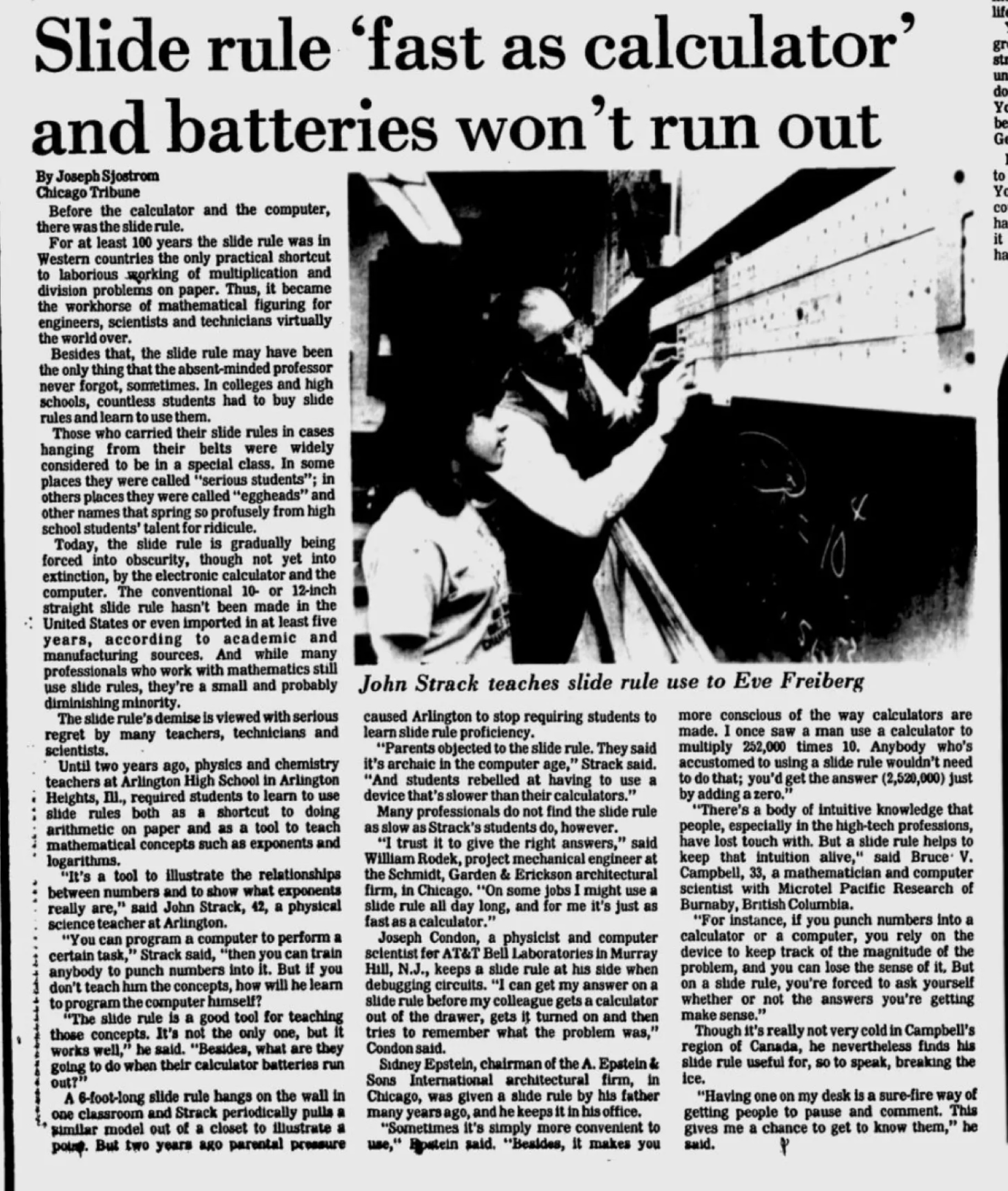
Older readers will remember the discussions generated by the use of pocket calculators, Google or Wikipedia in the classroom, and how absurd we see the opposition at the time: despite several generations using pocket calculators, no one has really forgotten basic mathematics, and teachers who forbade their students to use Wikipedia or cite it because “anyone could edit it” are now seen as Neanderthals, given that Wikipedia is already by far the best and most complete encyclopedia ever.
We’re now seeing the same debate about ChatGPT, particularly in higher education. The first wave of universities that, after the appearance of ChatGPT in November last year, decided to ban its use, block it in their proxies and equip themselves with detection tools are already beginning to see that this is futile: students can easily connect via their smartphones outside the institution’s network, while detection software is far from infallible.
It is increasingly evident that trying to ban such tools will do more harm than good: faced with a resource that students will use when they start work, it makes no sense for universities and business schools to ban the use of generative algorithms. At IE University we were always clear on whose side we were in that sense. Increasingly, the approach is not to prohibit it, and instead teach students how to use them properly. Even Harvard is increasingly recommending its introduction in the case method, although for the moment it is limited to explaining to teachers how to use it to better prepare their sessions.
It makes sense to see generative algorithms as upscale assistants: Wikipedia is an encyclopedia that returns results in an instant, while Google avoids dozens of trips to the library. Educating students how to use them became one of the ways to avoid the problems derived from these tools: students who use Wikipedia or Google often will be less likely to take them as the only source (and in fact, they tend to delve deeper into the sources that Wikipedia cites) or to blindly stick to the first result of a Google search. In short, a little knowledge is a dangerous thing, so higher education institutions have a duty to make sure students are in absolute command of these tools and can use them “in God mode”.
However, there is a problem: there are two ways of using technology, and one of them offers a much lower learning performance than the other. In theory, students should turn to generative algorithms as a way to improve their learning, to have that fantastic assistant capable of extracting the information they need more quickly, better or more completely. But in many cases, the objective function of the learner is not to maximize their learning, but to maximize their grade.
Competition for the best grades, reinforced by the system that offers better possibilities to those who finish, for example, in the Dean’s list, in Phi Beta Kappa or among the top tier, makes many students, especially those from countries with ultra-competitive systems such as South Korea or India, tend to use tools like ChatGPT not so much to learn better, but to cheat.
In the case of generative algorithms, the line between cheating and reasonable use is not sufficiently clear: based on my own use, I would tend to think that occasionally resorting to the algorithm in search of certain information, a way of saying something, an explanation of a concept or to check something — in other words, using an”assistant” — is legitimate, but requesting, for example, a complete article and then putting your name to it is not. Moreover, all these functions, from the first to the last, require a much-needed additional step: checking, which prevents generative algorithms from passing us information based on “hallucinations”.
What should teachers do? First of all, not restrict the use of these tools. Let students use them for whatever they want, including non-academic purposes, because practice makes perfect. But secondly, try to value honesty and, above all, a culture of effort: verify that they are used properly to maximize learning, and not to cheat. Encourage the algorithm to help them improve their critical reasoning instead of subcontracting the whole reasoning process to the algorithm.
In that sense, teaching how to ask questions (not simply prompt engineering, but something rather more conceptual, of the “what the heck do I intend to do” type) is important and is learned by doing. But unfortunately, my impression after many years is that it is practically impossible to detach the “materialistic” part of the objective function, that of students who are not interested in learning as such, and only want the best grades, as long as we continue to encourage an ultra-competitive grading that, moreover, tends to reward those who practice it.
There’s no magic bullet here, because our system is based on rankings and the best grades. Normative associations, for example, can also prevent a university from experimenting with grading methodologies, and be a difficult-to-counter force that promotes an isomorphism that harms us all.
I have found that group assessments, help align the idea of learning with that of getting good grades, as do methodologies based on software development, such as collaborative sandboxing or redteaming. Asking groups, for example, to get other groups to look at — and try to improve — their work before submitting it, or asking them to fiercely critique submitted work (without being labeled as “bad partners” by the group) are methodologies that I tend to sense improve that process.
But deep down, my doubt remains as to whether we should opt for other evaluation systems that do not prioritize the simple obtaining of an isolated grade that supposedly “reflects everything”, but rather the verifiable achievement of learning objectives. Something more complex, which would surely require getting to know the students as individuals, understanding their origin, their interests, their intentions and their way of thinking. Possibly smaller groups, more tutored, with a more personal relationship with those we are trying to provoke the learning dynamics. Nothing impossible, but different from what we currently do. We have to change how we teach, and I don’t think there are any sticking plaster solutions; what is needed is a change of philosophy.
Could the incorporation of generative algorithms, a powerful tool that can be used very well or very badly, be the trigger for a reflection in this direction? Frankly, I would love to be part of it.
(En español, aquí)