
How Are Irish-Americans Seen In Ireland?
An long answer, but a detailed one.
America has always loomed large in the Irish psyche, even before we knew it was there. 1,000 years before Christopher Columbus’ time, St Brendan the Navigator sailed west from Ireland in search of the mythical island paradise of Tír na nÓg.
Many ordinary Irish today credit him with being the first European to reach the Americas, and in 1976–1977, British explorer Tim Severin journeyed from Ireland to Canada in a recreation of an ancient Irish leather boat to prove the journey was possible.
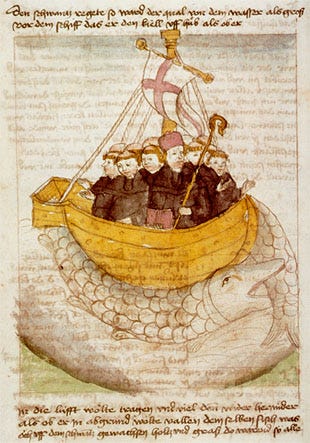
The story doesn’t have a lot of scholarly support, and Brendan’s descriptions are more reminiscent of Iceland than the Americas, but it shows that “the lands out West” have a certain poetic resonance in Irish history and culture that simply doesn’t exist with, say, France or Spain.
The Americas are a land of milk and honey, a paradise where the only hardship is reaching it.
Fast forward to 2022, and it seems like the Irish who moved West have done quite well for themselves in this paradise, particularly in the US. About 10 million Americans (3% of the population) report exclusively Irish ancestry, while another 24 million (7%) report some Irish heritage. Compared with a mere 7 million people on the island of Ireland, it’s clear that those who migrated have thrived.

These Irish-Americans were once an underclass within society, but that has completely changed. They have good jobs, live in nice neighbourhoods, complain about immigrants, and have reached the highest peaks of American life, including the presidency itself.
So, are people in the homeland proud of their American cousins? It’s a question that can only truly be answered with a pair of contradictions:
- The people of Ireland are extremely proud of what Irish immigrants have achieved in America
- The people of Ireland generally find modern Irish-Americans a bit ridiculous, and don’t consider them to be “real” Irish
But even within these views, there’s a lot of nuance and controversy in Ireland, so read on a little to get a clearer picture, and to see if modern Irish people still dream of migrating to the US.
Pride
Ireland has had a pretty miserable history for the past few hundred years. Colonisation, poverty, war, sectarianism, and the stifling weight of the Church have all weighed heavily on Ireland.
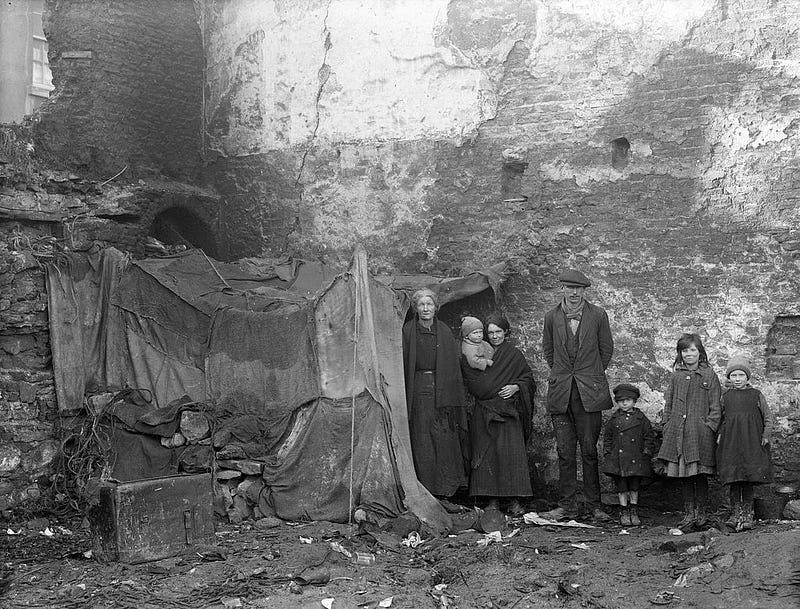
Unsurprisingly, then, Irish people tend to have a lot of sympathy for the downtrodden, and you don’t find many groups more downtrodden than Irish migrants to the US.
Because of the high cost of the boat journey, most early Irish settlers in North America came over by selling themselves into indentured servitude. Once there, even after freedom, they found themselves treated as second-class citizens in their new country.
WASPs were suspicious of Irish women, fearing that their high birth-rate was a Catholic plot to outbreed the Protestants, while men were associated with alcoholism and violence, a stereotype that was still pervasive in Richard Nixon’s time.
“The Irish have certain — for example, the Irish can’t drink. What you always have to remember with the Irish is they get mean. Virtually every Irish I’ve known gets mean when he drinks. Particularly the real Irish.” — Richard Nixon
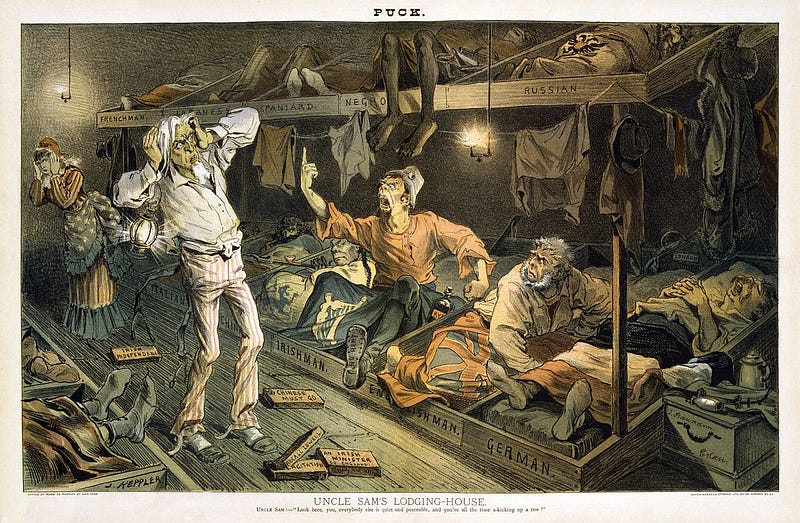
The Industrial Revolution brought scientific racism along with it, and the Irish were viewed as racially inferior to Americans of English or German descent, since they were Celts rather than Anglo-Saxons.
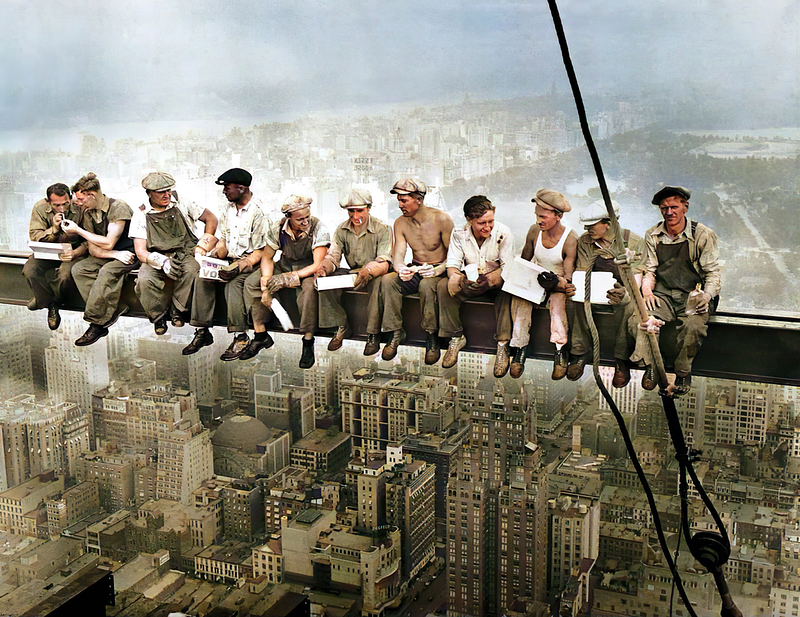
Despite these hardships, these immigrants got ahead through sheer hard work (as the story goes, at least); the women worked as nurses, maids and teachers, while the men built the skyscrapers of New York.
This is a narrative that most people on the island of Ireland value deeply, and it’s very common to decorate your house with photos of 1930s Manhattan construction workers, presumed to mostly be Irish. People defiantly boast that “No Irish Need Apply” signs couldn’t keep us down.
Irish achievements in US politics have long been keenly watched in the home country too.
JFK becoming the first Irish-descended and Catholic US president brought tears of joy to many people in 1960s Ireland. Despite every misery the island had suffered, here was proof that the Irish could get ahead in life. If an Irish man could become the leader of the free world, anything was possible.
Joe Biden isn’t quite as sexy, but many in Ireland had been thankful for the pressure he has put on Britain to ensure that Brexit won’t harm the Irish peace process. Britain might be Ireland’s historic bully, but America is the big brother that the bully has to behave around, and it’s understood that we have the influential Irish-American lobby to thank for that.
And of course, Irish people will shamelessly claim any cool or famous personality with any hint of Irish ancestry. I still remember my mum excitedly waking me to reveal that the first black president in US history had just been elected — and I also remember a lot of “But you know he’s actually Irish too, right?” conversations in the next few days too.
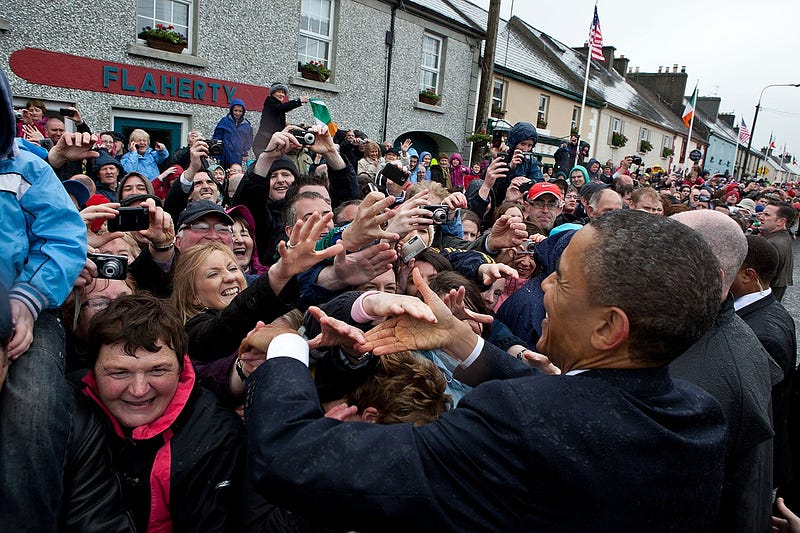
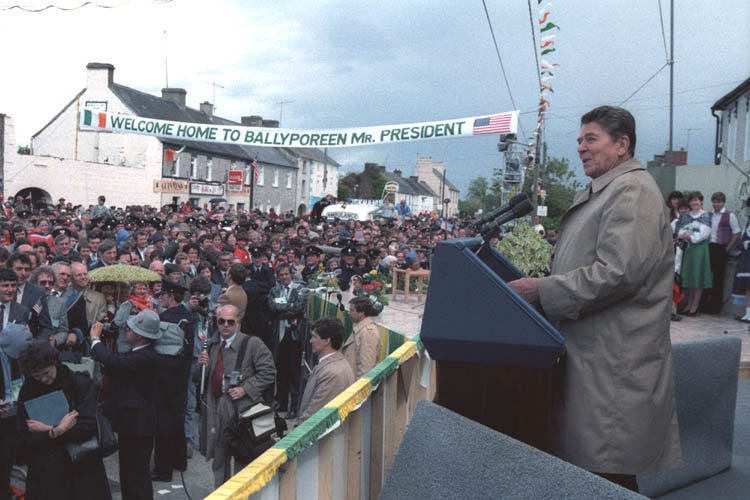
Also, many Irish people quite like that there’s so much fondness for Irish culture in America.
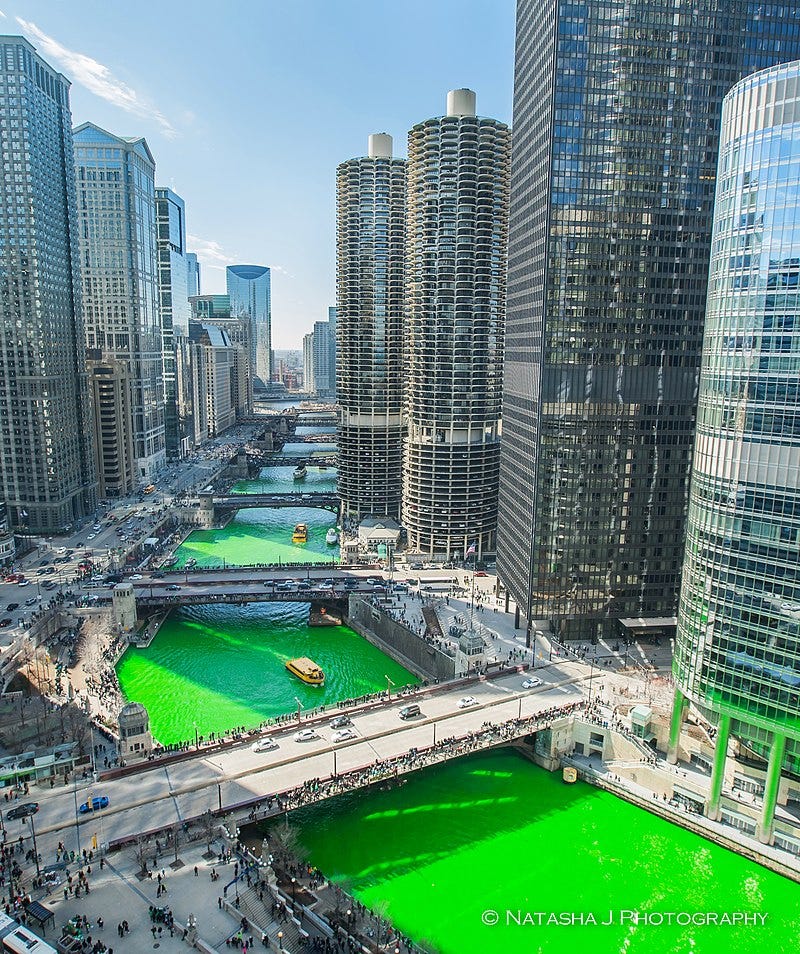
Plenty of people in Ireland will tell you that St Patrick’s Day in NYC, Boston or Chicago looks a hell of a lot more fun than our celebrations. Many listen to Irish-American bands like the Dropkick Murphys, and the prospect of a trip to America for a competition is a big motivator for kids involved in Irish dancing.
But …
In the second half of the 1900s, there were a couple of big changes to the US-Ireland connection. For a start, stricter border control made it harder for the Irish to enter America without an education or skills; secondly, the Irish economic miracle happened, and a one-way boat ticket to New York was no longer the only way to escape poverty.
That means the flow of Irish migration to the US is now a stream rather than a river. Irish-Americans are now very well assimilated into the mainstream US population, and are consequently very different from the citizens of the island.
Even without those changes, Irish folks have been in America long enough that they have their own traditions that are unrecognizable to people on the island. For example, I remember being very confused by meeting a young Irish-American who used her love of corned beef as proof of her identity.

We simply don’t eat this in Ireland, which prompted me to research this strange habit. It turns out that corned beef used to be a luxury good in Ireland, but not the US.
Irish immigrants in the US therefore began eating it rather than the more traditional cabbage and bacon, which is still eaten in Ireland, although those under-40 do so only with great reluctance.
Many Irish also don’t realise how closely associated Irish-Americans are with police and the fire service, and would be a little embarrassed at the police association — southern Irish police don’t even carry guns. Needless to say, American police have a reputation as being a touch heavy-handed.
Irish-Americans are sometimes labelled as “Plastic Paddies”: people who claim Irish identity despite stereotypical and inaccurate views of the country. National Review journalist Alex Massie gives this summary:
“When I was a student in Dublin we scoffed at the American celebration of St. Patrick, finding something preposterous in the green beer, the search for any connection, no matter how tenuous, to Ireland, the misty sentiment of it all that seemed so at odds with the Ireland we knew and actually lived in.
Who were these people dressed as Leprechauns and why were they dressed that way?”

To be fair though, the phrase is also often used for Brits of Irish descent, for Dubliners, and for people in Ireland who play English “garrison sports” like rugby or cricket.
A more serious accusation is “terrorist sympathiser”, which comes from the fact that the IRA did a lot of its fundraising in places like Boston, appealing to a diaspora that had little personal experience of the situation but had been raised to mindlessly hate the Brits.
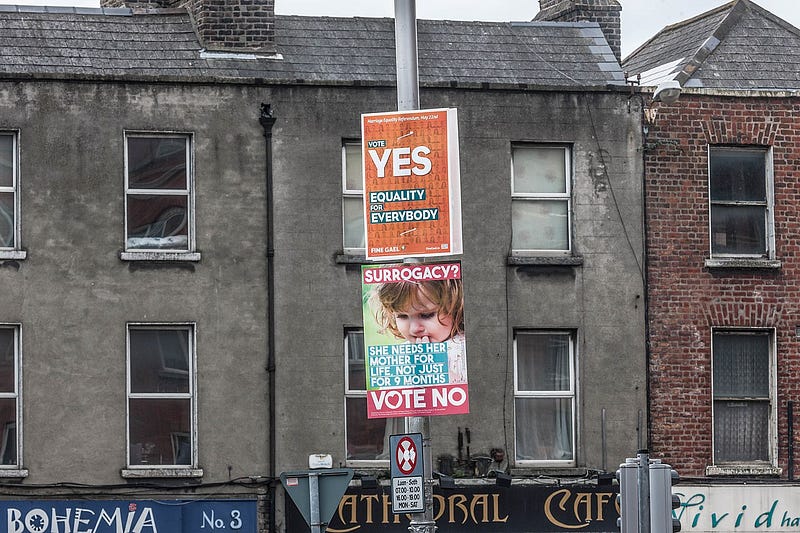
Similarly, many Irish resented the anti-gay marriage lobbying of Irish-American groups when it became legal in 2015; Irish-Americans were sometimes stereotyped as out-of-touch bigots who clung to the Church as a way to validate their Irishness.
A final point: some Irish people, particularly older rural ones, view Irish-Americans as the descendants of those who “left when the going got tough”.
They believe that “real Irish people” should have loved the land enough to endure the famines and the wars, rather than escaping to live the high life in America and teaching their kids to do a jig.
So … do modern Irish people want to move to the US?
Perhaps a little surprisingly, I think the answer is “yes, quite a lot of people do.”
For all the scorn that the Irish direct at Irish-Americans, the US as a whole still has a fairly cool image in Ireland, even if Trump has dented it a bit.
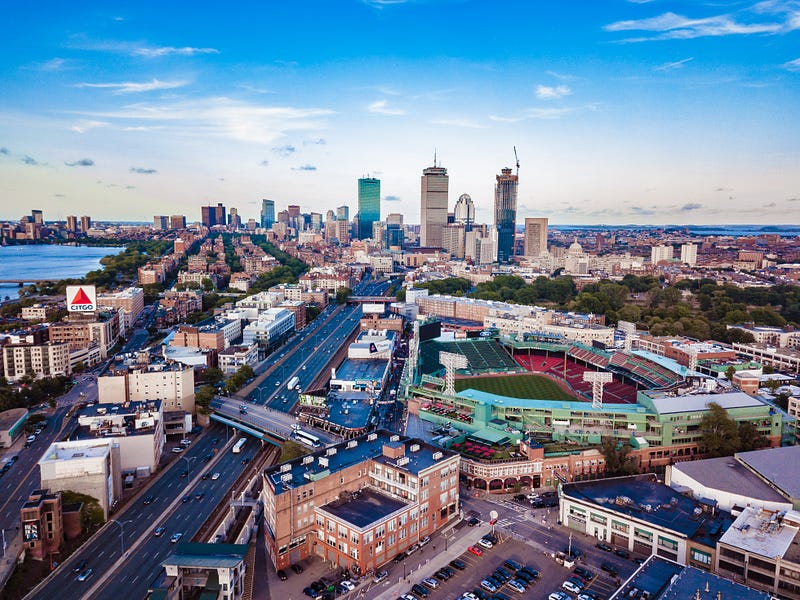
Spending a summer working in America (typically, NYC, Boston, or San Francisco) with a J1 visa is a very popular gap year activity, and pretty much everyone has a childhood friend or cousin who is living (very illegally) as a bartender in New York and therefore can’t come home for Christmas. Americans are seen as a bit dim but very friendly.
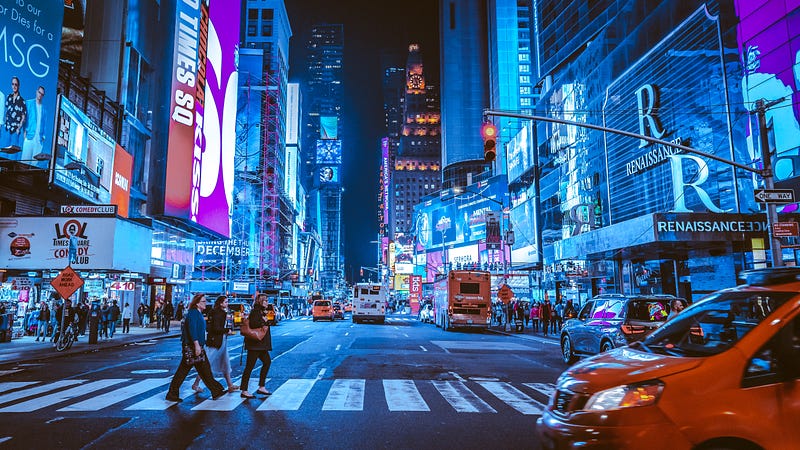
In rural Ireland, US country culture is huge. People like my dad grew up watching The Dukes of Hazzard and any cowboy film they could find; country star Garth Brooks sold 400,000 tickets in a few hours when he announced shows in Dublin.
For young trendy urban types, New York is likely to be seen as sexier and more exotic than London. Construction workers gossip enviously during their lunch breaks about crane operators in the US making $200,000 per year, and getting a scholarship to study in the US gives strong bragging rights to any Irish mother.
In Ireland, the American Dream is still alive and well — even if, for visa reasons, it’s usually easier to pursue in Australia.
Final thoughts
I think it’s sad that Irish-Americans often have an important part of their identity rejected by the inhabitants of the island.
I often find that Irish-Americans have fascinating family stories and a good bit of pride in their identity, and I don’t see any reason to discourage that just because they have a different accent.
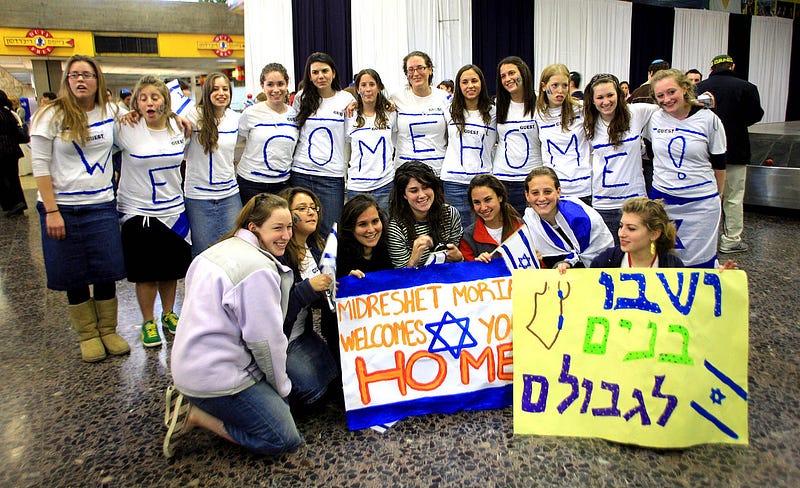
I think Ireland (and the US) could do a much better job of cultivating our ties with the diaspora. I wish an Irish-American who wanted to visit or live in Ireland had access to the same support that an American Jew would have if they wanted to deepen their ties with Israel.
I would also love for the US to introduce a true working holiday visa (like the popular ones that already exist in Canada, Australia and New Zealand) that would let Irish people spend a year or two getting to know it a little better. After all, we’re amongst the last Europeans who actually want to.
Are you Irish or part of the diaspora? Let me know your thoughts in the comments.