
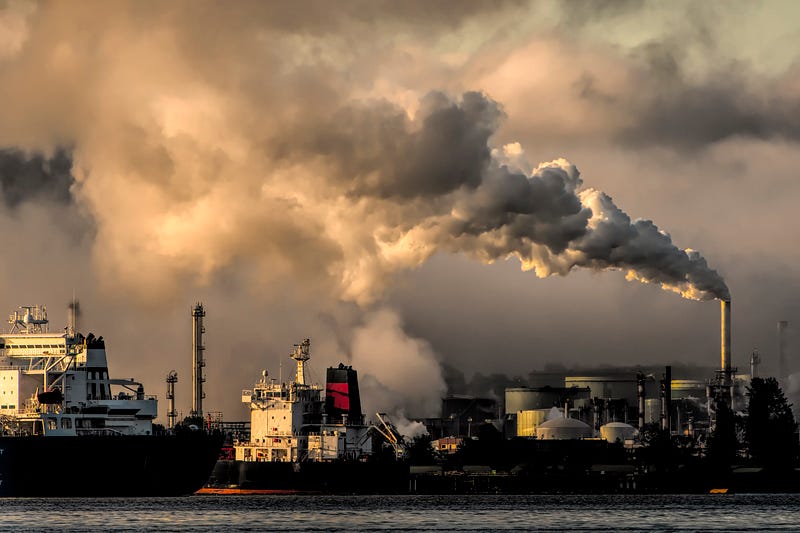
Create a simple carbon footprint today
A carbon balance sheet could save you more than cash.
Whether you believe in climate change or not, measuring your carbon footprint is something customers want you to be doing. Are you?
Consumers of all kinds of products and services want you to measure you carbon footprint. Then they can decide which company cares more about the environment. Consumers also want to reduce their own carbon footprint, so they are looking for ways to do that.
“New Zealand is to become the world’s first country to bring in a law forcing its financial firms to report on the effects of climate change.” -BBC News, 14 April 2021
That means any stock traded or loan made needs to have this level of due diligence. If you don’t do that today, you need to be ready.
If you are depending on financing, you want to be planning for this kind of law in your country too. It is only a matter of time before companies that are not efficient have rules. Companies that don’t produce recyclable products will have rules too.
“New Zealand wants to be carbon neutral by 2050 and says the financial sector needs to play its part. Banks, insurers and fund managers can do this by knowing the environmental effect of their investments, says its Climate Change Minister James Shaw.” — BBC News
How do you measure your carbon footprint? According to Oxford Languages, the definition of carbon footprint is, “the amount of carbon dioxide released into the atmosphere as a result of the activities of a particular individual, organization, or community”. So, all we need to do is determine the activities your start-up or company does, to determine what to measure.
One easy way to start is to go to your accounting software and do a report of your payables. Anything you buy, has a carbon footprint. Whether you rent or own your own space, this will have a very significant part of your carbon footprint. Any consumables you buy for your company will have a carbon footprint. And any transportation in getting those items will have a footprint.
Start to asking all your suppliers if they have a carbon footprint calculated for their products. If they don’t, isn’t it time to look for a supplier that does? Something with cheapest price doesn’t mean it has the cheapest cost.
This carbon balance sheet is the next step. Create a balance sheet for your carbon, because you may be offsetting through some purchases. Some suppliers may have a negative carbon footprint. You want to be tracking that negative number as it will be an internal offset that you won’t need to pay for later. Energy and air travel are two that have built in options. Also, some buildings will have energy ratings. Knowing will help you to reduce your footprint. Even if you are a software company and your three biggest costs are energy, real estate, and employee travel, you want to make progress.
Once you have a carbon balance sheet set up you can begin to see the holes in it. Everything on your balance sheet will have a corresponding entry. Also, the P/L statement will have an entry for all your cost line items as well.
A carbon balance sheet is only the first step to becoming aware of your carbon footprint. It will get you started in the right direction and help you to see that every cost center is not only a financial cost but a community cost. By planning your purchases to get the cheapest price, you are undercutting manufacturers in your local community. That may be doing the right thing, but at a cost that is too high for you to be profitable.
Certified organic processed product manufacturers have had to work with their suppliers and do such crazy things about have long term purchase contracts and for some commodities such as soybeans, have planting contracts and contract with farmers to plant soybeans. Many times, these contracts would be for up to 50% of the annual requirements for a manufacturer.
This long-term contract benefits both sides. The manufacturer can hedge his supply. The farmer can get money to buy seed, to buy gasoline to run his tractors, and not be bankrolling the manufacturer in the hopes that at harvest he is going to get paid. If he doesn’t get paid, he will need to resort to crop insurance or worse be out of pocket. This doesn’t lead to a long-term sustainability.
So, starting with your suppliers and taking very good stock of them is so important. Is that wind and sun generated power looking a lot better than it did before this article started? It may cost more on the P/L, and hit cashflow, but if you will need to account for the carbon hit of coal, you may pay more in external costs plus you will lose credibility with your customers.
Consumers today in the high value product categories are demanding environmental accountability. If you can’t show it, you will be out of business. I can help you set up a carbon balance sheet and get you on the road to building an alliance with your suppliers and your customers. Send me a message at https://twitter.com/DonaldNordeng