
How and Why You Should Run for Local Political Office
You CAN make a difference. It’s good for your community, and it could also be very fulfilling for you.
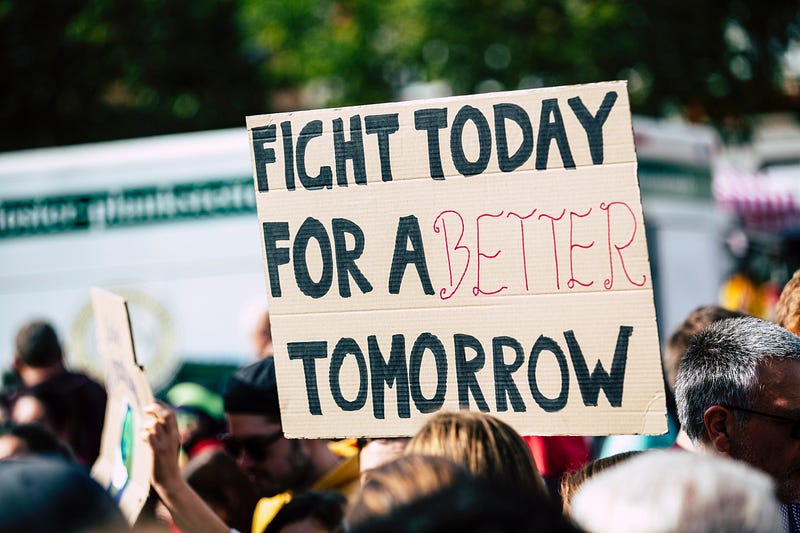
Let’s be honest with one another: regardless of your political affiliation, it has been a frustrating past few years in America.
I felt that frustration back in 2018 (and before). So in 2019, I did something about it: I ran for local public office.
And here’s why you should too.
Why would an introvert who has no real political affiliations run for public office? I don’t know why others do, but I can tell you why I did.
I live in a Midwestern state, in a small suburban city, population 22,000 or so, that is sandwiched between a much larger city and our surrounding rural areas. I’ve lived in all three of those environments: I grew up on a dairy farm, fifteen minutes outside of the city where I live now; I went to college and lived in the larger city for most of my twenties; now my spouse and I live and raise our kids in the suburban city between the two.
I love the area and am firmly attached to it because it is where my family still lives, it is where we work, and the landscape is (to me) the most beautiful I have ever found.
Because I have not been interested in politics for a long time — I do not vote reliably Republican or Democrat (the first vote I ever cast was for Ross Perot mainly because he was an Independent) — I certainly paid no attention to local governance in my home city. That changed when I became interested in local zoning and housing issues in 2018.
I started attending city council meetings, planning commission meetings, and workforce housing meetings (my city has committees for all of those issues and more). Before 2018, I truly had no idea how my city was governed and did not know any of the personalities involved. After 2018, I realized I was not happy with my city councilperson.
And when I say “my,” I mean the councilperson who represented my district in the city. My neighbors and I had been asking questions about proposed building projects in our area, and our councilperson was often dismissive of or downright rude to us. Once, after a meeting was over and my neighbors and I were still chatting outside city hall, she joined us, which we thought would be a good thing. We welcomed the opportunity to speak with her.
Soon, though, things took an ugly turn. I asked her who the investors were in a local housing project that she was voting for (I simply wanted to know if the developer’s project would be enriching people within the community, or mostly outside of it), and she became completely incensed, refused to answer the question, and belligerently asked, “Why? Where do YOU bank?” Shocked, I told her the names of the two local banks where I have checking and saving accounts.
I still don’t know why it mattered where I bank, but I very much remember her derisive tone of voice, which I thought was unnecessary at best and bullying at worst.
So I decided to run for the seat of city councilperson in my district. I believed then, as I do now, that if members of the public decide to show up at any kind of governance meeting, local or otherwise, they shouldn’t be insulted for doing so. That was really the sole plank in my platform.
Getting Involved in Your Community Can Be Good for You
I ran for city councilperson because I wanted to be polite to city residents who cared enough about their community to ask questions about it.
Why should you run?
Americans tend to move a lot, especially for work and career opportunities. This “geographical mobility” might be good for our economic bottom lines, but is it good for life in our communities? Is it good for our happiness?
I am not advocating a return to a world where all of us live in the communities into which we are born. What I am suggesting is that there are ways to feel more connected to where you live. Sometimes even small steps to increase your “socially engaged activities” within your community — like attending cultural events or socializing more with your friends, families, and neighbors — can lead to an increase in your level of life satisfaction. It works both ways: getting involved can make you happier, and being happier can make you feel more connected to your community. It’s a win-win.
Running for office can also be a great way to feel like you have tried to make a difference. If we have learned nothing else over the past few years, I hope we have learned the importance of empowering individuals to become activists and believers in community connections.
How Do You Run for Local Public Office?
1. Educate yourself
Before you consider a run for any local office — and there are a lot of them! — you need to educate yourself on local government in your area.
Identify the municipality in which you live (or, if you really want to start from scratch, read this information about the many different types of local governments) by visiting your municipality’s website or Facebook page. Plug your address into a voting site like Vote411, and it will show you upcoming elections and more information about your state. Or try Run for Office (although, be warned: most of these types of databases do not yet include all the opportunities in your area).
Once you’ve identified who’s in charge, start looking for local council or county board or school board agendas and meeting schedules. And then (there’s no way around this), go to some meetings.
Spoiler alert: the first thing you’re going to feel when you attend a local meeting is totally bored. This is normal. These meetings are mostly held in drab grey meeting rooms with no windows. (Well, now they’re held over Zoom, but hopefully, that is not a permanent measure.) They are run by career city planners and administrators and local politicians who drone on and on and who do, sometimes, quibble over Robert’s Rules of Order. (Don’t know what those are? You’re going to learn.)
Stick with it. By the second and third meetings, you will start to recognize what people are talking about. By the fourth meeting, and beyond? You will start to realize everyone in the room has their own agenda and personality and style and it will become FASCINATING to watch.
In addition to the fun of observing human behavior, you will learn more about where you live. Even if the topics being discussed are deadly dull (road surfacing techniques, anyone?) you are certain to know the places they are talking about. The places they are talking about are roads you drive on every day, sidewalks and busy intersections you have to traverse, and stores and other places you regularly visit and use.
Takeaway: Get educated. This site on the different tiers of local government is extremely helpful. For a more detailed look at elected local positions, visit Generation Progress. Call your local town hall or village hall or city hall, and ask their clerk to walk you through how the town is governed. It’s their job.
2. Pick an office/election that plays to your strengths
You do not actually have to start with running for political office. Most local governments offer a lot of opportunities to volunteer that have nothing to do with politics.
Again, visit your municipality’s website. Look for information about “government,” or “public meetings,” or “committee memberships.” In my city, there are a variety of fantastic committees on which to serve: Arts, Public Works, Parks and Public Lands, Workforce Housing, Youth. Applying for a position on such committees — or boards like Library Boards — can be as easy as filling out a short form, or having a short interview with a mayor, village board, or other community leaders.
When applying for such positions, keep in mind that leaders are often looking for people with specific knowledge and skills. Although I was fascinated by our city’s planning commission, I have no education or training in urban planning or architectural design. This put me at a disadvantage, as many professionals in my city do have those credentials.
I chose to run for councilperson because I’m interested in a little bit of everything, and my education and training are in journalism and library science (so I’m good at writing about and researching subjects, but I have no specific subject expertise!). I felt like I was a good fit for a role that would have to look at the conclusions of all the committees and make decisions across the entire city.
Takeaway: Know your talents and strengths, and look for elected or appointed positions where you could be of the most help.
3. Be organized from the very start
After you identify a position or race in which you might be interested, make a note of when the next election for it will be held and the deadline date by which you must file your declaration of candidacy.
Most local offices require “nominating papers” — depending on the population of the constituency you want to represent, you will have to get a certain percentage of your potential voters to sign a form asking that your name be put on the ballot. If you’re at all unsure of what the requirements are, contact your local clerk or municipal administrator. The requirements for me to file to run for city council were very easy but very specific: the election would be held in April 2019, but I had to gather signatures from at least 30 residents in my district on a specific form, and only during December 2018.
Each office and municipality will have its own rules. Follow them! This is very, very important, especially if you solicit donations and spend money in your pursuit of political office.
Tracking donations is a part of the process with which I am unfamiliar; my spouse was supportive of my running but was not exactly overjoyed about sharing any of our personal information. So we worked out a compromise wherein I would run, but I would not solicit or accept donations, and I would spend only a token amount of our own money (definitely under any limits at which you had to disclose your financial information). I was happy to follow that rule, as I believed, and I still do, that especially for a local election, if I couldn’t win just by doing the legwork and talking to people, then I didn’t deserve to win.
You cannot run for local political office without organizing a plan of action and keeping track of your work as you do so. Here are just a few of the things you will have to keep track of:
- Your initial filing paperwork
- Donations and how they are spent (this is why finding a treasurer to join you on your campaign can be so helpful)
- Lists of registered voters and their addresses in your district or zone
- Ordering promotional materials like signs and mailers
- Names of journalists and publications where you can spread your message
- Local issues on which you feel strongly
You will want to document everything about your race. This is required for legal reasons (especially as pertains to the money and campaign finance issues), and will simply help you run a more efficient campaign. Software even exists to help you track your campaign.
Takeaway: Document, document, document.
4. Prepare your one- or two-sentence pitch
I cannot state this strongly enough: prepare a one- or two-sentence reason to explain WHY you are running for office.
You cannot do this too early in the process. If the very first step of your campaign is going to be gathering signatures to get your name on the ballot, you should have your sentence ready when potential voters first open their doors to you.
After you have declared your candidacy, you will also have to talk to journalists and political organizations in your area. These encounters will run from the simple (forms of questions you return with your answers) to the more personal (sit-down interviews).
When I gave my first interview, I was busy trying to keep an eye on my active five-year-old (who wasn’t yet in school and thus went with me everywhere) in a local coffee shop, and I was anxious about the interview. As a result, my answers to the journalist’s questions were wordy, incomplete messes. I never really felt like I recovered from that first interview, or presented my positions as powerfully as I would have liked to.
Takeaway: Before you run, make sure you can write a sentence, or, at most, a 30-second “elevator pitch” about who you are, why you are running, and what you would like to accomplish in the office for which you are running. Practice it. Be friendly; be consistent; be concise.
5. Identify people who can help you and accept their help
Early in the process, I contacted a neighbor of mine, who had previously served as a councilperson, to ask for any advice she could offer. This is what I learned:
- My proposed flyer had a repeated phrase in it (she looked it over for me and saw it, even though I had proof-read the thing a hundred times, seemingly)
- That my city clerk kept a spreadsheet of registered voters by district, along with their addresses, that she was required to send to me if I asked
- That it would be very important to throw a fundraising event at my house and to organize volunteers to knock on doors on my behalf
That one two-hour meeting (which we combined with a casual supper out, as she has young kids and so do I) was the most eye-opening moment of my entire campaign. I had no idea even what to ask when I first started running; I certainly would never have guessed that I could get a list of voters in my district from the city clerk.
My neighbor was also extremely frank about how much time and effort it took to run a campaign, and how much time being a councilperson (complete with multiple committee memberships) took.
However you are organizing your run, make sure to identify friends, neighbors, or people you meet who seem amenable to supporting your candidacy and helping you do the work of running. Ask for their names and contact information, and have a list of tasks ready with which people can help you.
Takeaway: Do not be afraid to ask for or accept help. Running for local office is about strengthening your community, and that means recognizing that we are here to help one another with common goals.
What Are the Costs of Running for Local Public Office?
I’m not going to try and sweet-talk you into running a campaign. A campaign will cost you, and I’m not talking only about straightforward costs like filing or other fees.
There are also the financial costs of photography and website design, yard signs, mailers, and other promotional materials. I opted not to solicit donations or spend any money during my campaign, but if you do your online research, a lot of information exists about how much a more conventional campaign can cost.
Another cost of running for office (or even serving on committees) is your time cost. Filing all of your forms and doing your paperwork properly will take time (especially tracking your donations and spending). It takes a lot of time to campaign, especially if you are devoted to grassroots techniques that are long on meeting and talking to people and short on spending money. Prepare to spend hours at fundraisers, “meet the candidate” events, posting to your social media pages, and knocking on doors.
One of the biggest “costs” my spouse and I discussed was the amount of private information that I would have to divulge. Once you are an official candidate, you might have to share your personal information (relationship? children?), your home address, your age, and many other pieces of information that you may or may not want to be listed on the internet forever.
And, if I’m being honest? There can be a cost to your health. Campaigning can be mentally and physically exhausting.
How Do You Win Your Election?
You’ll note that the title of this article is about how to run for local office, and why you should. It is not about how to win your election.
I don’t know how to do that. I lost, by a vote of 433–310.
I lost, but I was proud of the race I’d run and the result I’d gotten within the parameters I had set for myself. When I look back now, I can see the things that I did well and the things at which I failed. Although I was surprised by what turned out to be my strengths, let’s start with things I could have done better.
1. Accept the donations and spend a little money
I firmly believe that money cannot solve our biggest problems. Like, how to get along with one another, particularly at the local level. I’ll admit that I am a bit of a naïve purist on this point.
Early on in my race, a local businessperson offered to buy yard signs for me or to make a donation to support their purchase, but I politely declined, sticking with my line (the one coherent point I tried to make) that I would accept and spend no money. During the entire campaign, I spent about 30 dollars (all my own), mostly for the two packs of bright paper on which I printed my homemade flyers.
In hindsight, I think there’s definitely a middle ground to be found on this issue. If you want to get your name out to your potential voters, you may have to consider yard signs and mailers. Just don’t go overboard. Make a campaign finance plan. Accept donations, and track them carefully. Spend as little as you can get away with to achieve your goals. Think of creative and low-cost ways to engage your potential voters.
I don’t know how my opponent financed her campaign. I do know she bought yard signs and sent out mailers. I think simply getting her name out there (her name was also first on the ballot, which you should know gives a candidate an advantage) probably did help her win the race.
2. Consider the political landscape carefully
Before you run for local office, you really should get to know the politics of your community. I’ve lived here or near here all my life, so I already knew that my city is extremely loyal to Democratic candidates.
If you match your local area’s politics in all particulars, you’re ready to go. Seek out mentors, your local party leaders, and personal and community group endorsements. My opponent, although she had never before run for political office, was well known in local Democratic party fundraising and social circles. That gave her a distinct advantage.
But, if you have different affiliations (or none at all, as in my case), that doesn’t mean you can’t succeed. It simply means you have to explain to people, clearly, why you are running, and what you want to do for and with them, regardless of party lines.
I feel very proud that I was the candidate on the “outside” and I still put together a respectable amount of votes. I believe each vote I got came from the personal touch: from talking to people in person, or from letters that neighbors wrote on my behalf to our local paper.
3. Accept help!
I’m listing this item twice because it’s just that important.
I freelance, I take care of my kids, I help take care of my elderly mom; realistically, there was only so much time I could spend getting my message out there.
Very early on, I should have heeded the words of the former councilperson I spoke with, and put together a list of people who would have been willing to knock on (or even just put flyers on) a few doors. People did periodically offer to help me in that way, but I truly thought that was something I had to do on my own.
Be a friend, and let others be friends to you! Think of a variety of ways they can help you; some will be happy to write a letter in support of you to the local newspaper; some will knock on doors and offer to answer questions on your behalf; some will keep you company as you make the rounds yourself (and all of you should keep these canvassing safety points in mind, particularly during this pandemic).

The Benefits of Running for Local Office, Even if You Lose
Even though I lost, running for local political office was a great experience and one from which I learned a lot.
The thing that surprised me most was how much I enjoyed talking to new people. I am introverted by nature, and not much of a small talker, but campaigning for local office gave me something real to talk with my neighbors about.
Knocking on doors was still really hard — especially that first doorbell I rang, on that freezing cold day in February— and most people, if they opened the door at all, simply took my bright-paper flyer (printed on my home printer) and nodded politely.
But when people talked? I couldn’t believe how many people were open to speaking with me. And the things they knew and asked me about! People had real questions about housing and businesses and public safety on their streets. They had really good ideas about snow plowing, traffic, taxes, and any number of other topics. One of them even recommended what turned out to be one of my favorite books of the year. (In Praise of Troublemakers: The Power of Dissent in Life and Business, by Charlan Nemeth.)
I also ended up enjoying using Facebook to run the digital side of my campaign. With a lot of help from my very patient sister-in-law, I set up a public page to try and share my message. Because I don’t usually use Facebook, I didn’t know how to do it. But I learned, and I had some fun posting items about upcoming meetings and issues of note to my district.
I kept an eye on my opponent’s page, too, and I made an effort to post more local news, recaps of local meetings, and more helpful links than I found on her page. I felt good about that. One of my biggest goals (although I never learned to state it as succinctly as I should have) was to help people learn about how their local decisions are made. I feel like I accomplished that, even if only for a short time, on my candidate page.
Most of all, it felt good to do something new, and so completely out of my comfort zone. I re-learned that my husband is an extremely supportive person (having the consent and support of your entire family is crucial), and I loved meeting and feeling more connected to my neighbors. Because I now know many more of them by name, I do feel more grounded in my neighborhood.
I didn’t win, but you know those 310 votes? I feel like I earned every single one of them. I didn’t affiliate myself with any party, send out any mailers, print up and distribute expensive yard signs, or receive the endorsement and aid of the former councilperson. My opponent did all four of those things. She won, but I was proud of the race I ran and congratulated her without rancor. We’re still neighbors, after all.
Live (and run for office) locally!


