
How Amazon Became The Most Dominant & Valuable Company On The Planet
The company aggressive expansion and acquisition policies have enabled them to surpass Apple and Google in terms of market capitalization.
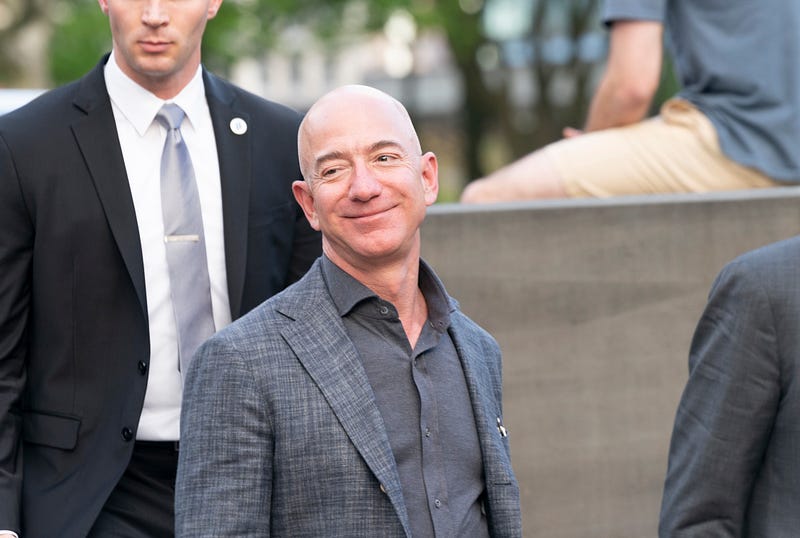
Amazon started off small, selling books online by Jeff Bezos in 1995. Twenty years later, the company now sells everything from furniture to food to clothing and even offers cloud computing services for businesses. The company made a $26.9 billion profit in 2020, more than the last 3 year’s total. It is undeniable that Amazon has become the most dominant company on this planet.
Amazon’s expansion is also not slowing. Amazon’s acquisition of Whole Foods Market for $13 billion in August 2017 was the company’s largest acquisition to date. With this acquisition, Amazon has grown stronger than ever, obtaining 460 physical locations as well as an industry-leading supply chain management system that will help the retail giant to develop its own food brands while reducing delivery costs. Amazon is currently valued at more than four times that of Walmart. The world’s largest retailer now has a market capitalization of over $1.4 trillion.
With Amazon expanding into new areas and their Amazon Web Services (AWS) division making up the bulk of Amazon’s profits with $43 billion in revenue last year, the tech giant is now looking to gain a larger share of cloud computing services for both businesses and government agencies.
Amazon has already won an $84 million contract from the CIA, which helped it land another $600 million contract with the General Services Administration. Amazon also announced a new partnership with the Canadian government in July 2017 to create a “virtual portal” for all online government sales, which will further solidify Amazon’s already dominant position within this market.
Amazon has become so powerful that it is estimated that Amazon now accounts for 49% of total e-commerce growth domestically, meaning nearly half of all online sales growth in the United States can be attributed to the company.
Amazon’s market share is expected to increase even further with the company quietly rolling out its own delivery service for businesses that would prove to be a direct competitor with UPS and FedEx domestically, giving them an additional leg up against these companies globally.
In the United States alone, industry sources estimate 147 million subscribers for Amazon Prime in 2021. Amazon’s success with its streaming service has led to even more customer loyalty for the tech giant and higher rates of online shopping, meaning that Amazon will continue to capitalise on its lead in this market by taking over other markets within e-commerce.
Amazon is continuing to grow at an unprecedented rate domestically while also expanding into new markets like India, Japan and Mexico. Their market share is only expected to increase domestically with the company continuing its dominance in e-commerce while also competing against traditional retailers by having Amazon open more physical bookstores under the Amazon Books brand.
The company’s new Amazon Go stores are also another avenue for domestic expansion that the retail behemoth will capitalise on to further consolidate its position as the world’s most powerful enterprise. The firm has also invested in Blue Origin, a space company that is competing in the space race to commercialise space trips.
It is safe to say that Amazon is at war with everyone. And it is the most dominant company that every other company has to reckon with.
If you enjoyed reading this, you might also find the below articles worth your time.
If you enjoy reading stories that help you learn, live and work better, consider becoming a subscriber. Becoming a member will get you unlimited access to 10000s of stories, articles, and writers. It is just $5 per month. If you sign up using my link, I will earn a small commission that helps me write more articles.