
How Alcohol Has Destroyed My Friend
From dapper to desolate
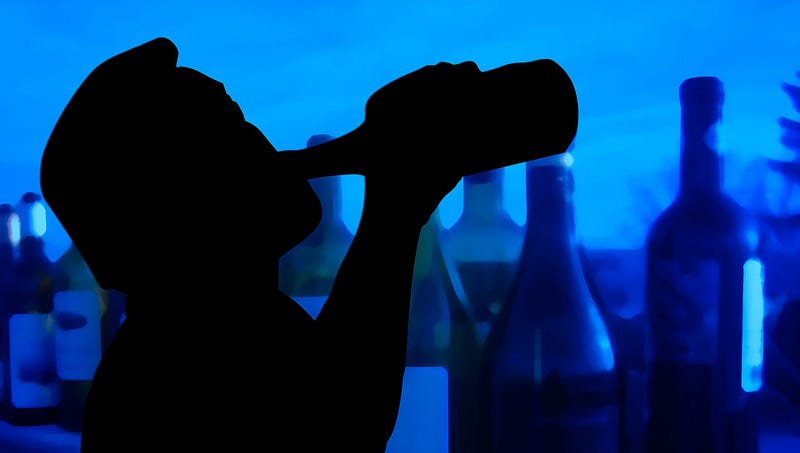
I knew he was a drinker. Brad* was the life of a party, the regular at the bar where a round of shots was often on him. He always had a beer in his hand, and a cigarette in his mouth, no matter what time of day it was.
I’ve known him for 23 years and consider him, his parents, and siblings my adoptive Canadian family. They put me and my kids under their wing all those years ago. I speak with his Mom more than I do my own flesh and blood.
Brad has a heart of gold and has rescued me in several times of need; he was a shoulder during my divorce and huge support to my son when he was facing some personal challenges.
My kids call him Uncle Brad.
He was a functional alcoholic. We all knew that. He somehow still managed to work despite packing away several beers a day and the odd sneaky bottle of vodka. He was always well-groomed and took pride in keeping his apartment pristine.
Until Covid hit.
Keeping up appearances
He seemed chipper on the phone when over the past 16 months, he either checked in with me or vice-versa. Work was slow but he claimed he still had a job. He was reluctant to meet because he was terrified of the virus, knowing his lungs were shot because of years of nicotine abuse.
I believed him.
He kept up appearances with his folks, phoning in at least twice a day and reassuring his mom he was working, eating, and getting out for daily walks.
They believed him.
Three weeks ago, Brad called my son — the one whom he had helped out a few years back — because he needed gas. Brad had headed off to run errands and didn’t consult the dash — the fuel tank was empty.
Brad didn’t call me for help. He called my son.
Alarm bells
My wonderful lad did what he was taught and went and rescued a friend in need. His Uncle Brad.
He was so disturbed by what he saw, he called me right away.
Mum — WTF is up with Brad? He looks like a homeless guy! He is unshaven, unkempt and dishevelled and he stinks of booze and cigs. You need to do something.
Instantly my heckles were up. WTF indeed! Brad said he was okay whenever I talked to him. How could he even venture out looking like that?
I knew something was terribly wrong.
I also knew if I tackled Brad right away, he would shut down; the second I called him out on his appearance I would lose him. Nor did I want to alarm his mom. She isn’t well and the last thing she needed was something more to worry about — especially her baby.
Challenging the challenged
I started to be a sleuth, knowing I was now dealing with a serial liar. I invited Brad to meet me for a walk.
He declined.
I suggested I go and watch a hockey game together at his place since I don’t have the live feed. He fobbed me off, declaring his house was a bit messy and he didn’t want me to see it.
I called more frequently and made every effort to see him. He always had an excuse up his sleeve.
Then, ironically, Brad started calling me more often. He was worried about some swelling in his feet. He knows I am a nurse and was seeking advice. Of course, I told him to go to the doctor, but he didn’t.
Then he mentioned the swelling had spread up his legs. Again, I reiterated my concerns. I was worried he was in heart failure and now suspected his drinking was totally out of hand. I urged him to go to the ER and offered to take him, but he was hell-bent due to Covid, he had to see an MD first— and he didn’t have one.
After three weeks of me nagging and his symptoms getting worse — he now reported that he had a huge belly — he knew he was in trouble.
And I did too.
He finally had a phone consult with a doctor and called me right after, asking me to take him to the ER.
Reality hits
I could not believe my eyes when I saw Brad. He looked like a gaunt old man with a 12-month baby in his belly and tree trunks for legs. He was unkempt, emaciated, and clearly unwell. Not the suave, clean-shaven, and dapper guy I last saw.
There’s nothing more callous than dumping a friend in need at the door of an ER. With Covid restrictions, patients are not allowed company or visitors into the department unless they are confused or linguistically challenged. Brad was neither.
He was good enough to keep me updated on his progress via text until I was able to force my way in to see him the following day — I played the nurse card — but that was for a mere 30 minutes.
Meantime, I had warned him that I had to tell his family. He was not happy — he is such a proud person — but I was not comfortable about keeping this from his loved ones.
I knew he was gravely ill.
The devastating effects of alcohol
It’s been an emotional, frustrating, and maddening time since I dropped Brad off at ER two weeks ago. Although I am his designated visitor now that he has been admitted to a care unit, I have been solely reliant on his interpretation of the information he is receiving from his care team.
Essentially he has destroyed three vital organs; his liver, a valve in his heart, and a kidney. Years of alcohol abuse have caught up with him with ghastly gusto and potentially dire consequences.
If he can stay sober, his life expectancy is 3–5 years without a liver transplant. If he drinks again, he will be dead before the end of the year.
His brother came and together we cleaned out his tragically filthy apartment. Hundreds of empty beer cans in full evidence. Piles of dirty washing on the floor. The most disgusting bathroom I have ever seen. This was not the Brad I knew.
It was sobering. And infuriating.
I was mad with Covid and its isolative demands. Amazed that he could live in such filth. Upset that he had pulled the wool over our eyes. Astonished at how someone so proud could fall so hard.
And guilty that I had not been more vigilant. That I didn’t make more of an effort to intervene earlier.
The long road ahead
The damage is done. Brad can no longer hide from his years of alcohol abuse. He has not one but three major surgeries to hurdle to repair the damage to his vital organs. A valve replacement, a kidney removal and, — if he stays sober — a liver transplant.
But his biggest challenge will be staying sober. He is gun-ho right now, vocally declaring his will to live and fight the battles ahead.
But I am worried.
It is all very well and good to have that strength and determination when in a controlled environment. But what will happen we he goes home tomorrow?
He bought beer instead of groceries. Can he go to the store and just buy food?
He sat and watched sports and drank all day. Can he watch a game of hockey or Formula One and not have a beer in his hand?
He’s always been a regular at the bar. Can he go there and order a 7Up instead of a Moosehead?
He is so proud. Will he join a support group and accept this is a mountain to climb without guidance and commitment?
The takeaway
Alcohol abuse is an illness. Brad didn’t ask to be an alcoholic. He didn’t set out to destroy his body. It crept up insidiously. We all tend to live by the ‘oh, it will never happen to me,’ head-in-the-sand thinking. The more he drank, the less he cared.
The longer the Covid restrictions were enforced, the more he was isolated. He hid behind the four walls of his apartment silently destroying his body.
Alcoholics lie. He bluffed his way through the last 6 months, feigning employment, making excuses, and accumulating debt.
In the end, he has to take responsibility for his actions. It is his life and he makes his own choices. His family can babysit him. I can spot-check him. But if he wants to drink, none of us can stop him.
It is devastating to see someone become a slave to booze. Its accessibility plays a significant impact on a recovering alcoholic. His circle of friends is socializers and drinkers.
I am part of that circle. We all need to respect his challenging path ahead and contribute to his success.
As I write, I have grave fears for my friend’s future. I fear he will get home and be sitting looking at his four walls, his empty bank account, and a life of sobriety ahead and decide it’s not worth it.
Only time will tell.
*I have changed my friend’s name to respect his privacy