
How AI Could Assist the US in Tracking China’s Potential Moves on Taiwan
How AI Technology Could Aid the US and Allies in Monitoring China’s Potential Invasion Strategies in Taiwan
AI Surveillance Technology: A New Approach to Monitor China’s Taiwan Invasion Strategies
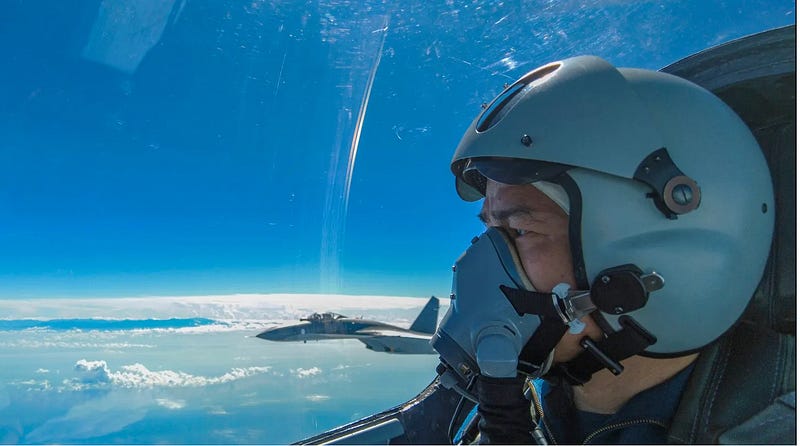
In the swiftly evolving landscape of geopolitical tensions, accurate and timely information forms the spearhead of effective coordination and strategy development. As you traverse through this article, we’re going to delve into the potential of AI technology as a powerful ally in monitoring China’s intentions toward Taiwan. We’ll explore how technology can offer a vantage point to the US and its allies in this delicate balance of powers.
In this age of connectivity, artificial intelligence (AI) represents the next frontier in data gathering and interpretation. It provides a glimpse into the unseen, offering crucial insight to guide policies and safeguard alliances.
Join us as we navigate these uncharted waters and discover how AI stands as a beacon of hope at the forefront of international security. Learn, comprehend, and consider how the implementation of this technology could revolutionize our ability to perceive and understand geopolitical shifts, notably China’s manoeuvres concerning Taiwan.
Just imagine, an all-seeing eye, continually scanning vast geographic expanses and oceans of data, processing and interpreting complex variables in real-time. This isn’t science fiction; this is the formidable power of artificial intelligence (AI) at work. Harnessing this technology, the United States and its allies could potentially monitor any subtle shifts and possible provocations in China’s stance towards Taiwan more effectively.
AI, a term you’ve undoubtedly heard, is enabling unparalleled advancements in the fields of defense and security. For the less tech-savvy among us, a simple explanation: AI refers to intelligent systems capable of performing tasks that usually require human intelligence. These tasks might include understanding natural language, recognizing patterns, and making predictions based on data.
Picture countless satellites capturing high-resolution images across the Taiwan Strait — these are just the raw materials. These images, when fed into an AI analysis system, transform into a gold mine of data. The system can recognize, analyze, and document changes: whether troop movements, ballistic missile activities or naval deployments. Such a dynamic setup provides decision-makers with insights that are accurate, timely, and crucially, predictive.
An instance where time and accuracy could be critical is in evaluating the danger of a sudden military escalation. Suppose an AI system detects unusual activity within the People’s Liberation Army bases near the Taiwan Strait. In that case, it could serve as a ‘canary in the coal mine,’ alerting officials to a possible security concern well ahead of time.
Nevertheless, like all tools, AI is not an infallible crystal ball. AI-powered systems, while extraordinarily potent, are only as good as the data they interpret. Hence, they require rigorous verification and continuous optimization. Despite these challenges, the potential benefits of such technology are beyond profound in safeguarding global peace and security.
It’s an exciting path ahead, and no doubt, we will all be watching. The advent of AI in the geopolitical arena is promising, amplifying our collective ability to respond to potential threats and proactively manage risks. By leveraging the power of AI, nations can not only create a more robust defense but also promote stability through enhanced understanding and preemptive action.
- AI technology can analyze vast amounts of data at exceptional speeds, which significantly enhances the capacity for real-time surveillance and hence, can help in detecting any unusual military activity.
- Through machine learning algorithms, AI can also recognize patterns and make predictions based on historical data, potentially alerting authorities about an impending threat before it transpires.
- An AI-infused defense mechanism could reduce the burden on human operators, allowing them to focus more on strategic decision-making and less on routine surveillance tasks.
- AI can spot trends which are often missed by human observation, thereby providing the opportunity to take preventive action before the escalation of a potential conflict.
- Such technology could also be used to simulate various invasion scenarios, helping military strategists to plan and prepare for different eventualities.
- AI is not influenced by human emotions and biases, leading to potentially more objective and accurate threat assessments.
- In addition to predicting potential conflicts, AI can also contribute towards peacekeeping by identifying early signs of de-escalation, thereby guiding diplomatic initiatives.
In sum, artificial intelligence possesses the potential to fundamentally alter the nature of threat detection and national defense by advancing surveillance capabilities and enabling the prediction of hostile activities. With the capacity to sift through enormous data quantities at remarkable speeds, AI can discern patterns often overlooked by human inspectors, potentially identifying risks before they materialize. Not only can AI bolster human strategizing through its efficiency in routine surveillance, it can also contribute towards maintaining peace by signifying early hints of conflict de-escalation. By reducing human error and bias, AI could provide us with crucial insights and considerable lead time, preparing the US and its allies to effectively counter and diffuse potential threats.
If you feel like this read hit home and it’s worth a coffee for this writer, :) You can buy me a coffee here. I’m forever grateful for your support. Cheers.


