
How AI is Tipping the Scale of Job Vulnerability
Exploring AI vs. Human Intelligence competition in the workplace
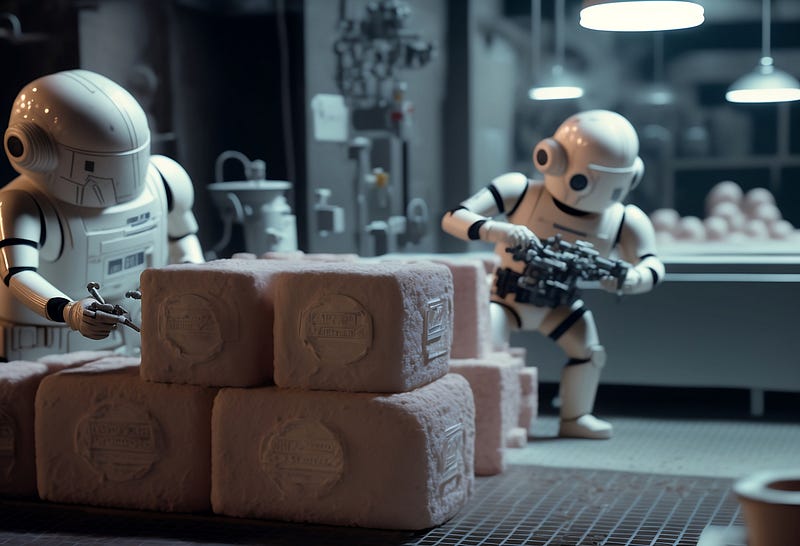
A while ago, I stumbled upon a report from the OECD showcasing some eye-opening information about the risky rise of job automation connected to the booming wave of AI.
I’ve been writing a lot about AI in 2023, so by now you already know my take on the surge of high-end GenAI technology during the pandemic crisis that shook our world.
There’s no avoiding the increasing influence of AI in our everyday lives, but that doesn’t mean we have to stand idly by and let the “ghosts in the machine” call the shots.
It’s 2024 and algorithms are everywhere, and they are here to stay, so we have to deal with them as we’ve done with many technological advancements in the past.
To me, all the AI doom and gloom in 2023 was like Ebenezer Scrooge says:
Bah humbug!
So why do we worry so much about how AI is taking everything to another level?
Pop culture has always drawn ominous scenarios as a result of the potential rise of machines, and this vision still looms over our collective minds as the sword in the myth of Damocles.
Well, there has been much speculation about how the work landscape will look in the future.
There’s no straight answer to that. What I do know is that it will look quite different from what we have today.
New job opportunities will pop up, and some might become obsolete, but I guess no one truly knows what will happen.
In 2022, the OECD surveyed thousands of companies and workers.
The compiled data confirmed what everyone already knew.
Most of the working class feels AI brought forward a technological revolution with positive changes, namely, by reducing the inherent dangers and monotony commonly associated with some tasks.
Then in 2023, another report also highlights how almost 63% of workers say that artificial intelligence has had a positive impact on overall work performance.
On the other hand, the report confirms that the working class is worried about seeing salaries decrease or losing jobs to artificial intelligence in the next decade.
The OECD also notes that the jobs most at risk of automation account for around 27% of employment.
I’ve looked at the figures, and I can safely say the United States is among the OECD nations with the lowest shares of employment in occupations with the highest risk of automation (21,2%).
So, if you’re in the U.S., you’re among the least threatened by AI, as you only fall behind Luxembourg (17,7%), the United Kingdom (19%), Sweden (20,1%), Netherlands (20,9%), and Norway (21%).
However, I can’t be sure if, as a writer and teacher, I risk being replaced by a top-notch chatbot any time soon, because my country has about 30% of its jobs highly likely to be overrun by AI within the coming decade.
Last year, in March, Amazon announced the cut of an additional 9,000 jobs, in addition to the 18,000 announced in January, citing cost reduction as the reason for these decisions.
Who knows, maybe the plan was to replace human workers with the new Digit and other robots like the Sequoia, aimed at speeding up the delivery process.
The company expected to identify and store items 75 percent faster, all while reducing order processing time by up to 25 percent.
The total of 27,000 layoffs represented about 1.7 percent of Amazon’s workforce, which had 1.54 million employees worldwide at the end of 2022.
Looking back through the cobwebs of time, I can see how my career has intersected with AI.
I’ve also seen firsthand how AI-powered tools and systems can boost productivity and efficiency. But I’m far from feeling disheartened by the AI reckoning foretold by those gloomy soothsayers.
As a teacher, I’ve read reports stating how AI-driven analytics in the field of education can help identify learning gaps and provide personalized guidance to students, enabling teachers to tailor their instructional approaches effectively.
I have nothing against using AI to run analytical studies, but I don’t see a chatbot taking over a classroom any time soon.
Furthermore, I’ve been working in the publishing business for almost two decades, and I know many of us in the industry are paying the price of automation. Chatbots and AI assistants are no match for a seasoned human editor, but in this fast-paced world, writers are going for quantity over quality. So on the writer’s side, life is a lot easier these days. There are plenty of free tools available to help you with content editing and proofreading.
These apps are all over the place, and they claim to quickly uncover and resolve all your troubles with grammar and spelling issues, freeing you up to focus on the text itself.
Most of the time, the results are subpar.
The ͏impact of AI on our lives has been increasing and will continue to do so in the coming years.
From manufacturing to finance, its influence is expected to grow, altering the way we work ͏and challenging the conventional norms of employment.
Sectors with an elevated risk of automation will suffer the most, and roles that rely heavily on repetitive tasks or routine decision-making are particularly susceptible to being overtaken by AI.
Jobs like data entry, assembly line work, customer service, and even some aspects of financial analysis are among those that may face the brunt of automation’s advances.
Companies keep saying that layoffs caused by the AI surge will not be a problem, as new positions will be created.
I keep hearing their representatives state how human workers are “irreplaceable,” and that we’ll not see any fully automated work environment soon.
I want to believe in this, but it’s becoming increasingly hard to do so. I’m all for the synergy between humans and AI, especially when it comes to heavy lifting and ensuring safety redundancies.
However, when it comes to letting machines run free, well, that’s a different story.
I’d love to hear your take on this too — what are your thoughts about this topic?
Thank you for reading.
✍ — Published by Dr. Gabriella Korosi, at Dancing Elephant Press. Click here for guidelines to post.


