How AI Can Shape Our Destiny
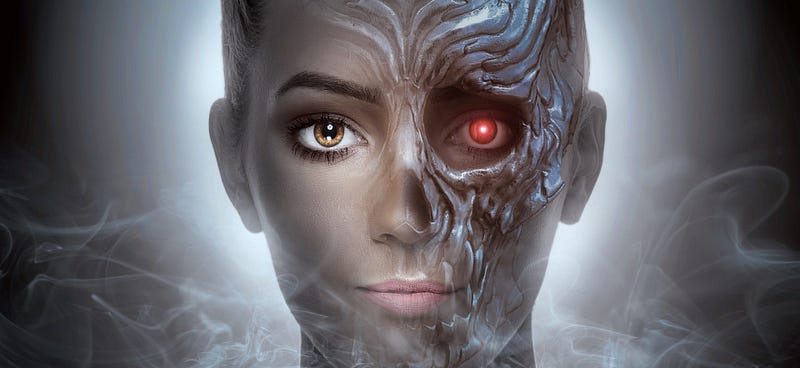
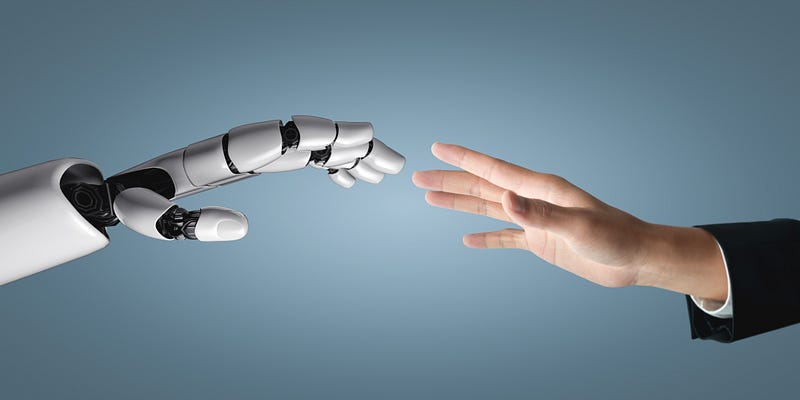
The Robots Came Closer And The Angel Of AI Holding In Its Hands The Future Of Humanity
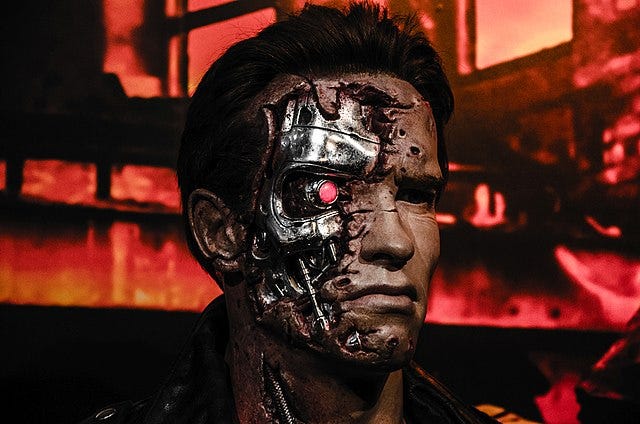
Hollywood films have taught viewers that nothing good can be expected from artificial intelligence. Robots in Oscar-winning productions almost always prefer confrontation to cooperation, as Sarah Connor from The Terminator and the characters of individual episodes of The X-Files can tell a lot about.
The technologies on which the directors of the 1980s and 1990s based their frightening predictions are turning into reality three decades later. Many of us are concerned about whether artificial intelligence, a technology considered a key catalyst for the development of mankind, can really be dangerous for humanity.
For a long time, artificial intelligence was a billion-dollar grave — research was stagnant for a long time, and the euphoria of the early years dried up. But amazing things have happened in recent years: Speech recognition in our cell phones is inconceivable without AI. Automated driving, automated factories, and automated combat drones are within reach. Scientists and programmers promptly warn of the dangers — will humanity abolish itself?
A Monkey House
I stare at the faces of the chimps, gorillas, gibbons, and orangutans, long, straight, rudely straight, shamelessly straight, in a way I would never do with humans. Whether they’re frolicking, scratching, picking at food, or just sitting quietly, they captivate me.
It’s the resemblance that fascinates me. The gestures that I imitate almost automatically as if to check that I’m doing them the same way; strikingly similar Gestures, and at the same time disturbingly different.
Of course, I know what looks like my reflection is not human. But that is precisely what is fascinating: how something can be so similar to us without being the same?! And how can something so similar to us appear so alien in the next moment?
Humans get along better with robots when the machine beings don’t look like humans,
developers say. We don’t accept robots equipped with human faces whose gestures seem stiff, cold, or wrong. We are strangers when they look like us when they imitate us when they pretend. And we notice that.
A classic science fiction motif: many short stories by Philip K. Dick, for example, revolve around this theme, the fright of the similarity, the frightening moment in which the being in front of us, that talks like us, that behaves like us, realizes it’s just a robot, an Android of the Nexus 6 series.
Human Or Machine?
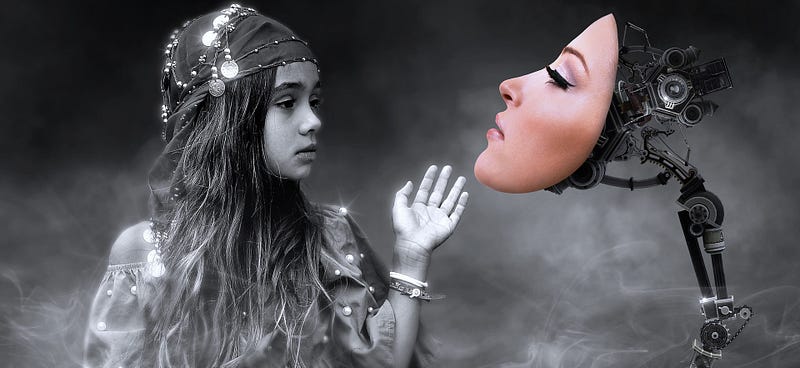
In some scenarios, Dick linked this to a threat — so if we can no longer tell the robots from us, they will destroy us. But then don’t we really have to ask who is destroying whom? Because what makes humans different from their own creations? The much-cited Turing test claims that a computer has artificial intelligence when people can no longer differentiate whether an answer comes from a machine or another person.
Computers are already imitating us. Robots assemble our cars and do their best to turn a handle, open the door, and let another robot through. Artificial intelligence answers our questions to the voice assistants on our cell phones or tirelessly gives us translation suggestions. They can’t do what we can — not everything. But there are some things they can do better than their creators.
A future in which we are no longer the only intelligent beings on earth seems to be foreseeable.
Don’t we need a test that determines with absolute certainty what makes a human different from a machine? Skills like memory, empathy, or irony — and how do we measure them, where is the threshold to determine what is completely human, and what is only artificial? When a “human” is a human?
What if it’s just a worse machine? So a creature with an expiry date. A species overrun by evolution. No future without Cassandra. Biochemist and science fiction author Isaac Asimov established laws for robots 60 years ago. The famous one is:
No robot may kill a human
The less well-known demands: No artificial intelligence may live together with developed biological beings on one planet. The essence of both laws: it is a dictate of common sense to keep the devices at a distance.
Shortly before his death, physicist Stephen Hawking warned that computers would overtake us in 100 years. And Elon Musk, head of the electric car manufacturer Tesla, repeatedly speaks of AI’s destructive powers that could soon outweigh human judgment.
Robots Rule Intelligently
Autonomous driving, a development focus of Tesla, is not possible only thanks to the ability of AI to recognize patterns. A car that doesn’t think when another crosses our path shouldn’t be allowed to drive alone.
But that is precisely the question: Does it think? Is the car able to make decisions? Is the artificial intelligence that controls the car actually thinking? Is it possible for AI to determine which of two possible steering maneuvers is more ethical?
Dodging a deer even if the maneuver puts the driver’s life at risk? What would you prefer, steering the skidding car into a kindergarten group or a pensioners’ trip? How about vice versa? What are the parameters? Based on the value added through work, an average life costs around $1,000,000. The autonomous vehicle would then have to steer around a group of pensioners while avoiding a limousine driven by a company driver.
I don’t remember being asked these questions on my driver’s test. However, why do we ask these questions about a car that steers itself? Are we afraid that it will make a wrong, amoral decision?
Or more importantly, are we afraid that it will make better decisions than we do?
Let’s look at the current world situation; environmental destruction, wars, hunger, and injustice. Perhaps a reign of intelligent robots would not be a nightmare scenario at all.
Of course, private transport would be abolished. Because it doesn’t make sense to use up so many resources just to get someone from point A to point B.
Of course, the production and possession of weapons would be banned. That’s because artificial intelligence cannot be taught the highly human deterrent formula of intimidating an opponent in advance with the threat of killing them to prevent the opponent from developing the idea of killing themselves.
Knives with a fixed edge were allowed because the benefit outweighed the danger.
Of course, all drugs including wine, beer, and cigarettes would be banned. That’s because too many people abuse them, or because the healthcare costs are disproportionate to the benefits.
Coffee and tea are still being tested, but the data is not clear enough at this point.
Anyone with an ounce of brains would have to commend artificial intelligence for making these decisions.
Every human being who still has a vestige of dignity must fear the puritanical fury that is inherent in such considerations. There are sound reasons for banning potable alcohol, but wine would also wipe out an eight-thousand-year cultural achievement. Worse still, we would be relegated to objects that the AI does not trust to make an individual trade-off between benefit and harm.
We would be slaves to a virtuous cause.
However, it would be fascinating to see if human ingenuity could not invent ways and means of fooling artificial intelligence with its nonexistent nose.
Human Actions Are Unpredictable
Of course, programs can develop scenarios to create a desirable future for people. And of course, these scenarios will only become reality if we work together to ensure that people do not prevent what is useful to people.
Hito Steyerl, the artist who developed the very clever formula that artificial stupidity exists along with artificial intelligence, highlighted how biased we are when it comes to making predictions. Residents of Grenfell Tower in London have repeatedly stated that the risk of a fire is extremely high. The fears came true, and 71 people died. Steyerl asks why nobody listened to her prediction.
Not because it was as obscure and ambiguous as the Oracle of Delphi. The reason for this is that
human predictions, particularly those made by low-status individuals, do not rank with those made by computers.
Human beings are not all as bad as oracles. What computer scientist Julia Dressel discovered? She examined the “COMPAS” program, which is used in the United States to calculate the likelihood of recidivism among criminals. Courts in some states grant earlier release if the prognosis is positive.
Dressel provided the information available to the program — living conditions, location, race — to 20 randomly selected people. This group, with no special legal or sociological knowledge, achieved the same hit rate as the program: 65%.
What surprised the computer scientist herself? If the number of parameters is increased, i.e. more reasons are used as to why someone has relapsed in the past, this does not lead to an improvement in the result. Calculating more parameters did not increase the number of hits. It stayed at about 65% accuracy, which also means that every third prediction was wrong; for people who act like machines.
However, since there are only two possibilities — someone will relapse or not — the hit rate, which is based on a purely random selection, would be as high as 50%. That means evaluating data increases accuracy, but not to an overwhelming extent.
There seems to be a natural limit to accuracy. Human behavior is unpredictable. Which is not surprising for statisticians. It’s relatively easy to compare my purchases with those of other customers who have bought the same or similar items.
And if a retailer promises to deliver something before we have ordered it, in practice, this often only means that the company will deliver the expansion to the computer game Call of Duty if we have already purchased a product in the range.
It is more difficult when a large number of influences can determine our actions. Then it is no longer possible to make clear predictions.
Business firms, however, love predictions, because they give the executive board the framework for how they should behave in the future. You should not be caught unprepared by the new one.
It’s easier to improve on what you already know and make it a bit cheaper rather than trying something new.
Computer programs that, for example, adjust a milling machine minimally until it achieves an optimal result are just as innovative.
Computers Are Not Curious
The newcomer has a good reputation, but few true friends. Therefore, the new should not be too new. Quite a few executives almost seem to fear the new — its all-dissolving power — they fear that they are not prepared. In doing so, they fail to recognize the potential of their employees, yes of all people, to create something from the ground up.
In a lecture that was rediscovered only recently, the philosopher Hannah Arendt meditated on the revolution in the USA — in particular she dealt with the question of why the uprising of the founding fathers against British foreign rule was successful.
What characterized this revolution was the combination of two feelings, namely “to be free and to start something new”. According to Arendt, the invention of modern democracy was only possible because of this. It succeeded because the new had the taste of freedom.
All men are equal — all people are equal. A revolutionary formula. At the same time — and this is one of Arendt’s brilliant ideas — the founding fathers simply overlooked about a fifth of the population: the slaves. But just because they did so, because they failed to see that implication, did the slaveholders adopt a constitution that contained within it the seeds of the abolition of slavery?
Any program would have pointed out the obvious error. Blacks are people too. Then it cannot be true that slaves are not human. Therefore, it is illegal to enslave them. A simple syllogism can be used to test the logic of an assumption. But, as must be remembered, there is also a logic behind slavery, even if the assumption that blacks are not equal is accepted as true.
Would a computer program have prevented the American Revolution by pointing out the inherent contradiction between equality and slavery? Maybe.
What Arendt points out is that the founding fathers designed a state that was not implemented immediately, but which was at least conceivable from now on. People can create something new — which certainly needs a lead time, but is not just an extension of this past.
Being unpredictable can be as much a weakness as it is an opportunity.
Or as Arendt put it poetically, atypically for her: “We can start something because we are beginnings and therefore beginners.”
As for machines, can they be as revolutionary as humans? At this point, we can reassure everyone afraid of artificial intelligence. Jürgen Schmidhuber — according to the New York Times the “godfather of AI”, but journalists are not exactly petty when it comes to declaring idols to be gods — Schmidhuber admits that it is very, very difficult to instill curiosity in computers. In fact, what is now referred to as AI is actually just machine learning.
Like a teacher, we ask the machine toddler a question and teach it to answer it. Maybe that’s why AI research is currently successful — apart from the money rain from Silicon Valley — because the scientists have become more humble. The limits of what can be achieved are clearly stated. It’s not about creating awareness, but about gradual improvements; the machines are just beginning to learn from their mistakes.
And how difficult that is, what a lifelong task, we humans know from painful experience. What programs can already do better today? They don’t see errors as failures but as a step toward a better solution. They can do this because they are not emotionally involved. They don’t despair, they don’t tire, and they don’t get angry. Their focus is on finding a solution and exploring all the possibilities.
However, this is not entirely alien to us humans. The Israeli army has started an interesting project: It has had autistic people from the island evaluate satellite photos, i.e. people who can hardly understand facial expressions but can stare at two images for hours until they discover all the differences between them. You’ve been staring at the pictures for so long.
Tasks like these will one day be handled by computers. This is because they are beyond the ability of the vast majority of people to focus on a tiny problem with a tremendous amount of data. And because the number of autistic people who can do this is limited. And of course, there is more than just this manageable area where robots are better than humans or where their use protects humans.
We like to let them work for us when it comes to handling dangerous goods, toxic paint, and radioactive materials. Or to handle many nursing activities that are either stupid, such as checking the number of pills in the medicine cup, or strain your back, such as turning bedridden patients.
Robots Can Create Time For Humans
I worked in a nursing home for 18 months. I worked one of the few night shifts on New Year’s Eve. As the thunderbolts and rockets exploded en masse, a 90-year-old woman strayed through the room yelling, “The bombers are coming.” I didn’t know what to do.
I wasn’t bad at developing roles. I was a nephew, grandson, hunter, and husband’s friend. In barely recognizable scenarios, I played along with everything and added to everything that faded memories hinted at. In return, the patients gifted me with alertness, stories, with joy.
But I didn’t know what to do here. Out of an inexplicable impulse, I took the woman’s hand, which immediately gripped mine tightly. I didn’t let go of her. All night I made all my rounds with her on this New Year’s Eve shattered by explosions, talking as much as I could and as calmly as I could.
Not only that night I would have liked to have had a robot with me that would have done the turning of stroke patients every four hours for me, handing out the drinking cup, which was already right next door on the little table — I desperately needed help, because if I could Hand had to loosen, the fear got worse. Her panic needed my hand.
I thought about quitting work several times. I had to go to the doctor because of back problems, and twice or three times I rudely dismissed the elderly because there was so much to do — which I am still ashamed of to this day. I knew this work was beyond my strength. A robot would have helped. So that there would have been more time to listen. Time because I just didn’t have a solution. But at least I still had a hand. And
sometimes people need a hand more than a solution or a glass of water.
We need to train programs
There is no either/or, also and especially in the debate about artificial intelligence. If we clearly define the tasks, then we can construct robots that buy us, humans, time so that we allow patients their dignity. But if we unlock and let military technologists do their thing, then we get combat drones that independently decide which human will be dead in the next moment.
However, I wouldn’t care if I was killed by a human command or by a program’s algorithms alone. In so far as we humans, rational beings, don’t take the fifth commandment so seriously, we should be magnanimous when discussing the ethical inexperience of AI.
But other inexperiences worry us. The poet Paul Valéry once wrote that “the deepest part of a human being is the skin”. It cannot be foreseen whether a non-biological being will ever understand this sentence. The depth of the skin can be measured, between 1.5 and four millimeters. How is it supposed to be the deepest part of the human being? Nevertheless, for every lover who is being touched by the object of his desire, the correctness of this sentence is beyond question.
It is unclear whether neural networks will ever be able to do more than simulate human thinking. Some people say no, for theological reasons, which is not surprising, but also for scientific reasons. The renowned linguist John Searle, for example, points out that an algorithm only works if all calculation steps are carried out one after the other.
Of course we humans do that too — but not only.
Many remarkable discoveries are based on brilliant ideas, sudden intuitions, on our ability to discover a rule in an accident.
Searle calls this our ability to think semantically, that is, our capacity to imbue something with meaning.
Much of what is commonly referred to as artificial intelligence still relies on the ability to find correlations amidst gigantic collections of data. But the programs are not yet able to recognize whether there is a real causality or just a correlation. There is a correlation between the many births in spring and the simultaneous arrival of storks, but this is not causal, as small children already know.
Nobody knows whether artificial intelligence, whether a deep neural network, for example, will one day be able to do the same: determine a reason. Neural networks mimic our brains. There, neurons pass on an impulse more quickly if it occurs several times.
To put it simply, we learn from experience. AI counts all incoming data and what occurs more frequently is established as a pattern. The program then searches for this pattern — and if it finds more hits, then this algorithm becomes the norm.
That means we have to train these programs. We have to teach them what to delete, what to add, and what threshold is appropriate to distinguish a series of coincidences from a rule. That means we teach the machine how to analyze data in a meaningful way. We haven’t got any further. AI is still learning how to learn.
Nobody knows whether our brain really works like this or whether it already fully describes our ability to learn.
The proponents of the thesis that intelligence works the same everywhere regardless of the carrier medium, i.e. independent of the brain, have become somewhat quieter.
Except for the manageable group of transhumanists, who are driven by the somewhat vain hope that their scanned consciousness can live on the networks forever. It is no coincidence, then, that some transhumanists are calling for recognition as a religion.
Sometimes it is not the level of development of the AI that is a problem, but the euphoria of its human proponents.
It’s not the machines’ fault that we overestimate their capabilities.
In one respect, however, compared to us, the programs are already superior. What appears harmless, even banal, is a great human weakness. We stop asking. We don’t ask enough. The obvious yet invisible racism of the American founding fathers is an example.
Another, more modern, makes it even clearer. In 1974, the physician Harald Zur Hausen published a report on the role of viruses in the development of cervical cancer. The researcher was initially harshly criticized because he contradicted the teaching of the time that cancer was not caused by viruses.
The main difference is that vaccines can be developed against viruses. What was finally tried — with success. Because a scientist contradicted the prevailing opinion, In 2006 a vaccine was finally available that immunizes against two cancer-causing virus types.
Not only computers can be taught by people, we can too.
We can learn to see the questions that arise from data analysis. We can learn to question. We think we know. Artificial intelligence, on the other hand, is a follower of Sophocles:
it knows that it can only know something because it acts as if it doesn’t know anything.
Takeaway
So, we too should learn how to learn again — and rather leave the memorization that dominates the curricula to the machines. The playful, the curious, the poetic, and the creative human has survived in a constantly changing environment. Some insects are perfectly adapted to a host plant. We are not. As a biological species, we are generalists who survive even chaotic situations. Because we can grasp the new without knowing it.
And that’s why nobody has to worry about us disappearing. Future intelligence, which we no longer recognize as artificial, or hardly notice at all, will not lock us up in a human park because it has deciphered its code. Instead, we have become bored. An intelligence that is implanted with curiosity and openness will appreciate people who keep giving them tasks that they have to nibble on.
Since the mathematician Kurt Gödel, we have known that sufficiently complex systems cannot be free of contradictions, i.e. that they cannot be completely proven from themselves. Put another way, systems create a ground for themselves. Our social life is based on assumptions: love, dignity, and intelligence. We have created wonderful things with it: music, languages, puns, wine, counting rhymes, and freedom.
So there is no threat of war between two intelligent species, no “survival of the fittest”, and no annihilation of mankind. It is unlikely that a new superrace will displace us in the same way that Homo sapiens did with Homo neanderthalensis, and modern man has done with Neanderthals.
A co-evolution is also conceivable, a coexistence, an appreciation of those abilities that the other does not have to the same extent.
We fear robots because they threaten to become too much like us. It’s human, but it doesn’t have to be that way.
We don’t have to love robots right away. It’s more about humility. For millennia we have looked down on barbarians, primitive peoples, and savages. We look down on people we don’t see as equals.
We even treat animals like cattle because they are animals. Orcas speak, suckler cows suffer when farmers take their newborn calves away from them. Keas, parrots from New Zealand, learn from the successful behavior of their conspecifics, and Matabele ants drag wounded conspecifics back into the burrow to care for them there. We’re not as unique as we think we are.
Darwin’s theory of evolution was ridiculed when an unnamed artist caricatured him as a monkey with a human head. But the artist was more correct than he knew: chimpanzees use tools, use sex as a means of social interaction, and, yes, fight other groups when they invade their territory. So they are very close to us.
Close enough for me to stare at them at the zoo and find their gestures fascinating.
Charles Darwin suggested that the difference between man and ape is one of degree, not principle. The difference between artificial and human intelligence is possibly only one of a degree. It may be that imitating humans will make the machines appear very human. And then? Then the question is how we will look at each other: As opponents? Or as a fascination?
The robots, the neural networks, the artificial intelligence — they are getting closer. If we don’t frighten them, we have a high chance of learning from each other.
If you found this article helpful, consider subscribing to my email list to get my stories delivered straight to your inbox whenever I publish on Medium!
If you’re new to Medium and wish to support my work, consider being a Medium member through my page and get unlimited access to all current posts from me and hundreds of other writers! Your membership fee directly supports me as I get a portion of your monthly fee at no extra cost to you and it will go a long way in helping me keep on delivering valuable content to you.


