avatarEP McKnight, MEd

Free AI web copilot to create summaries, insights and extended knowledge, download it at here

3029

Abstract

s://cdn-images-1.readmedium.com/v2/resize:fit:800/0*QKKEQP8wadqWNVA4.JPG"><figcaption>Photo by Tyrone Beason</figcaption></figure><p id="bb15">Even in their seclusion, while many plights were far better than the south and other regions inundated with systemic racism, on the outskirts of Palm Springs, about three miles away. African Americans found a better life but struggled as they were aware that they lived in a country that did not embrace them no matter how many wars they fought and died in as justice and equality often escaped their reality.</p><p id="ecf9">The city officials, back in the day, forced the African Americans and other people of color, an old habit that started with the founding of this country or the taking of this country from the Native Americans, out of their homes in downtown Palm Springs. While many stated that they had a good life, but quickly acknowledged it was not fair.</p><p id="553d">Trees that were planted in the late 1950s and were believed to have been planted to isolate the African Americans from the city’s golf course and Palm Springs residents but have been of late cut-down as the residents led the charge for their removal. Also, planting these trees prevented their properties’ value from being equal to Palm Springs and being next to a golf course, all this was coupled with being denied equal financing.</p><p id="777d">Many African American residents who were raised in these two historical towns have chosen to buy properties there as their legacy continues and to follow in their parents' pursuit for a better life.</p><figure id="ad14"><img src="https://cdn-images-1.readmedium.com/v2/resize:fit:800/0*bmtlrWR36r53pggw.JPG"><figcaption>Photo by Tyrone Beason</figcaption></figure><p id="cc06">A native of Palm Springs, Christopher Williams, can be seen in the above photo overlooking his backyard as it faces a golf course and San Jacinto Mountain, which had been blocked from the 1950s by the planting of trees.</p><p id="e8b4">Similar to railroad tracks, Section 14, an area in downtown Palm Springs, permitted the local officials to orchestrate their removal from land owned by the Agua Caliente Band of Cahuilla Indians in the city center, which was home to African Americans, Mexicans, and Native Americans until the 1960s and razed their homes as part of a redevelopment plan. Today, this land houses the city’s convention center and a casino.</p><p id="94e8">The African Americas similar to the residents in Tulsa, Oklahoma, turned the area into a cultural hub inclusive of three churches, Black beauty supply store. As they were denied access in downtown Palm Springs to restaurants or had to go through the back door, or had to travel 30 miles to get a bank loan, and were relegated to lower-paying jobs such as housekeeping, restaurant, and construction jobs, nevertheless, they moved forward and continued.</p><p id="70ce">Today, the population has decreased by 50% do to widespread poverty and joblessness while many are losing their homes that their famil

Options

ies worked so hard to build in the face of much racism.</p><figure id="a64a"><img src="https://cdn-images-1.readmedium.com/v2/resize:fit:800/0*NcFi66zNDp6x6liM.JPG"><figcaption>Photo by Tyrone Beason</figcaption></figure><p id="4e32">In conclusion, the above photo depicts the pride that these two neighborhoods harbor in spite of its history of racism and more recently as a result of a protest against Floyd’s murder at the hands of ex-officer Chauvin was met with much negativism from Trump supporters.</p><p id="f723">African Americans built lasting communities and have made it very clear that they are there to stay and stated that Blacks can get along with anybody but people cannot get along with them. One resident stated, “We as Black Americans have found different ways to figuratively shatter racism into so many pieces of scrap, so as not to let centuries of injustice extinguish our love of life.”</p><p id="3194">Life goes on as African Americans have done and always will do in the face of racism.</p><p id="cb90">For additional reads:</p><div id="f815" class="link-block"> <a href="https://readmedium.com/the-time-for-change-is-now-in-mississippi-c2f860de7a14"> <div> <div> <h2>The Time For Change Is Now in Mississippi</h2> <div><h3>How a Republican control state needs to wake up and smell the coffee</h3></div> <div><p>medium.com</p></div> </div> <div> <div style="background-image: url(https://miro.readmedium.com/v2/resize:fit:320/0*5-WuQHdOnZ73j2F1)"></div> </div> </div> </a> </div><div id="77cb" class="link-block"> <a href="https://readmedium.com/native-americans-no-longer-the-invisible-race-7634089410b0"> <div> <div> <h2>Native Americans, No Longer the Invisible Race</h2> <div><h3>How Colorado’s 1864 Order to kill NativeAmericanss is being rescinded.</h3></div> <div><p>medium.com</p></div> </div> <div> <div style="background-image: url(https://miro.readmedium.com/v2/resize:fit:320/0*SKwbiFbxMZx4hFy_.jpeg)"></div> </div> </div> </a> </div><div id="7230" class="link-block"> <a href="https://readmedium.com/antioch-californias-chinatown-was-burned-to-the-ground-145-years-ago-aaddd2dc868"> <div> <div> <h2>Antioch, California’s Chinatown Was Burned to the Ground, 145 Years Ago</h2> <div><h3>How racist’s white residents destroyed Chinatown, murdered and hanged Chinese men</h3></div> <div><p>medium.com</p></div> </div> <div> <div style="background-image: url(https://miro.readmedium.com/v2/resize:fit:320/0*4xQhEvShVxAVHNps.JPG)"></div> </div> </div> </a> </div></article></body>

How African Americans Found a Haven Sheltered From and as a Result of Racism

How a California desert provided solace to African Americans despite being isolated
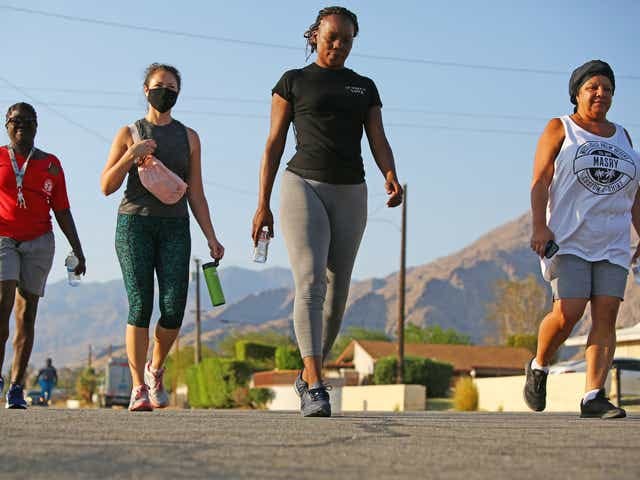
Photo by Desertsun.com
Photo by Tyrone Beason / LA Times
Photo by Geoffrey Moore

A well-kept secret brings freedom, peace, and their plight in comparison to many of the bigger or larger cities, where the residents created a mecca that worked for them, in the face of opposition and injustices.

This well-kept secret oasis is located witiin the city limits of Palm Springs where very few are aware exist, as many concluded that Palm Springs was void of African Americans.

From the first half of the last century to date, hundreds of African Americans from over the country settled in desert communities like Palm springs for better jobs, land ownership, and freedom to live the desired life.
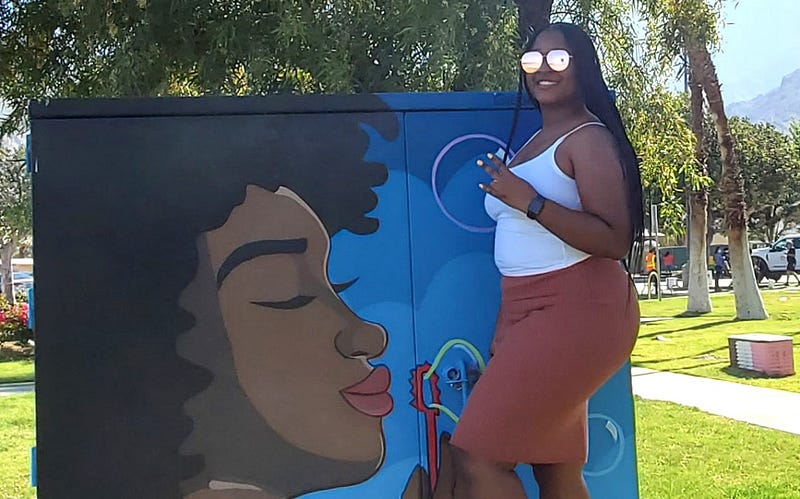
Photo by Tyrone Beason / LA Times

African Africans found their haven as they were forced out of their homes as was the norm for most people of color as the whites overtook their properties. This historically Black district resulted in the 1960s from the same type of removal where dozens of people of color created their oasis.

As had happened in many cities around the country, Blacks were restricted and segregated to neighborhoods via housing mandates, lending practices similar to the redlining concepts, being suppressed by the KKK and in the midst of Jim Crowism. Unfortunately, this legacy of segregation and denial continued on a less visible level.
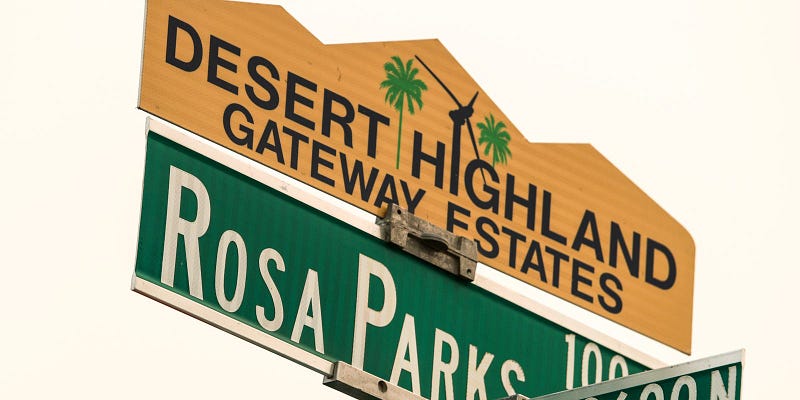
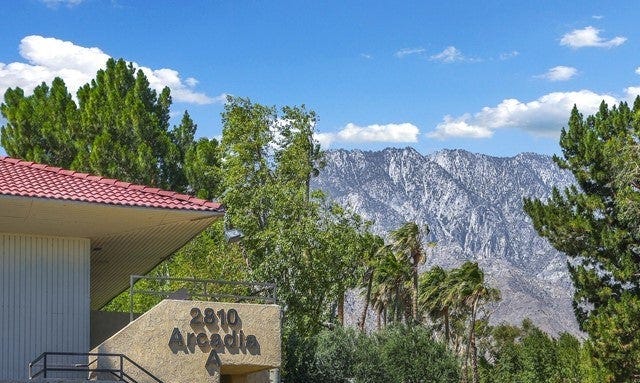
Photo by Desertsun.com
Photo by Geoffrey Moore

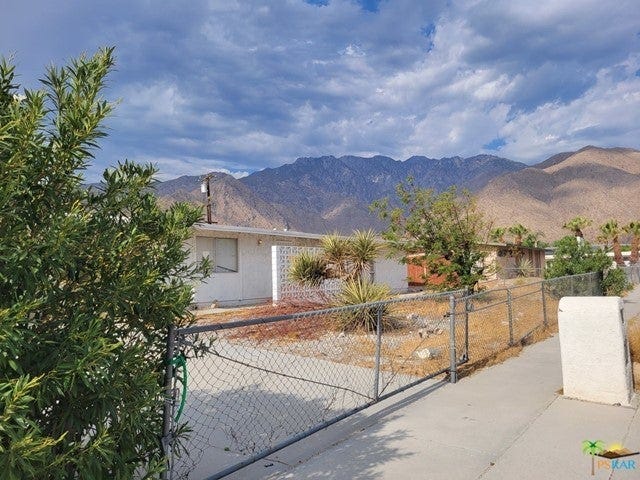
Highland Gateway Estates, a complex of about 400 homes, is located on the northern outskirts of Palm Springs, three miles from downtown. Another historically Black neighborhood, Lawrence Crossley, named after its Black landowner, near Palm Springs airport, a single U-shaped street lined with several dozen two- and three-bedroom houses shaded by palms, and on one side is the lush green of a municipal golf course and a far-end there exist a strip of barren desert.
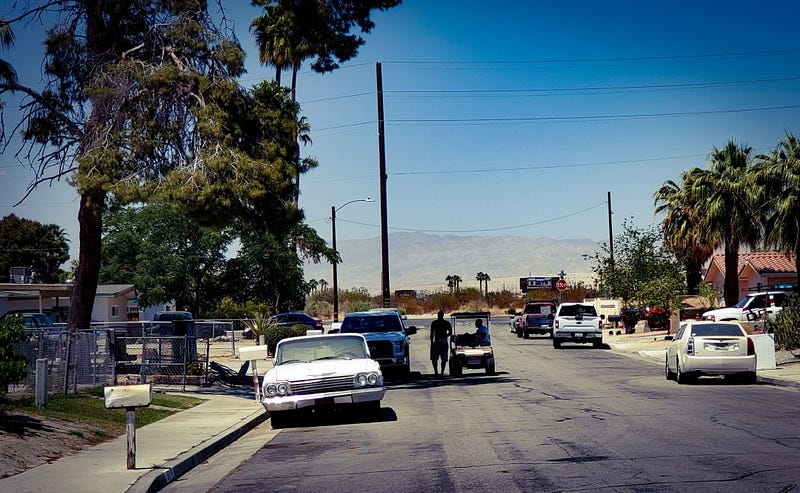
Photo by Tyrone Beason

Even in their seclusion, while many plights were far better than the south and other regions inundated with systemic racism, on the outskirts of Palm Springs, about three miles away. African Americans found a better life but struggled as they were aware that they lived in a country that did not embrace them no matter how many wars they fought and died in as justice and equality often escaped their reality.

The city officials, back in the day, forced the African Americans and other people of color, an old habit that started with the founding of this country or the taking of this country from the Native Americans, out of their homes in downtown Palm Springs. While many stated that they had a good life, but quickly acknowledged it was not fair.

Trees that were planted in the late 1950s and were believed to have been planted to isolate the African Americans from the city’s golf course and Palm Springs residents but have been of late cut-down as the residents led the charge for their removal. Also, planting these trees prevented their properties’ value from being equal to Palm Springs and being next to a golf course, all this was coupled with being denied equal financing.

Many African American residents who were raised in these two historical towns have chosen to buy properties there as their legacy continues and to follow in their parents' pursuit for a better life.
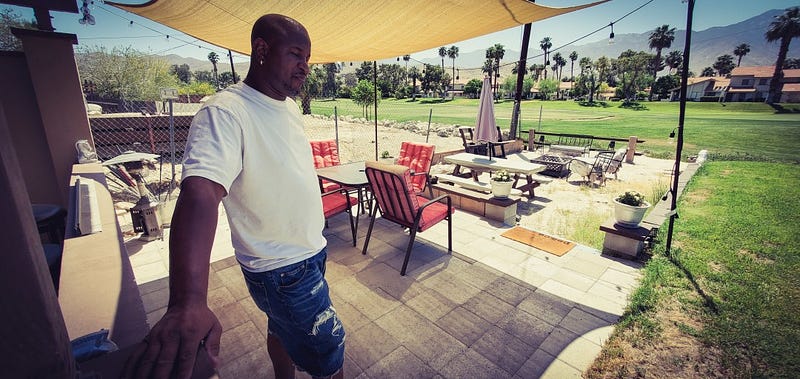
Photo by Tyrone Beason

A native of Palm Springs, Christopher Williams, can be seen in the above photo overlooking his backyard as it faces a golf course and San Jacinto Mountain, which had been blocked from the 1950s by the planting of trees.

Similar to railroad tracks, Section 14, an area in downtown Palm Springs, permitted the local officials to orchestrate their removal from land owned by the Agua Caliente Band of Cahuilla Indians in the city center, which was home to African Americans, Mexicans, and Native Americans until the 1960s and razed their homes as part of a redevelopment plan. Today, this land houses the city’s convention center and a casino.

The African Americas similar to the residents in Tulsa, Oklahoma, turned the area into a cultural hub inclusive of three churches, Black beauty supply store. As they were denied access in downtown Palm Springs to restaurants or had to go through the back door, or had to travel 30 miles to get a bank loan, and were relegated to lower-paying jobs such as housekeeping, restaurant, and construction jobs, nevertheless, they moved forward and continued.

Today, the population has decreased by 50% do to widespread poverty and joblessness while many are losing their homes that their families worked so hard to build in the face of much racism.
Photo by Tyrone Beason

In conclusion, the above photo depicts the pride that these two neighborhoods harbor in spite of its history of racism and more recently as a result of a protest against Floyd’s murder at the hands of ex-officer Chauvin was met with much negativism from Trump supporters.

African Americans built lasting communities and have made it very clear that they are there to stay and stated that Blacks can get along with anybody but people cannot get along with them. One resident stated, “We as Black Americans have found different ways to figuratively shatter racism into so many pieces of scrap, so as not to let centuries of injustice extinguish our love of life.”

Life goes on as African Americans have done and always will do in the face of racism.

For additional reads:

Racism
Life
Life Lessons
BlackLivesMatter
Education
Recommended from ReadMedium