How a trip to L.A. made me feel like a useless suitcase?
Years of air travel as a wheelchair tennis player have more than once left me with the sour feeling of deserving less consideration than a young child at best, an old trolley at worst.
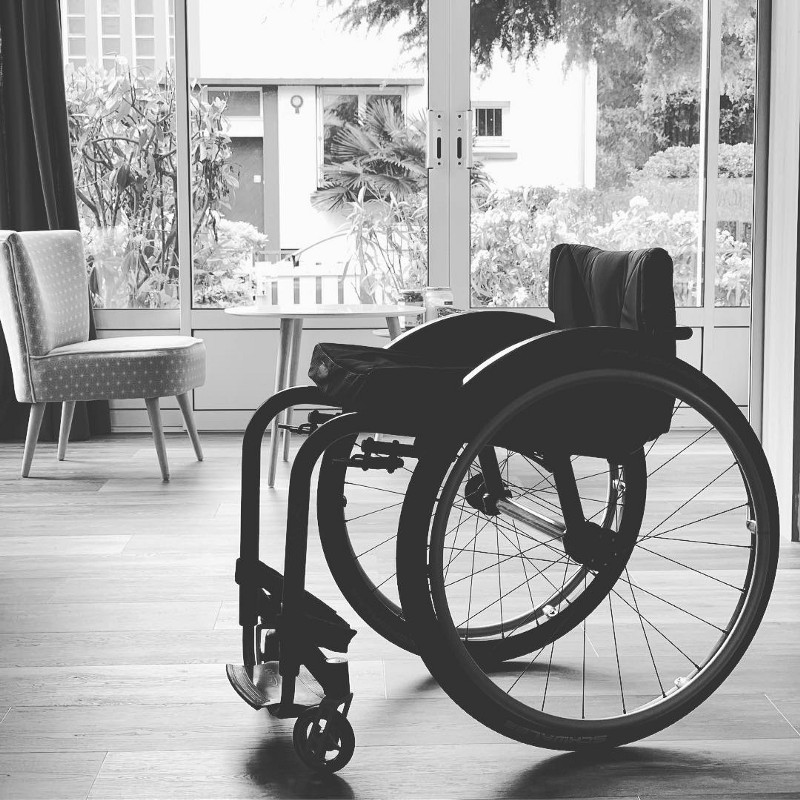
Sometimes funny, most of the time upsetting, airport anecdotes, as a victim or witness, I have loads. From a non-transiting wheelchair at London Heathrow to the lost wheels (because separated from their chassis in Pensacola) upon arrival in Fort Lauderdale, my records also include all kinds of nervous breakdowns, boarding denials, delays in disembarking, missed planes. The wheels slightly bent by overly conscientious cargo storage define the ultimate “Crab curse” since the wheelchair will never head straight again. We may lack physical abilities but not a sense of humor. Most of the time!
When principles regulating disabled passengers’ freedom of movement are inept and discriminatory, like in Paris Charles de Gaulle airport, keeping calm and travel becomes more laborious.
I don’t need a chaperone, thank you, I already have a husband.
Last October, my husband and I took off for Los Angeles on a business trip from Roissy Charles de Gaulle Terminal 1. The situation is doubly unusual. First things first, I am not familiar with this oldest and most neglected part of the airport. Moreover, I hardly ever travel in a wheelchair anymore but walking with a cane. A sharp and painful spike took me back a few years, though.
Since I am no rookie in this world, I told Norwegian upon booking. I also made it to the check-in area three hours ahead of schedule. We are only away for a few days; thus, we have only carry-ons, except for my manual non-foldable wheelchair, that I intend to ride around freely until we board. Seriously, have you ever been asked to remove your shoes when strolling in an airport? Craving to kill hours at Starbucks, we decline an assistance offer and head toward boarding areas. I don’t need a chaperone, thank you, I already have a husband.
The situation gets more complex a few meters further on, at the foot of the conveyor belts that engulf passengers in the terminal’s belly.
- She can’t take the conveyors on her trolley, says an airport Lady to my husband.
It is indeed well known that disabled people are not “Madam” or “Sir” but “She” or “He”. Don’t complain; it could be “It” as well. She also does not hear, does not speak, does not deserve to be addressed directly. And I pass on my state-of-the-art-five-grand-worth wheelchair being called a shopping trolley.
A triangular conversation starts. I politely ask for explanations from the agents. They answer my husband without looking at me. No doubt, they should put a plastic pouch with a U.M. logo around my neck!
I don’t want to get angry. I love L.A., and these agents, after all, are victims of a lack of training, time pressure, and rules imposed on them. So, I try to explain my point calmly, but safety prevails upon discrimination. Our dialogue is deaf. Everyone seems right.
Reality is simple: conveyors can be dangerous for wheelchair riders. The airport is right to warn people and to wash their hands of any responsibility. They are also duty-bound to offer an alternative solution like an accredited attendant to head through a restricted-access passage. But nobody should impose on me something I don’t need. I also refuse to have my abilities decided for me by standardizing a whole group on a single norm. Shouldn’t people over 60 also be denied access because some are less mobile than others, then?
I didn’t win my case. I finally had to accept being walked by an attendant to access my coffee.
Then, it was time to board the plane.
- Where’s the chair? asks a ground staff to a colleague talking about me, not about my locomotion tool.
- Over there. We’ll put it last!
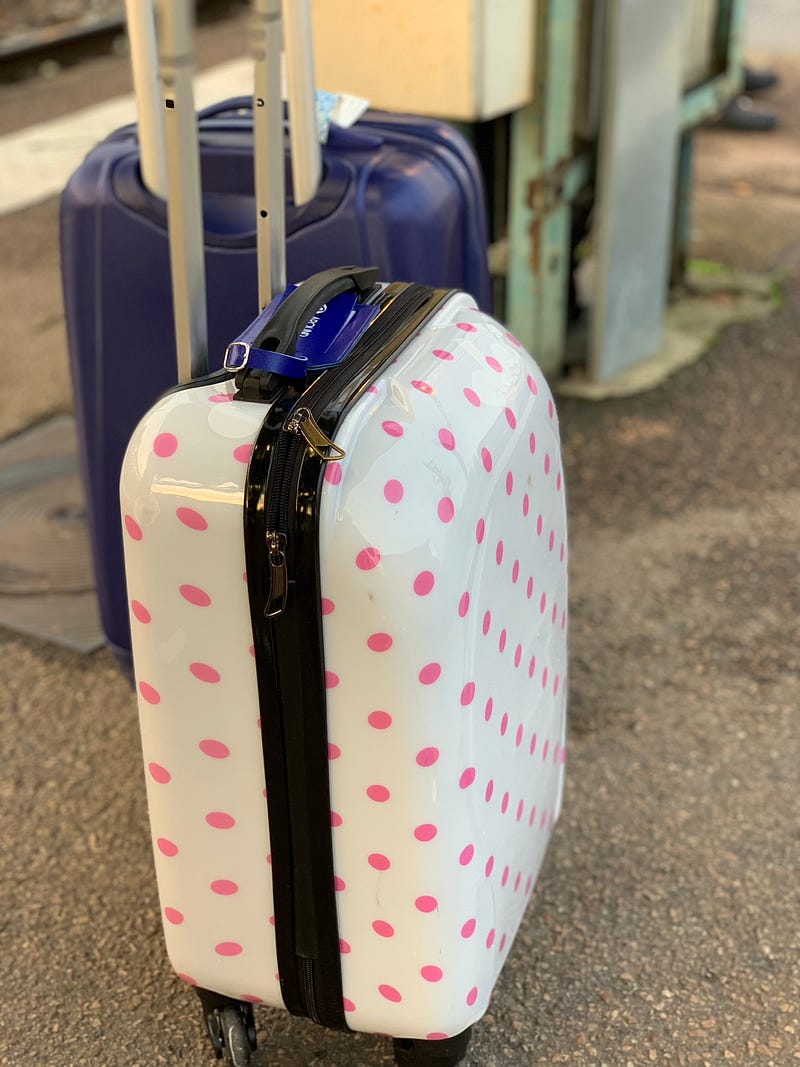
That is when I no longer was a “she” anymore when I became a useless suitcase, an object without conscience and feelings.
Accessibility is not enough.
A few days later, I received apologies from the airport reps. Not enough, though. Rules and philosophies underpinning them must change throughout our society.
Wheelchair circulation (as for any other disabilities) is a matter of adapting buildings ergonomics, by combining technology and usages. Making a place accessible means allowing people to move around; autonomy means having the freedom to do so by oneself, to the extent of one’s abilities, in complete dignity.
The difference seems tenuous. It is not so much so. Imagine yourself sitting, without being able to stand up, on a chair that you cannot handle alone, with the urge to buy a magazine, a sandwich, or worse to pee. For all this, you will have to ask permission; you will need supervision at all times. Flirting with a handsome stranger? Don’t even think about it.
Make disability visible! Everywhere.
In France, the law only became binding in terms of wheelchair accessibility in 2005. Not entirely, though!
Every year, deadlines imposed on promoters increase, and the risks of penalties decrease. The reasons are numerous. The lack of visibility of disabled people in the public sphere is a huge one. Decisions are indeed made by men who are little or not concerned about the issue. The fact that there are few or no voices in artistic, audiovisual, or economic circles is a significant problem.
Sportsmen and women with disabilities are important actors of change. For years, we have worked hard to challenge procedures at Paris airports, shouting out whenever necessary, explaining, denouncing. We have left crazy energy in the air. Today, voices are rising. My best mate, Michael Jérémiasz, has been waved in his wheelchair by the crowd at a music festival in France. He is also commenting sports on T.V. every Saturday afternoons, and he is raising awareness in media and politics big time. That comforts me, of course, to think that we are heading the right way. Plus, the 2024 Olympics and Paralympics will be a tremendous accelerator of integration and social inclusion.
But the road is long and strewn with pitfalls, first and foremost, among which is a critical societal question: are disabled people, citizens like any other?
Answer yes to this question, and I should never again feel that I am treated like a toddler or a bulky old suitcase when I travel the world.
Answer yes, and I should never feel discriminated against in the blind and undifferentiated application of a supremacist principle of precaution.
The transformation of the way we regard people with disabilities is an absolute necessity, just as upgrading public infrastructure is essential to everyone’s freedom. Ignorance and simplicity shall never limit individual rights in any way.
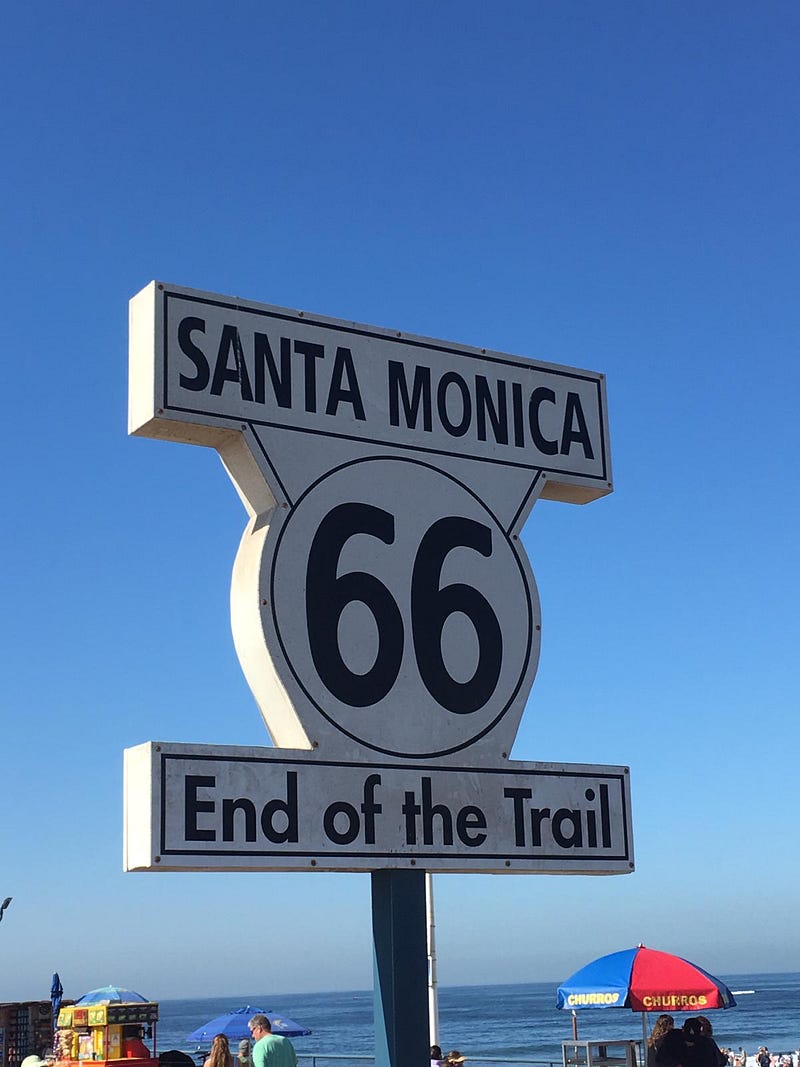
Rarely have I been so happy to stroll freely under the sun of Santa Monica as I was last October.
Join me for weekly tips to overcome your challenges and step out in a bigger world.