
How a Top Hair Loss Researcher Saved My Hair
How to naturally regrow your hair — based on my attempts, learnings, and results
Hair loss can obliterate self-confidence and exacerbate mental health issues. Given that more than 55% of women and 85% of men are likely to experience hair loss in their lifetime, I find it odd that it remains a taboo. In 2020, my stress hit an all-time high. I have dealt with bouts of stress-induced telogen effluvium (a shedding disorder) throughout my life. It became a chronic issue in 2020, and when coupled with androgenic alopecia and scalp issues, things got pretty bad upstairs.
My dad lost most of his hair in his 30s. Same with my uncle on my mom's side. Both of my grandfathers were bald. From an early age, I desperately wanted to avoid that outcome.
At 40, I have a full head of hair, thanks to Rob English, who has conducted hair loss studies papers ranging from systematic reviews to cross-sectional surveys, focusing on experimental treatments like microneedling and massaging. English has also published five peer-reviewed papers on androgenic alopecia.
In 2020, I reached out to Rob, and we had a 1-hour call. In that time, he was able to determine the causes of my hair loss and recommend a few interventions, with or without the use of drugs. I opted for the natural route. His knowledge of hair loss floored me. This guy had essentially cracked the code for hair loss and regrowth.
Like myself, Rob had spent thousands of dollars trying to regrow his hair and eventually took matters into his own hands. He tried minoxidil for almost seven years and saw no effect. Rob also tried oral finasteride, albeit for just a few days.
He read quite a few horror stories online, which dissuaded him from sticking with the medication.
Rob has since spent over 15 years combing through thousands of studies, organizing and synthesizing data. His obsession eventually turned into a career, as he made it his mission to demystify and debunk an entire industry.
Rob called hair loss the "spammiest corner of the internet," surpassing even male enhancement and anti-aging.
I was so impressed by his company — and my results — that he eventually became a marketing client of mine in 2021. His site deserved more traffic. At the time, he had just a few hundred members, yet he provided information that couldn't be found anywhere else. I wanted to do all I could to help him succeed in reversing hair loss for as many people as possible, as most hair loss sufferers believe hair recovery is only possible with the use of drugs, wigs, and plugs.
In this article, I walk through different ways to identify the cause of your hair loss and include the natural, multi-faceted regimen Rob recommended.
Disclaimer: I’m not a certified hair-loss (or growth) expert — Rob is. Everything I share is based on my own research, experience, and recovery process with Rob’s help. Consult your primary healthcare provider or doctor before applying these tips.
Determine the Cause of Your Hair Loss
Before starting any hair loss regimen, you need to determine the root cause(s) of your hair loss.
Rob has figured out a simple method for determining if you are suffering from androgenic alopecia (male or female pattern baldness).
Telogen effluvium is a shedding disorder typically triggered by stress, hormonal changes, hypothyroidism, and vitamin deficiencies (particularly iron, vitamin D, and zinc). It is characterized by rapid and diffuse (scalp-wide) shedding, with many hairs containing a rounded white bulb at the end of the shaft.
There are many other types of hair loss, as defined in this article. Rob's membership site includes the industry's most extensive (and accurate) online hair loss assessment.
My hair loss was misdiagnosed multiple times, and after five years, a trichologist in San Diego figured out that some of my hair loss was attributed to pityriasis amiantacea, a rare and aggressive form of seborrheic dermatitis.
Large scales would form on my scalp and bind down tufts of hair, taking all the hairs with them when they detached. Fun stuff.
For these issues, Rob recommended low-level laser therapy, dietary changes, and ketoconazole shampoo, all of which helped clear it up.
My Five-Step Hair Growth Regimen
No two cases are alike, though the following regimen has been shown to work for both men and women suffering from various hair loss issues. I have recommended it to numerous people (male and female), all of whom saw considerable regrowth.
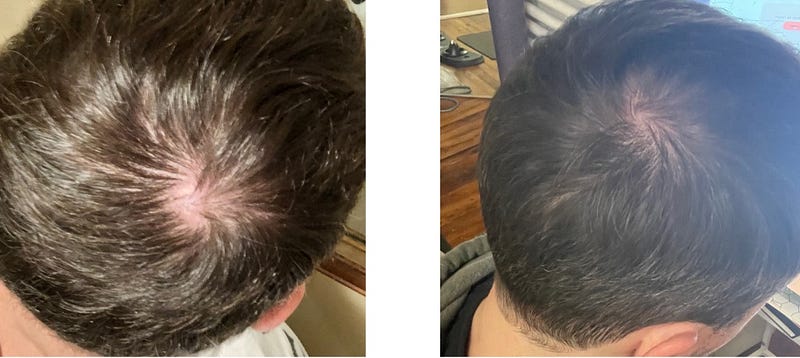
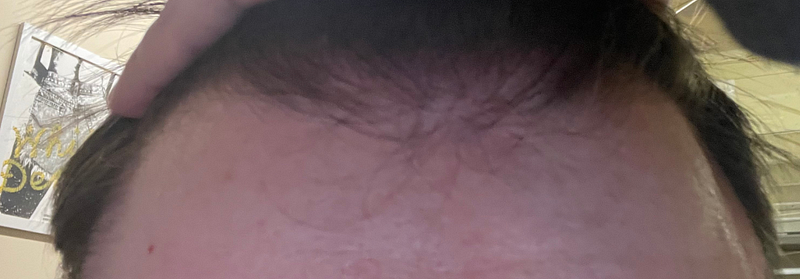
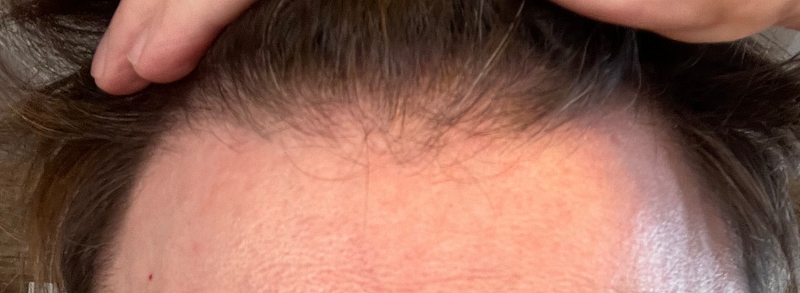
Below, you will see a few of my before and after photos. They aren't the highest-quality photos, though the improvements are evident.
1. Use oral and topical saw palmetto
Saw palmetto is proven to reduce hair loss and regrow hair. It does so by partially blocking the mechanisms of follicle-attacking DHT. Saw palmetto can slow, halt, and even reverse hair loss. However, compared to popular hair loss drugs like finasteride and dutasteride, the results are far less dramatic. It should be used as one intervention of many — not as a standalone treatment for hair loss.
The average person may experience regrowth of between 5% and 15% using oral saw palmetto. These are by no means clinically (or cosmetically) significant numbers.
Saw palmetto has a very brief half life. To increase hair gains, saw palmetto should be taken orally 2x per day (160mg in the morning and evening) and applied topically. I use a cold-pressed saw palmetto topical (with added melatonin) three nights a week and apply a daytime topical three days a week. A little goes a long way. Apply only to problem areas of the scalp.
While it's low in efficacy compared to drugs like finasteride, a new randomized, placebo-controlled study shows promising results. Both saw palmetto and finasteride inhibit type II 5 alpha-reductase (and thereby lower DHT levels). Saw palmetto's tissue-dependent effects are limited. In contrast, with finasteride, the DHT reductions are more significant and systemic (which can be problematic).
Saw palmetto helped slow down my hair loss when taken as a standalone oral treatment. When I added the topical, I began to see a visible amount of regrowth.
2. Follow a hair-friendly diet
Diet affects hair loss and hair growth. A lot of hair loss can be tied to low-grade inflammation, so do your best to prevent the consumption of inflammatory foods. I do not eat processed foods and limit the consumption of grains and sugar.
Be sure to examine any packaged food with a nutrition label. Prioritize whole, organic foods and be careful when eating out (processed seed oils are highly inflammatory).
To feed your follicles, prioritize zinc-rich foods and nutrient-dense meat, dairy, fish, fruit, and vegetables. Consider consuming more oysters, sweet potatoes, avocados, cheese, salmon, red meat, broccoli, greek yogurt, and beef liver.
Make sure to consume foods high in lysine, as it can increase collagen production, which is essential for healthy hair growth. Taurine has shown great potential in combating alopecia. I take it daily in powder form. It might be a good idea to add it to your hair loss regimen if you don’t consume a lot of taurine-rich foods.
Collagen supplementation may also help, though it is unlikely to produce any visible results on its own. If you are vegan or vegetarian, make sure you are getting enough quality protein in your diet.
You may want to supplement with fermented essential amino acids (EAAs) if you are not consuming at least .75 grams of protein per pound of body weight. Bacterial-fermented EAAs were initially developed to prevent muscle wasting in cancer patients. Many boast a bioavailability rate upwards of 99%, meaning nearly all of these amino acids are made available to produce new tissue, including skin and hair.
3. Try low-level laser therapy
LLLT is effective; it just requires time and money (and most products look ridiculous). I use a device every other day for 25 minutes. Just don't expect to regrow more than 15% of hair that has been lost. Like saw palmetto, it should be used as one of multiple interventions — not as a standalone hair loss treatment for androgenic alopecia, alopecia areata, telogen effluvium, and other hair loss disorders.
If you want to try an LLLT device, Rob recommends investing in one with a 6+ month guarantee, as you should see results within that time horizon. If you don't see results by then, consider returning your device and exploring other interventions. In over ten years of consultations, Rob has never encountered someone who could show cosmetic hair regrowth from LLLT as a standalone therapy.
That said, LLLT works well for most people suffering from androgenic alopecia, as well as inflammation-driven hair loss. It has also shown promise in cases where cancer patients shed a significant amount of hair during chemotherapy.
4. Apply topical melatonin to the scalp at night
I add 1–2 drops of topical melatonin to the saw palmetto topical. Be sure to use it only at night, as it can cause drowsiness even when applied to the scalp.
Doses as low as .01 mg of topical have been shown to regrow hair. Topical melatonin acts similarly to minoxidil. It extends the anagen growth phase and activates the WNT signaling pathway — a critical pathway that controls hair growth. I have seen many "baby hairs" sprout since incorporating topical melatonin a year ago. My hair looks and feels noticeably thicker as well.
5. Wash your hair with ketoconazole shampoo
Ketoconazole has been shown to reduce scalp DHT levels without impacting hormone levels elsewhere in the body. Ketoconazole is prescribed as an anti-fungal shampoo for treating dandruff and seborrheic dermatitis. It also helps reduce scalp inflammation.
While ketoconazole is technically considered a drug, it has virtually no side effects over decades of widespread usage. Most complaints are likely linked to sulfates and benzyl alcohol, both of which cause issues for many people (myself included). I use a more natural OTC formulation of 1% ketoconazole shampoo 3–4x per week and leave it on the scalp for 5–7 minutes.
Studies show that 2% ketoconazole shampoo boasts a response rate of 80%, with average hair density increases of 5%. As a note, 1% formulations have not been proven clinically effective for treating androgenic alopecia and other hair loss disorders.
Other Considerations
Before incorporating any of the treatments above, you should optimize your health, beginning with three foundational pillars: Sleep, diet, and exercise.
Each case of hair loss is different from the next. What worked for me may or may not work for you. I would rather get hair plugs than touch any drug that disrupts hormones. If you go the drug route, perform your own research before popping any pill.
Try scalp massage and micro-needling (with minoxidil)
Rob is a big proponent of scalp massage — though he regularly emphasizes that the intervention is experimental, not a replacement for FDA-approved drugs, with widely varying results. It's possible that scalp massages may work similarly to microneedling — another therapy that seems to have an amplifying effect on drugs like topical minoxidil.
Some of his most dramatic case studies involved scalp massage and/or microneedling (with or without minoxidil). He and his team drafted a peer-reviewed paper on microneedling, which remains the most comprehensive resource available on the topic today. Here's a video synopsis of the piece.
Since I was dealing with telogen effluvium, Rob advised that I not include these interventions, as they can make matters worse.
Manage your stress
Stress management is critical, as stress exacerbates androgenic alopecia and can lead to diffuse thinning (telogen effluvium).
Here are the three most effective ways to manage stress, in my experience:
- Meditation (2x per day)
- Morning walks in sunlight (coupled with deep breathing)
- Moderate exercise (5x per week)
Limit the consumption of caffeine and alcohol, as both can negatively affect the central nervous system, even in small doses. I cut out alcohol in January 2020. When I drink coffee, I pair it with 200mg of l-theanine, which mitigates the adverse effects (a 2:1 ratio of l-theanine to caffeine is ideal).
Maintain a hormone-friendly home
Hormonal health is a key to maintaining healthy hair. Unfortunately, we are surrounded by endocrine disruptors. Here are my recommendations:
- Dishes: Use baking soda for hand-washing dishes.
- Laundry and cleaning products: For laundry, use white vinegar and add 2–3 drops of essential oil for scent. If you want to use detergents and household cleaners, opt for 100% bio-based options.
- Cologne and perfumes: Almost all fragrances are filled with endocrine disrupters. Use with caution.
- Face care: I wash my face with Burt's Bees Orange Cleanser and use pure witch hazel as a toner. I will clear my pores twice per week with pure jojoba oil.
- Sunscreen: I use Keys Luminous Plus as a facial sunscreen when I'm out in the sun for more than 30 mins between 10–4. It's 100% natural.
- Mouthwash and teeth whiteners: If you like mouthwash, try Lumineux. They also have toxin-free whitening strips. The safest way to whiten teeth is by using a brush with a rotating head — with minimal pressure applied. Avoid traditional teeth whitening products. I use Ojook toothpaste.
- Body wash: I use a 100% organic soap from Norway. Brommers is also a good — and more affordable — option.
- Shampoo: I use a 100% organic shampoo 2x per week, in addition to the ketoconazole shampoo. Most chemical-laden store-bought shampoos make hair loss issues worse.
- Hair styling products: Many hair styling products can cause scalp build-up and even exacerbate hair loss by bombarding follicles with chemicals. Use styling products sparingly and try to find chemical-free options.
- Additional recommendations: Avoid tap water like the plague. Pass on plastic cutting boards, plastic seasoning grinders, bottled water, and standard paper towels (many contain chlorine and formaldehyde). Try to avoid wearing polyester and other synthetic fabrics.
Don't Sweat the Hairfall…
It's hard not to freak out when you find clumps of hair on your pillow and in the shower drain. As I have experienced, worrying only leads to more shedding. In most cases, your hair will recover. If not, find peace knowing that there are options out there, even if that means flying to Turkey for an FUE hair transplant, using minimum viable amounts of oral/topical finasteride, or simply embracing the baldness.
With that said, you should factor in your year-over-year rate of hair loss and the opportunity cost of trying natural interventions. Those who are losing over 10% of their hair annually from androgenic alopecia may want to consider more aggressive measures than those I have taken.
Best of luck on your hair growth journey, and be sure to check out Perfect Hair Health's YouTube channel. You will find tons of valuable information on hair loss diagnosis, prevention, and treatment.
Disclaimer: I'm not affiliated with Perfect Hair Health and have not been compensated for this article (and the company is no longer a client). I believe in the value of Rob's work and want to help people file through endless misinformation online. His company provides many free resources for those who cannot invest in a membership. I did not receive any affiliate commissions from mentioning products.


