How A Texas Supermarket Helped Defeat Communism
The Cold War wasn’t just fought in Vietnam and Afghanistan; it was also fought in kitchens.
The Cold War occasionally involved bullets and bombs, but its battles were mostly fought by athletes, artists, diplomats, inventors, scientists, filmmakers, and other civilians.

This was first and foremost a war of ideologies, a clash over whether capitalism or communism provided better outcomes for ordinary people. In 2023, with the benefit of hindsight, it seems obvious to us that life was better in the US and Western Europe — but to people at the time, the situation was not always so clear.
The Soviet Union, communism’s flag-bearer, had almost the same life expectancy as the US in 1970; it offered free university education, free kindergartens, free healthcare and free accommodation for workers. In the 1970s and 1980s, Soviet literacy rates were as high as 99.7%; in 1982, the US Census Bureau found that 13% of Americans were illiterate.
From 1967 onwards, Soviet workers got 15 paid vacation days per year, which could be spent at heavily discounted holiday resorts in places like Crimea or Lake Baikal. Many people had a basic country house (“dacha”), and if you didn’t, someone if your family probably did, or you could rent one cheaply.
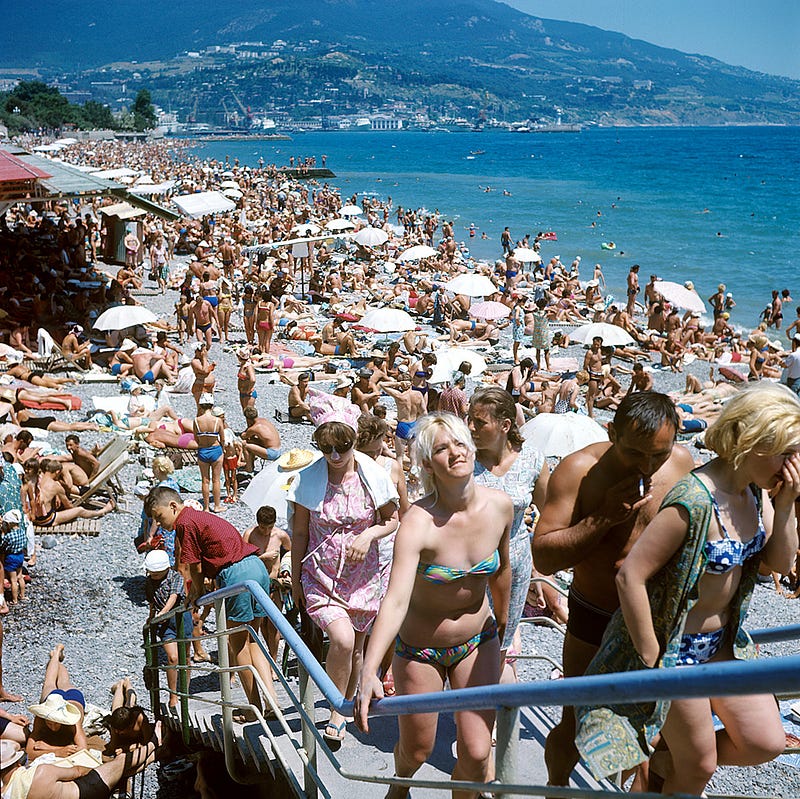
I’m not trying to depict the USSR as a paradise. That free healthcare didn’t always involve state-of-the-art equipment, like anaesthesia; holidays usually involved a shared room; getting to the best universities or the best apartments often required connections or bribes. However, it’s not like everyone in the US was going to university or had idyllic holidays at that time either.
The important point here is that the ruling Soviet elite was not always as cynical as we often believe. During the Cold War, when contact between the capitalist and communist worlds was limited, the Soviet intelligentsia and ruling elite really were idealistically communist. They genuinely believed that their system was better for ordinary people, and dismissed evidence to the contrary as American propaganda.
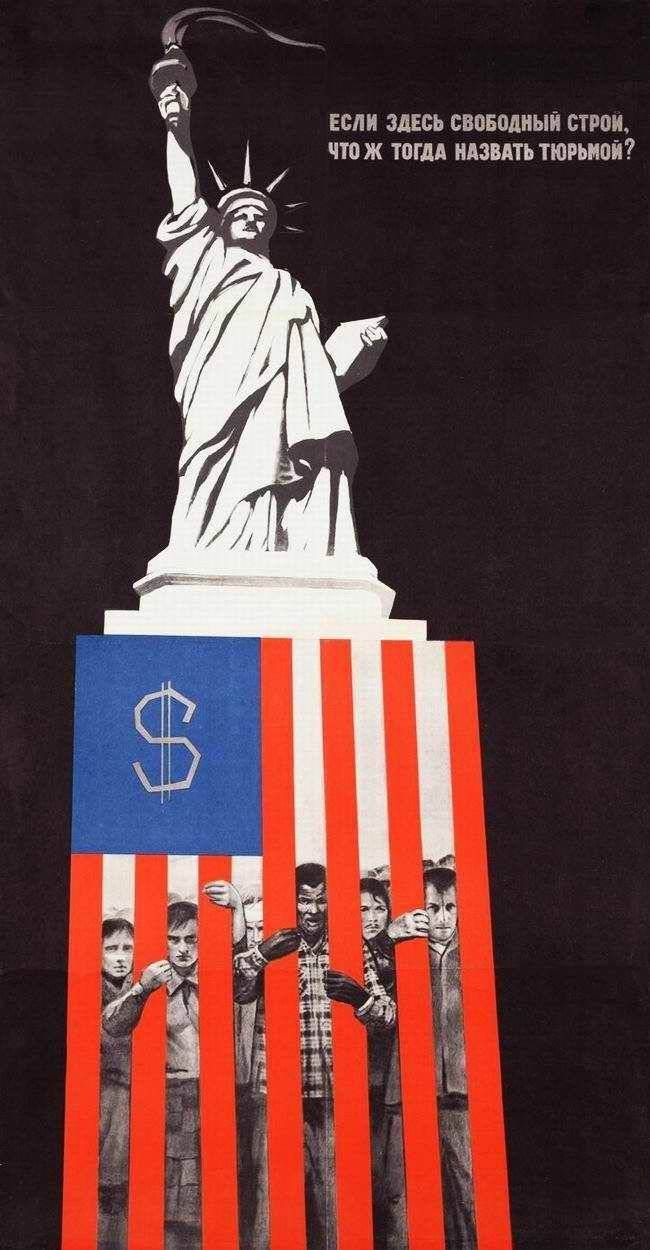
On those rare occasions when the duelling superpowers opened up to cultural exchange, neither could resist a little propaganda, which led to both sides becoming quite cynical. The classic example is the Kitchen Debate.
In the summer of 1959, the US and the Soviet Union held a pair of exhibitions: a Soviet one in New York in June, and an American one in Moscow in July. Lots of money was poured into these with the goal of impressing the other side with their culture rather than military might.
The centrepiece of the Soviet exhibition was a replica of Sputnik 1, the first human-made satellite in space.

At that time, the Soviets rivalled or surpassed the US in many areas of science and heavy industry — something the US was well aware so. So instead of trying to impress the Soviets with such serious stuff, they focused on the one area where the Soviets couldn’t come close: consumer goods.
Whereas the Soviets spent $12 million on their exhibition, the US government only put in $3.5 million, and allowed the rest to be paid for by private companies like Ford and IBM that were hoping to break into the Soviet market. The centrepiece of the American exhibition was a model of a prefabricated suburban house that cost $14,000 (~$125,000 today).
The house was enormously interesting to the Soviet public — in 6 weeks, 2.5 million people visited the house. It was packed with appliances like a dishwasher, fridge-freezer, washer-dryer, 4-burner stove, and a built-in oven. Most importantly, in late 1950s America, it genuinely was representative of a modest Californian middle-class home.

But that was not something that Soviet leader Nikita Krushchev was willing to accept. He was shown around the house by then US vice-president Richard Nixon, and the two ended up sparring verbally:
Khrushchev: Your American houses are built to last only 20 years so builders could sell new houses at the end. We build firmly. We build for our children and grandchildren.
Nixon: American houses last for more than 20 years, but, even so, after 20 years, many Americans want a new house or a new kitchen. Their kitchen is obsolete by that time. . . . The American system is designed to take advantage of new inventions and new techniques.
Khrushchev: This theory does not hold water. Some things never get out of date — houses, for instance, and furniture, furnishings — perhaps — but not houses. I have read much about America and American houses, and I do not think that this exhibit and what you say is strictly accurate.
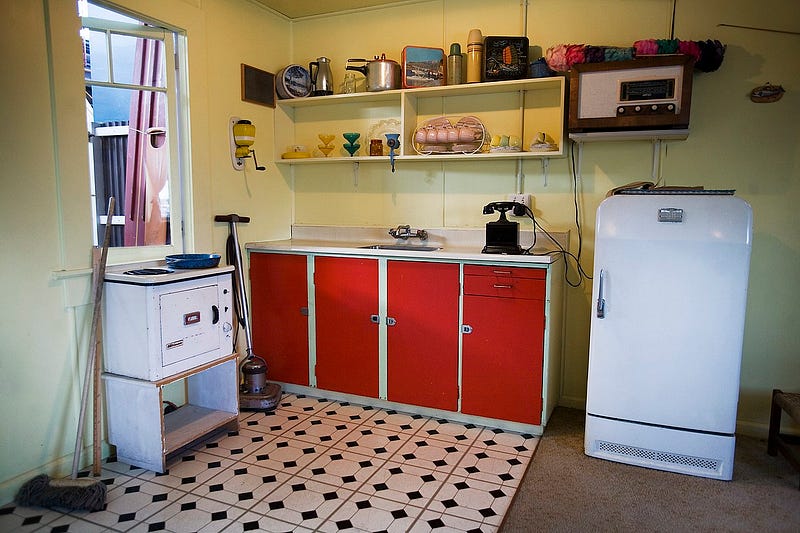
Khrushchev also mocked some items on display (like a handheld lemon juicer) as being more complicated than the traditional method, and forced Nixon to admit that some of the American products were prototypes, not yet available to the public.
In summary, Khrushchev was not impressed. This Soviet dictator, who had only 4 years of education and was born in 1800s Russia to impoverished peasants, genuinely believed in the superiority of the Soviet system. The same was true of many leading Soviets throughout the Cold War. The son of the Soviet ambassador to the US gave this memorable quote about the model home:
“Presenting this as the typical home of an American worker is like presenting the Taj Mahal as the typical home of a Bombay textile worker, or Buckingham Palace as the typical home of a British miner.”

Throughout the Cold War, the US struggled to keep up with the Soviet military, but was very successful in crafting a sexier image. American jeans and music and fast food were the envy of Eastern Bloc citizens.
There was, however, more to life. Soviet leaders could reassure themselves that there were fewer homeless people in the USSR, that their women and minorities were less oppressed, and that any Soviet steelworker could attend the opera or ballet.
So let’s fast forward to 1989. The momentum is definitely with capitalism, and many people in Eastern Europe are demanding (and getting) freedom from Soviet oppression. Even the USSR itself is opening up, thanks to Mikhail Gorbachev’s glasnost and perestroika policies.
Its failings had never been so apparent, but its society had also never been so free. The year before, American President Reagan Ronald accepted that the Soviet Union was no longer an “evil empire”. Many wanted to see the USSR gone forever, including people living there, but many others hoped that it could reinvent itself as a free and egalitarian society — particularly Gorbachev himself.
Boris Yeltsin was one of Gorbachev’s key allies. Today, he is best remembered as the alcoholic and bumbling incompetent who oversaw Russia’s descent into oligarchism and lawlessness in the 1990s. In the late 1980s, however, Yeltsin was extremely popular as a symbol of liberal reform in Russia.
In 1989, he became a member of the Supreme Soviet (council) of the Soviet Union, making him one of the most powerful men in the country.
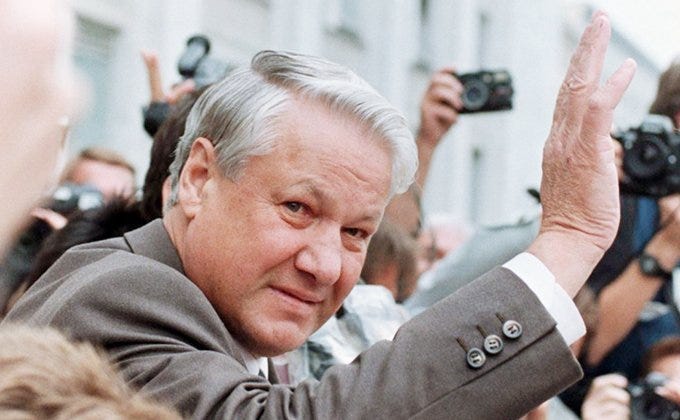
In his autobiography, he insists that he truly was an ideological communist and believed that it was a fairer system. His attitude was shattered, however, by a visit to the US that same year. He was visiting Johnson Space Centre to discuss plans for the International Space Station. It wouldn’t have been particularly impressive to him — the Soviets were the champions of space, after all.
But during his visit, Yeltsin insisted on an impromptu visit to a mid-sized Texan supermarket called Randall’s before heading to the airport. He wanted to see what the average American shopping experience looked like, without tour guides and diplomats to airbrush the experience for him — and what he found shocked him to his core.
“When I saw those shelves crammed with hundreds, thousands of cans, cartons and goods of every possible sort, for the first time I felt quite frankly sick with despair for the Soviet people.” — Yeltsin’s autobiography
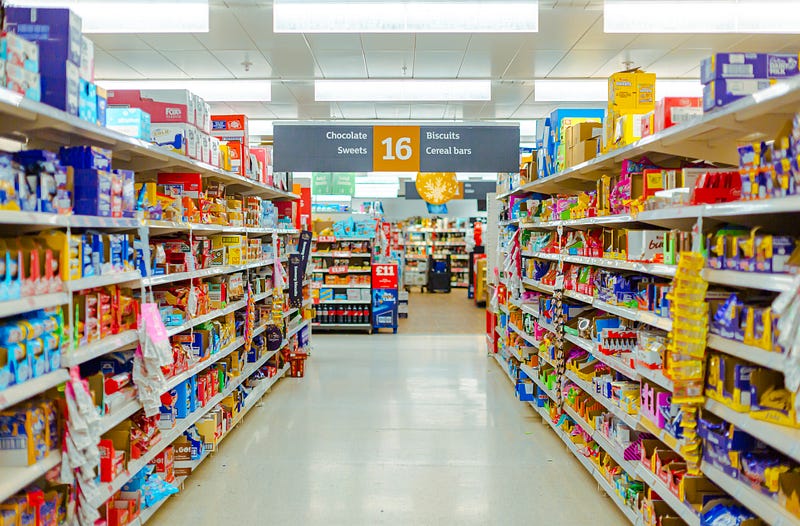
As a senior Soviet leader, he presumably had access to accurate economic data on both American and Soviet citizens whenever he wanted it — but seeing the abundance of capitalism with his own eyes still stunned him.
He walked around the supermarket marvelling at cheese samples and frozen pudding pops. He talked with the store manager about logistics details and the range of items on offer (over 30,000). As he walked around, Yeltsin muttered to his aids that not even Politburo members or Gorbachev himself had access to such extravagance.
On the flight home, he apparently said with his head buried in his hands, raging at the lies of Soviet propaganda and how his country was betraying the working class. An aid who was with him on that flight home reckoned it was when the last traces of Bolshevism left him.
The grocery store visit definitely happened, and it certainly shook Yeltsin to the core. But did the trip have any real impact on Yeltsin’s future actions? That is harder to be sure of. He was already an advocate of the Western system before the trip. A cynic might wonder if he hammed up the whole thing to animate people back home.
If so, the event still would have been significant as one of the first instances of a senior Soviet leader admitting that the West provided better for the ordinary citizen.
But it’s entirely possible that this incident was just as shocking to Yeltsin as he claimed, and that it did profoundly change his worldview. If you want a look at what a typical Moscow supermarket was like in the same era, take a look at this video:
It makes Yeltsin’s awe a lot more believable.