avatarRobert Roy Britt

Free AI web copilot to create summaries, insights and extended knowledge, download it at here

3808

Abstract

d recently</a>, 27% of U.S. adults say stress has such a grip on them they can’t function normally most days:</p><div id="3e0a" class="link-block"> <a href="https://robertroybritt.medium.com/2022-in-a-word-permastressed-6c9dd7cbcd90"> <div> <div> <h2>2022 in a Word: Permastressed</h2> <div><h3>Neverending crises have caused unprecedented stress and anxiety. Before we can get better, we must acknowledge the…</h3></div> <div><p>robertroybritt.medium.com</p></div> </div> <div> <div style="background-image: url(https://miro.readmedium.com/v2/resize:fit:320/1*eKFZZMt6srfR1fbizwKvJQ.jpeg)"></div> </div> </div> </a> </div><p id="2230">In a separate <a href="https://www.psychiatry.org/News-room/News-Releases/Americans-Anticipate-Higher-Stress-at-the-Start-of">new survey</a> published in late December by the American Psychiatric Association, 37% of Americans rated their mental health as fair to poor, with 26% saying they expect <i>more </i>stress in 2023. No surprise, many of these folks were planning New Year’s resolutions aimed at improving their mental health, with their top three plans for change being more exercise, meditation, and seeing a therapist.</p><p id="c08d">Stress, I like to stress, is not what happens in life, but how we perceive, process and react to what happens. Epel reflected on how the culture of stress has changed in modern times:</p><p id="8a90">“We have always had to contend with randomness of events — how things unfold in our lives, and uncertainty about tomorrow,” she explained in an email. “That is inherent in life, and scientists call that ‘irreducible uncertainty.’ Now we also have a bigger type of uncertainty, ‘volatile uncertainty,’ that refers to the dramatic life-changing events for us communally, that come with an unstable world — such as our climate and politics, and the dramatic and traumatic events those can bring.”</p><h2 id="0f57">How to Change Your Stress Response</h2><p id="a854">Preventing and dealing with stress, experts say, can’t succeed without a plan. It requires forethought and an <a href="https://elemental.medium.com/how-a-serious-stress-reduction-strategy-can-improve-your-life-91308a608845">actual strategy</a> for how you will deal with the inevitable challenges and frustrations that come your way every day.</p><p id="eef3">“We need to be more prepared for whatever can happen and expect to be surprised,” Epel said. “Things are changing rapidly in our era. We need to unstick ourselves from getting fixated to a specific picture of a future we must have. We can try living with ‘not knowing’ and making the absolute best of being alive at this time. We can still have a most purposeful and precious life. That is the opportunity in front of us.”</p><p id="f2f6">If stress is a constant companion, or even an occasional one, a serious <a href="https://elemental.medium.com/how-a-serious-stress-reduction-strategy-can-improve-your-life-91308a608845">stress-reduction strategy</a> can help. Or if you need a quick fix right now, this <a href="https://robertroybritt.medium.com/feel-better-in-3-minutes-90921dde7456">3-minute exercise in deep, slow breathing</a> serves as an introduction to relaxing in stressful moments. Indirect approaches are crucial to stress reduction, too. Healthy behaviors like <a href="https://robertroybritt.medium.com/get-out-a-super-simple-sleep-solution-a459fd273f92">spending more time outside</a>, <a href="https://robertroybritt.medium.com/22-minutes-that-could-save-your-life-c240a1a984f3">getting more physical activity</a>, and <a href="https://robertroybritt.medium.com/the-10-step-guide-to-better-sleep-f150796fe4ce">sl

Options

eeping better</a> feed off each other to create a positive cycle of improved physical and mental health, which provides more energy to get things done and manage emotions throughout the day, resulting in less stress.</p><p id="f88b">Recognizing the grip of stress is perhaps the most important step in any effort to deal with it. I’ve known people who claim to thrive on stress, or who say their stress is normal and there’s nothing to be done, yet watched it ruin their days in ways that seemed obvious — irritability, worry, constant fatigue, depression.</p><p id="f4e7">So I asked Epel what she’d say to people who might not realize how powerfully stress is affecting them and how much power they might have to make change.</p><p id="a00a">“Ask yourself if and when you get deep rest — true relaxation and restoration,” she said. “This can’t just be for vacations, which you probably skip or skimp on anyway (working on vacation is one of the ways we stay addicted to stress, to work). Try adding five minutes a day, each morning, to try a mind-body exercise that works for you. Slow breathing is an excellent choice. Add your favorite relaxing music to add some potency, and condition your body to that. Or get into urban nature in the middle of the day for your break. The green and blue mind states really show you what you are missing, and how good you can feel.”</p><p id="fbff">In <a href="https://www.amazon.com/Stress-Prescription-Seven-Days-More-ebook/dp/B09WMBSPLT">her book</a>, Epel explains how to be more resilient, to deal with the unexpected, to control what you can and let the rest be.</p><p id="c3c9">“We can’t eliminate stress,” she writes. “It will always be a part of life — anything worth doing will have aspects of stress woven throughout: challenge, discomfort, risk. We can’t change that. But what we can change is our response to stress. And in a rapidly changing, unpredictable world, we can do this with a beautifully simple pivot: We can learn to expect the unexpected.”</p><p id="498f"><b>Related resources:</b></p><ul><li><a href="https://robertroybritt.medium.com/feel-better-in-3-minutes-90921dde7456">Feel Better in 3 Minutes</a></li><li><a href="https://robertroybritt.medium.com/doing-nothing-can-be-really-something-938cf6d6b659">Doing Nothing Can Be Really Something</a></li><li><a href="https://robertroybritt.medium.com/a-stupid-simple-way-to-calm-and-focus-your-mind-9b55296a1901">Mindfulness: A Stupid-Simple Way to Calm and Focus Your Mind</a></li></ul><p id="5ec1"><i>I’m the author of <a href="https://www.amazon.com/dp/B0BJBYFQCB">Make Sleep Your Superpower: A Guide to Greater Health, Happiness & Productivity</a> (<a href="https://www.amazon.com/dp/0997761458">paperback</a> or <a href="https://www.amazon.com/dp/B0BJBYFQCB">Kindle</a> version). Your support makes my health writing possible. You can <a href="https://robertroybritt.medium.com/subscribe">sign up for emails</a> when I publish on Medium, or <a href="https://robertroybritt.medium.com/membership">join Medium</a> to directly support me and gain full access to all Medium stories. — Rob</i></p><div id="5cde" class="link-block"> <a href="https://robertroybritt.medium.com/10-ways-to-be-happier-in-2023-according-to-science-in-2022-ae5a6518d122"> <div> <div> <h2>10 Ways to be Happier in 2023, According to Science in 2022</h2> <div><h3>Resolutions that can actually make your life better</h3></div> <div><p>robertroybritt.medium.com</p></div> </div> <div> <div style="background-image: url(https://miro.readmedium.com/v2/resize:fit:320/1*Eq6D2ArMbd-b_C-CD8rwYw.jpeg)"></div> </div> </div> </a> </div></article></body>

How a Stress Expert Deals With Her Own Stress

Running or hiding from constant stress will just make it worse. What you need is a plan.
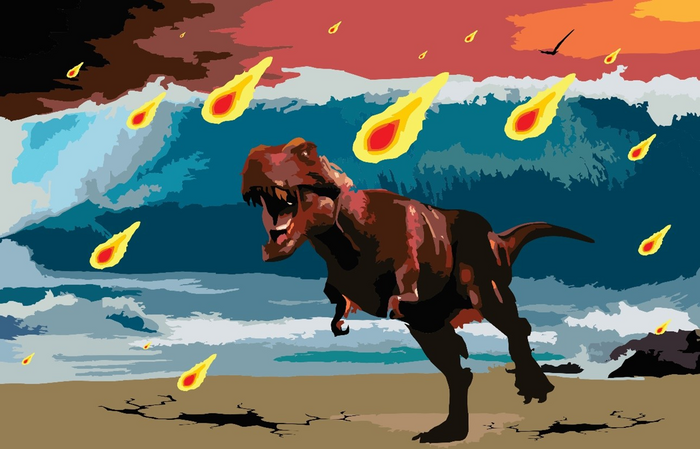
One dinosaur’s experience of chronic stress from fire, tsunamis and weeks-long earthquakes caused by the Chicxulub asteroid impact 65 million years ago, as depicted by Hermann Bermúdez.

Everyone gets stressed out now and then. Just ask Elissa Epel, PhD, a professor of psychiatry at the University of California, San Francisco who studies the psychological and biological effects of stress on health and aging and what we can do about it.

“Oh, yes,” Epel said when I asked if she suffers notable stress or anxiety.

“I have lived for years and years where stress is the dominant feeling for the day, the week, so frequent it becomes the baseline,” she said. “Even Buddhists — whose ideology is to embrace uncertainty and impermanence, to remember ‘this too will pass’ — get stressed out. It’s a lot of work to be human, in this modern stressful time, and have some equanimity.”

Eventually, Epel got bored of hearing herself and others talk about being so stressed out, and she realized how easily we can let stress infect routine conversations. (Stress can be contagious, research has shown, particularly among close friends, family and romantic partners.)

“I sometimes hesitate to even ask ‘How are you?’ of some people because I know it will trigger a list of complaints,” Epel, author of the new book, The Stress Prescription: Seven Days to More Joy and Ease, told me. “Instead I ask something like, ‘What are you excited about lately?’ I don’t want to stress people out anymore. Or myself. It’s really a rip-off to live that way and we don’t have to. I benefit from being around people who do not have this high-stress baseline.”

Old Stress, New Stress, More Stress

Stress has increasingly become a permanent fixture in the lives of billions of people around the world, a chronic condition generating a steady flood of fight-or-flight chemicals that the mind and body were meant to experience only in fleeting moments of true duress, to face or flee from imminent danger. When worries or frustrations become constant, and we don’t effectively deal with them, we put the mind and body into a constant state of readiness that simmers just under the surface, perhaps unbeknownst even to our own conscious minds.

The effects of this chronic stress are as disastrous for long-term physical and mental health as they are for near-term emotional stability, making it hard to think clearly in the moment, shrinking the brain, and raising the risk of everything from diabetes to heart attacks to dementia.

“Chronic stress, the type that goes on for years and years, has a toxic effect on your body,” Epel writes. “It wears out your cells prematurely.”

And a lot of people are getting prematurely worn out as they hide or run from their stressors instead of confronting and managing them. As I reported recently, 27% of U.S. adults say stress has such a grip on them they can’t function normally most days:

In a separate new survey published in late December by the American Psychiatric Association, 37% of Americans rated their mental health as fair to poor, with 26% saying they expect more stress in 2023. No surprise, many of these folks were planning New Year’s resolutions aimed at improving their mental health, with their top three plans for change being more exercise, meditation, and seeing a therapist.

Stress, I like to stress, is not what happens in life, but how we perceive, process and react to what happens. Epel reflected on how the culture of stress has changed in modern times:

“We have always had to contend with randomness of events — how things unfold in our lives, and uncertainty about tomorrow,” she explained in an email. “That is inherent in life, and scientists call that ‘irreducible uncertainty.’ Now we also have a bigger type of uncertainty, ‘volatile uncertainty,’ that refers to the dramatic life-changing events for us communally, that come with an unstable world — such as our climate and politics, and the dramatic and traumatic events those can bring.”

How to Change Your Stress Response

Preventing and dealing with stress, experts say, can’t succeed without a plan. It requires forethought and an actual strategy for how you will deal with the inevitable challenges and frustrations that come your way every day.

“We need to be more prepared for whatever can happen and expect to be surprised,” Epel said. “Things are changing rapidly in our era. We need to unstick ourselves from getting fixated to a specific picture of a future we must have. We can try living with ‘not knowing’ and making the absolute best of being alive at this time. We can still have a most purposeful and precious life. That is the opportunity in front of us.”

If stress is a constant companion, or even an occasional one, a serious stress-reduction strategy can help. Or if you need a quick fix right now, this 3-minute exercise in deep, slow breathing serves as an introduction to relaxing in stressful moments. Indirect approaches are crucial to stress reduction, too. Healthy behaviors like spending more time outside, getting more physical activity, and sleeping better feed off each other to create a positive cycle of improved physical and mental health, which provides more energy to get things done and manage emotions throughout the day, resulting in less stress.

Recognizing the grip of stress is perhaps the most important step in any effort to deal with it. I’ve known people who claim to thrive on stress, or who say their stress is normal and there’s nothing to be done, yet watched it ruin their days in ways that seemed obvious — irritability, worry, constant fatigue, depression.

So I asked Epel what she’d say to people who might not realize how powerfully stress is affecting them and how much power they might have to make change.

“Ask yourself if and when you get deep rest — true relaxation and restoration,” she said. “This can’t just be for vacations, which you probably skip or skimp on anyway (working on vacation is one of the ways we stay addicted to stress, to work). Try adding five minutes a day, each morning, to try a mind-body exercise that works for you. Slow breathing is an excellent choice. Add your favorite relaxing music to add some potency, and condition your body to that. Or get into urban nature in the middle of the day for your break. The green and blue mind states really show you what you are missing, and how good you can feel.”

In her book, Epel explains how to be more resilient, to deal with the unexpected, to control what you can and let the rest be.

“We can’t eliminate stress,” she writes. “It will always be a part of life — anything worth doing will have aspects of stress woven throughout: challenge, discomfort, risk. We can’t change that. But what we can change is our response to stress. And in a rapidly changing, unpredictable world, we can do this with a beautifully simple pivot: We can learn to expect the unexpected.”

Related resources:

I’m the author of Make Sleep Your Superpower: A Guide to Greater Health, Happiness & Productivity (paperback or Kindle version). Your support makes my health writing possible. You can sign up for emails when I publish on Medium, or join Medium to directly support me and gain full access to all Medium stories. — Rob

Stress
Health
Mental Health
Science
Psychology
Recommended from ReadMedium