How A Series Of Colonial Misteps Ruined Christianity in Sri Lanka
Possibly for good
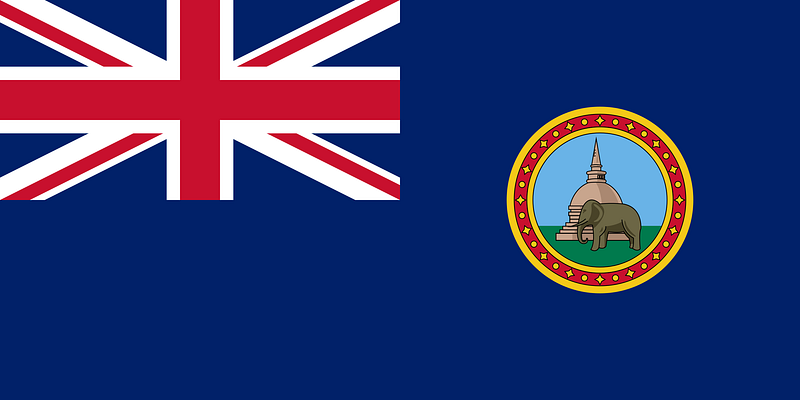
In the 19th century, the British embarked upon one of the worst possible conversion efforts in history. The British Empire took possession of Ceylon (Sri Lanka) in 1802. They seized the island from Dutch and Portuguese interests and immediately set out on a war of conquest against the neighboring native Kingdom of Kandy. Numerous British missionaries appeared on Ceylon’s shores on the coattails of the invasion forces with the goal of converting the local population. Instead of increasing Christianity’s influence on the island, the British missionaries damaged it substantially and irreparably.
The British have given history us a lesson on how not to try to convert a local population. Over the course of a century, the British managed to alienate existing Christians and make the local population hostile to the foreign religion. This was because the British steamrolled over local culture and religious nuances that existed on the island long before they arrived. The outcome led to a lingering distrust and hostility toward Christianity in Sri Lanka that exists to this day.
So how did the British screw up so badly, and what can people learn from their mistakes today?
Early Christianity in Sri Lanka

Sri Lanka has a Christian tradition dating all the way back to the first century. Christian tradition says that the Apostle Thomas visited Sri Lanka in 52 CE and established a church that became a Nestorian Christian enclave that existed for centuries. Despite the first inroads by the apostle, Christianity was always a minority religion on the island.
The Nestorian Christians were content to live on their own during the intervening period and did not rock the boat much. They maintained their traditions and participated in the local culture, but they were not disruptive. Christianity became much more disruptive in Sri Lanka with the arrival of the Portuguese in 1505.
The Portuguese brought with them an aggressive form of Roman Catholicism. Catholic missionaries set out to convert the reluctant population more energetically than their Nestorian counterparts had in the previous centuries.
When the Portuguese managed to secure control of the whole island, they made the official state religion Roman Catholicism. This immediately put many locals at odds with their culture and traditions.
Despite making Roman Catholicism the official state religion, the absolute maximum Christian population on Ceylon was estimated to be 25% during the 17th century. The religion never managed to spread further than that, and even then, it began to ebb in the years following.
Here is the situation that the British eventually entered into. Christianity was a severe minority on the island. Religion was legislated from the top down by foreign colonial authorities. Many people had to decide between choosing the new foreign religion and staying true to their ancestors. Catholicism was seen as a foreign import and a structure of the colonial government.
Instead of recognizing these nuances, the British tore through them and ended up in a mess that ultimately damaged Christianity’s image on the island permanently.
Enter The British
Two types of British missionaries entered Sri Lanka: political and theological. The political missionaries wanted to help convert the population to Christianity in order to facilitate a more unified and harmonious population. A unified population was often easier to govern and connect with than a fractured one. The theological missionaries were earnest in their faith and truly wanted to serve the people of Sri Lanka. But there was one problem: they were all Protestant.
Up until this point, Christianity in Sri Lanka had been Roman Catholic. Now, new missionaries, who were Protestant, were entering the country. That immediately set them against the existing Catholic communities on the island. Not only were non-Christian natives targeted (primarily Buddhist), but now Roman Catholics were targeted by these new missionaries.
This split the already small and fragile Christian community even further.
In addition to that, the early years of British rule saw Christianity once again legislated with a firm hand. They passed laws aimed at forcing the natives to give up their personal religions and cultural practices. One such law read:
Christians participating in the ceremonies of heathenism would be liable to public whipping and imprisonment in irons for one year.
Such decrees were deeply unpopular and alienated Christians even further. Laws like this forced native families to choose between their “heathen” ceremonies, likely cultural staples of their region, and their faith.
The state of Christianity and the tactics of the missionaries were so fraught that they became a center point for 1815 negotiations between the British and local lords. The British were forced to relent and declared after 1815 that Buddhism would be a protected religion and that Christianity would no longer be forced on the population.
Encyclopedia Britannica puts it this way:
The convention specified that the traditional laws, customs, and institutions of the Kandyans were to be maintained and administered by the usual native authorities.
From that point onward, Christianity started on a downward trajectory on the island that continues to this day.
Mistrust and Dwindling Support
Sri Lanka’s Christian population dropped from 25% in the 17th century to 20% in the 18th century. By the end of the 19th century, that number was a mere 13%. In 1911, the Christian population was just 10%. Today, just 7.4% of Sri Lankans are Christian. This decline is because local views of Christianity were soured by the meddling of the Portuguese, Dutch, and, finally, the British.
The British managed to trample over local customs and traditions while also splitting the existing Christian population between Catholics and Protestants. The colonial powers forever linked Christianity to colonialism, conquest, and heavy-handed rulership. Many of those perceptions of Christianity and Christians linger to this day.
In 2019, a series of bombs ripped through Colombo on Easter. The bombings specifically targeted Christians and foreign tourists. Two hundred sixty-nine people died, and over 500 more were injured. ISIS-linked groups claimed the terrorist attacks, and they were a very violent and visual reminder of Christianity’s thorny position in Sri Lanka.
Instead of continuing to be a benign minority religion on the island with a bright future, Christianity was relegated to a religion of foreigners and a reminder of Ceylon’s colonial past.
Conclusion
In order to win people over to your religious cause, you have to connect with them. Religion cannot be regulated from the top down. Any true conversion must happen from the bottom up. Jesus did not immediately go to the king or the religious leaders at the time, he started his ministry with fishermen and tax collectors. He started from the bottom and worked upward.
The Portuguese and the British tried to convert the population from the top down. They tried and failed to denigrate the local culture. They failed to learn about regional traditions. They failed to connect with the people on a personal level, which is required to convince someone of anything truly meaningful. Worst off, the British came in and damaged the existing Christian population by launching a vain Protestant crusade against Roman Catholicism on the island. The results have been dismal. Sri Lanka’s Christian population continues to dwindle and has faced enduring scrutiny, criticism, and even violence, all because of events that unfolded during the nation’s colonial period.