
How a Perfect Marketing Campaign by De Beers Made Diamonds Immortal
A diamond is forever
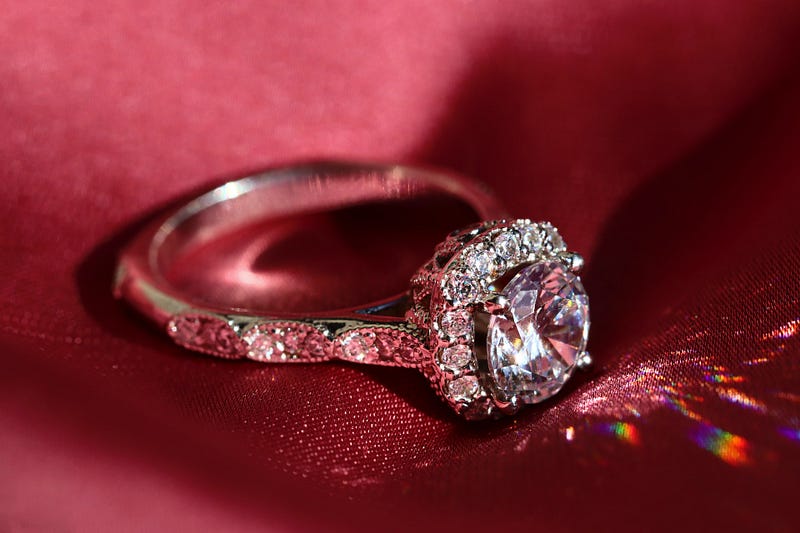
The diamonds, as we know was a brainchild of a perfect marketing campaign by De Beers in 1947. The shiny and rare stone that makes ladies swoon and men scared due to a potential pocket denting experience is a no-brainer as an engagement ring.
So, if you aren’t one of the few who could not afford a diamond ring as a present, you aren’t doing well in life. Exactly the aura and exclusiveness the company wanted to create through different campaigns.
Hey, everyone loves the stone!
Diamonds have fascinated people with their beauty and unique qualities for centuries now. What is a proposal without a diamond? Perhaps, a damned one since the ultimate love can only be depicted through a kidney puncturing price-tagged diamond topped with a pretty gold ring (another kidney goes on a mortgage). Dimond is an art piece and a sign of success and everything reeking luxury.
No doubt, they are pretty, rare, and worth the attention. For starters, they need incredible pressure for their formation, which is equivalent to 80 elephants standing on your big toe (no, it won’t hurt, you won’t feel a thing).
They pre-date life on earth since the oldest diamonds formation was around 3.5 million years ago. Moreover, history suggests their use as jewelry and their popularity gaining traction later.
Yes, they are exclusive, and so are the meteorites. Who’s buying them as an engagement ring?
All this hoopla and excitement when they depreciate by at least 50% the price you paid for it the moment you step out of the jewelry store. Yet, we feel coerced to buy them for our loved ones.
Down the memory lane
While the stone is rare and exclusive, various factors were made it the ultimate symbol of love. Not everything rare and precious commands respect and attention like a diamond. The idea that diamonds are rare and valuable while linking them with self-esteem and pride was a thoughtful strategy to leverage exclusiveness.
To understand the sheer madness for the diamond, we need to delve into the history of what made it, well, immortal.
In the late 19th century, massive diamond mines found in South Africa flooded markets with diamonds. The British businessmen running the African mines soon realized that a perfect gimmick to maintain the preciousness of the diamonds is a must.
The idea of establishing the fiction about diamonds as scarce and extremely valuable was the ideal way to protect their investment interests and push diamond prices higher.
To establish a monopoly by manipulating the market, De Beers Consolidated Mines, Ltd. (now De Beers), launched in 1988. De Beers ensured complete control, exponentially extending the company’s command over all aspects of the diamond trade in the ensuing decades.
On the verge of the great depression and world war two in 1938, the global economy was in tatters, and Europe was under war threat.
Their challenge was to decide which country had the most potential to support a growing diamond market and then hire an agency to implement a marketing campaign.
De Beers chose the U.S. even though the diamonds had declined by over 50% after world war I.
De Beers hired Philadelphia-based ad agency N.W. Ayer in 1938.
Laying the groundwork
With the market and the marketeer decided, it was time to roll in the dice to create perspectives and position diamonds strategically. De Beers brought in N.W. Ayer because of their creative ideas. They wanted to do extensive market research to gauge the social opinions about diamonds. They planned to analyse the market for implementing a well-crafted strategy to create an acceptance.
N.W. Ayer conducted extensive research to comprehend the American mindset about diamonds in the 1930s. An interesting outcome was that they found that Americans considered diamonds a luxury reserved for the super-rich. Moreover, they preferred to spend money on appliances and cars rather than diamonds.
The idea was to sell big and more diamonds, and it was only possible through pitching and positioning the product as an item of desire to all the income levels. Above all, the economy was in a slump, and to get people to shell out money for something like a diamond was a challenge. The only possible way to get more people to buy was to link diamonds with emotional values. Diamonds are not worth much inherently, so they also had to figure a way to restrict people from reselling.
In other words, they had to make them immortal.
Ideally, they had to make it emotional, valuable, and eternal.
What fits the bill? Marriage.
N.W. Ayer planned to create an aura and acceptance around the shiny stone. They wanted to position diamond as a necessary must when taking their marriage vows. A diamond engagement ring, if you marry, is as important as marriage.
Before World War II, diamonds were not a preferred token of love as an engagement ring, and only 10% of the rings had diamonds. The potential was huge, and with a thoughtful strategy, N.W. Ayer changed the public opinion about diamonds.
It went from only a precious stone reserved for the wealthy to an integral part of courtship and marriage. Gradually, the idea that diamonds are the ultimate gift to express love became mainstream and part of relationships.
The perfect bait- “ A Diamond Is Forever”
The statement has become immortal. The iconic words have appeared in all De Beers advertisements since 1948. Also, the slogan is the number one slogan of the century, termed by AdAge in 1999.
N.W. Ayer decided to improve the visibility of diamonds in mainstream media. They wanted to make it a top-of-the-mind product for the audience and started using celebrities to endorse it.
From newspaper ads to radio shows and fashion influencers, everybody was talking about diamonds. Public opinion was steadily swung from desiring to believing that a diamond is an actual need.
N.W. Ayer wrote: “There was no direct sale or brand name to be engraved in the public mind. A simple idea depicting eternal emotional value for diamonds was the thought. The strategy was to create stories about the people who gave and received diamonds and how happy and satisfied they felt.
Cut, clarity, colour, or the 3 Cs was an effectively planned move to create an exclusiveness for the stone. It instructed people to check and verify for a perfect diamond making it desirable.
The period between 1938–41 saw massive growth for De Beers. The company reported 55% growth and began perfecting its marketing strategies and campaigns.
The masterstroke came in 1948 when Frances Gerety came up with the famous line- “A Diamond Is Forever.” Frances Gerety was the woman who wrote all De Beers ads from 1943 to 1968. Though not convinced with the line, she went ahead with it anyway. The slogan was presented in the meeting the next day, but it didn’t find an enthusiastic response.
Eventually, the line was chosen to be the trademark punchline capturing the essence of a diamond and emotional touch. The slogan became an instant hit with the audience by perfectly tapping the sentiments De Beers was after. It catapulted De Beers’ standing and the sales to a new high. The slogan worked as it placed diamond as a forever companion just like a relationship and created value and desire for people.
Rest, as we know, is history.
References:


