How A Musician Discovered The First Planet In Over Three Thousand Years
William Herschel and the Remarkable Discovery of Uranus
The earliest years of William Herschel’s life were consumed by music. The son of an oboist, both he and his sister, Caroline, spent many long hours composing, singing, and playing. William was an accomplished musician. He initially followed in his father’s footsteps and took up the oboe. Before long, he had expanded his musical forte to include the violin, harpsichord, and organ. After mastering a stable of popular instruments for the time, Herschel branched out and began composing symphonies. He wrote 24 in total. But it wasn’t long before a new obsession took hold and changed his life forever.
After serving as a musician in the English city of Bath, Herschel realized that his fortunes might not lie in music. Music offered a stable living and a modicum of societal recognition. The heavens, on the other hand, offered far more.
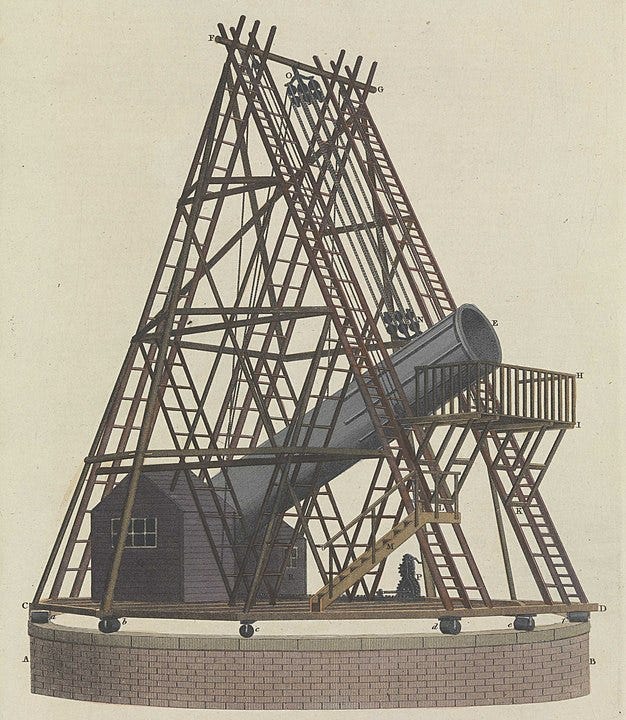
In 1774, Herschel started on a new and seemingly random pursuit — telescope building. After extensively reading the works of contemporary natural philosophers and ancient philosophers, Herschel started to wonder about the heavens. He put down his oboe (for the time being) and instead picked up a grinder. Herschel sought out the most prominent glass and mirror builders in the region and began to study.
Soon, William Herschel was a man possessed. He would spend upwards of 16 hours per day hunched over various grinding wheels and polishing clothes while he feverishly built his first large telescope. Herschel wanted to build the largest telescopes of the day, hoping to capture the elusive mysteries of deep space.
Beginning in 1774, William Herschel embarked on a nine-year survey of the heavens in which he was fascinated by double stars, nebulas, and stellar disks. Herschel cataloged over 5,000 different objects, many of them whom he mistook for nebula, which were actually distant star clusters. But it was one discovery in particular that propelled him to stardom and gave him the fame that many suspected that he craved deep in his soul.
A New Planet
In 1781, after years of staring into deep space through telescopes of his own design, Herschel began to notice something strange that kept appearing in his viewer. It was a smudge that did not behave like other nebula that he had been studying. Due to its movement, Herschel initially thought that the smudge could be a comet, but it quickly became clear that its patterns did not match that of other comets that he had observed.
Baffled, Herschel quickly consulted with other eminent astronomers at the time. He called on Nevil Maskelyne, the Astronomer Royal in King George III’s court. Maskelyne was intrigued but did not believe that the smudge warranted a major discovery at the time. He encouraged Herschel to gather more data before presenting his findings once more.
Not to be dissuaded, Herschel next reached out to Anders Lexell, a member of the Russian Academy of Sciences. Lexell decided to calculate the object’s orbit in order to determine what kind of body they were dealing with. After weeks of collaborating Lexell returned his calculations with an astonishing conclusion — the smudge was in a planetary orbit.
Herschel returned to his telescopes and realized that the smudge was likely a planet, and such a planet must orbit far beyond the orbit of Saturn. This was a completely new idea and one that was going to change the way that future astronomers viewed the solar system for generations.
An Unheard Of Discovery
What William Herschel had done was something that had not been done since the time of the Babylonians. He had discovered a new planet. It was the first such discovery in nearly three thousand years. Not since the eminent Babyolian skywatchers had someone made such a groundbreaking discovery so close to Earth.
At first, Herschel tried to curry favor with the king by naming it George’s Star and referring to it as a Georgian Star. The favor currying campaign was a success, and King Geroge III named Herschel “The King’s Astronomer.” However, few in the scientific world at large (which included numerous Germans, French and Russians) were happy with the idea of the first planet in thousands of years being named after the British monarch.
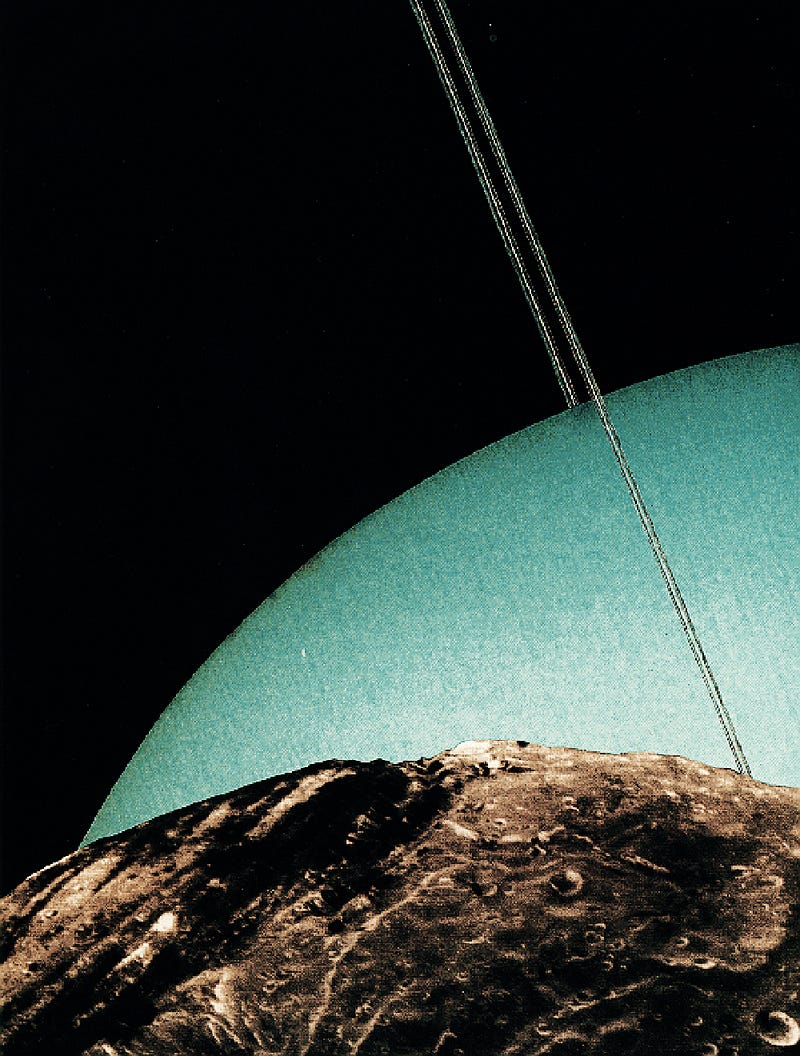
Instead, the new planet was named Uranus after the Greek god of the sky. The new name fits the prominent naming scheme, which we still have to this day, which bestows the names of ancient gods onto heavenly bodies.
Seemingly overnight, William Herschel was propelled to fame and fortune. Herschel went from a middling musician to an amateur telescope designer and one of the most famous astronomers of the age.
Sisterly Assistance
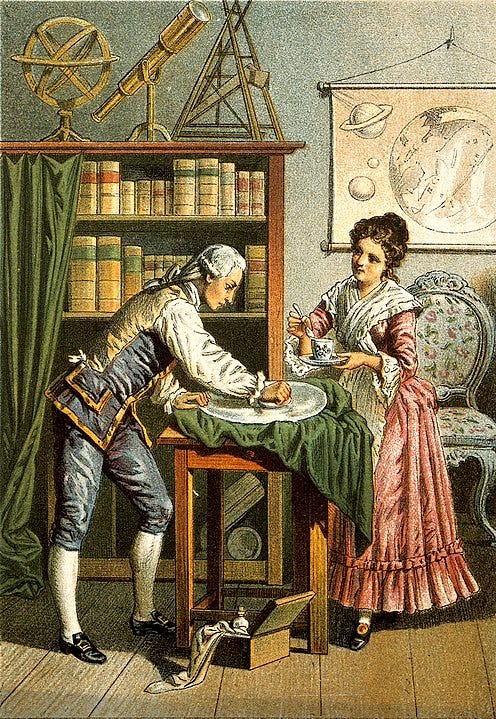
Any discussion of the discovery of Uranus would not be fair without mentioning Caroline Herschel, William’s sister. Interestingly enough, Caroline also took up the hobby of astronomy and was instrumental in helping to shape and grow William’s skills. William and Caroline would spend long hours polishing mirrors, cataloging finds, and bouncing ideas off one another. While William is given the lion’s share of the credit (likely due to the culture of the era), he likely never would have discovered the planet without the help and support of his sister.
In fact, the discovery of Uranus was a collaborative effort. William drew on the knowledge and expertise of numerous people to confirm his discovery, including his sister and other prominent minds like that of Lexell who did many of the orbital calculations to confirm that what they were looking at could indeed be a planet. Like so much of science, a team of people worked and thought together but one man’s name is primarily attached to the ultimate discovery.
Other New Planets
Now that the idea that there could be other planets lurking in the darkness of space, a new wave of astronomers took to the skies. After taking over two thousand years to find a new planet, the next planet was found less than 70 years after Uranus. Neptune would be pinpointed in 1846. Pluto would be declared a planet in 1930.
Today, much of the planet-seeking public spends their time scouring the skies for signs of exoplanets that orbit other distant stars. Everyone is hoping to discover a planet that has a similar size and composition to Earth.
Without the contributions of William and Caroline Herschel, it is hard to say if people would have even started to look for other planets. For thousands of years, most people assumed that the handful of planets already spotted were the only planets in the heavens and everything else was a star or similar body.
Conclusion
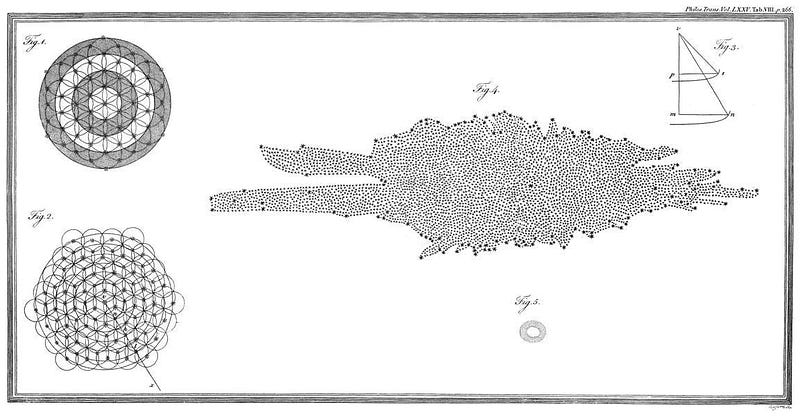
William Herschel would go on to study a large variety of different stellar bodies. He worked on sunspots, the Martian ice caps, asteroids, and planetary moons. He discovered two moons of Saturn and two moons of his new planet, Uranus. Herschel was the first person to present the idea that the Earth resided within a galaxy that was in the shape of a disc. Herschel discovered the presence of invisible infrared radiation and even speculated that there could be life living on other planets. He was a true visionary and a pillar of his field at the time.
Despite his vast and varied contributions to the field of modern astronomy, many people do not give William Herschel the same amount of credit that they give to other astronomers like Galileo and Copernicus. His name absolutely deserves to be in the same conversation as those preeminent astronomers.