Education
How a Little Junior High Stole the Profits from a National Portrait Chain
An industry disruption that sparked, then fizzled for lack of school district courage
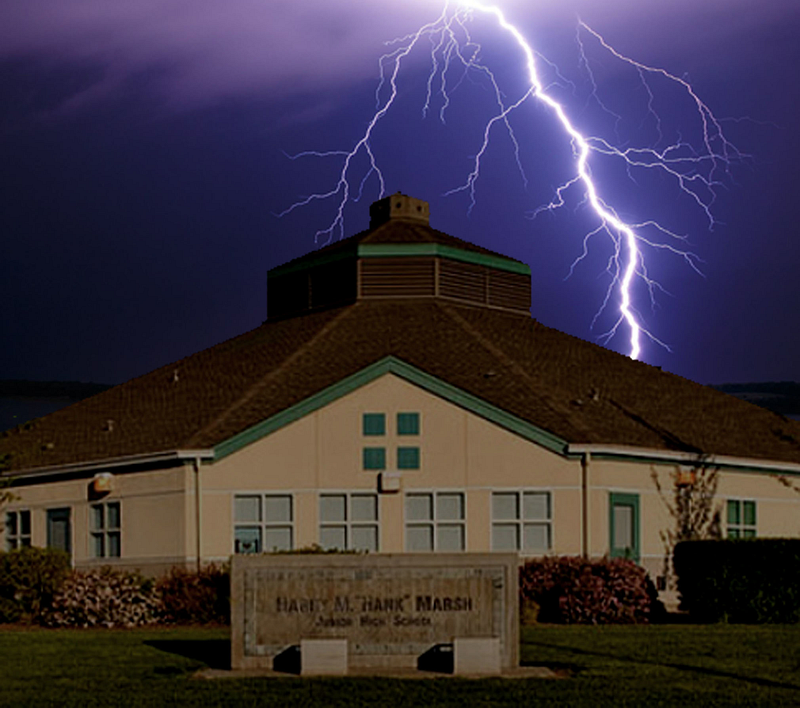
These days it seems teachers are always begging for money. As a classroom teacher, I was the biggest benefactor of my own program. My personal philosophy was: This is my career, and I’m not planning to spend my entire career just getting by with the school district’s miserly resources. My wife spent 36 years as a kindergarten teacher at a neighboring school district but shared the same experience. We decided that money spent on our classrooms was an investment in our careers. The first thirteen years of my career I taught in elementary school, the last seven in junior high.
It was the transition from elementary school to Marsh Junior High where I encountered the best boss I would ever have, the Marsh principal, Jeff Sloan. Jeff met every problem with a smile. He ran concise staff meetings that never wasted your time. By the second week of school, Jeff could walk the halls, calling every student by name, all six hundred of them. If you needed additional classroom funds, Jeff had one answer. If it’s good for kids, we will find a way. And he did. After my first semester at Marsh, I just wanted to be part of the team. That says a lot coming from me, as I typically go my own way.
I’ve always considered myself an idea guy. But working with Jeff, I was happy to take on the role of facilitator. One day he came into my classroom, right in the middle of a lesson. I could read the excitement in his eyes as he walked through the door. He excused himself to the class, stepped up to me, and whispered, “Why don’t we take our own school photos?” He was referring to taking back a program ceded corporate America. I’ll call them Photo Corp, the school portrait giant who descended on our school twice a year to snap the kid’s pics, I knew exactly what he meant. My immediate answer (well because Jeff…was well…Jeff), “I don’t know, but give me a week and I’ll find out.”
First I focused on economics. I examined the cost of the photo packages sold to our parents by Photo Corp. Then I looked into photo printing prices offered at Costco. Along the way, I learned that Costco actually did all the overrun printing for the portrait giant, who actually had a printing plant right in our little town. Based on Costco photo pricing, we could offer parent photo packages for about 30% less than Photo Corp, while making a whopping 70% profit for the school. The corporation gave back a miserly 10% while maintaining the inflated prices of the film era. I also envisioned offering tiny, inexpensive packages, along with a full gamut of bigger packages so all students could afford something and no one would be left out.
Next, I recruited three professional photographers to shoot the photos as school volunteers. They were excited, eager, and ready to go. The first was a parent of one of my students. I’d known her since I had her son in the 5th grade. She suggested the other two. Both were either parents or grandparents with a solid connection to Marsh. They were happy to lend their expertise. None of them worked in school photography, so this venture did not pose a threat to their incomes. I figured we’d learn a lot from them as we worked through our spring photoshoot.
A week later, I presented my plan to Jeff. He got us on the school board agenda later in the month and we were off and running, or so we thought.
Keep in mind, that all this happened around 2001. Photo Corp was still heavily invested in film photography. Back then, retail 10-megapixel Canon digital camera was selling for about $500 and camera phones were unheard were not yet available. It was not until 2002 that cell phones first sported cameras. Even then, only as an expensive upgrade, with limited resolution. The industry was changing, and the Photo Corp was caught with their pants around their ankles. If Kodak was caught by surprise, you can imagine the state these guys were in.
As the technology teacher at Marsh, I ran the computer lab and taught a full complement of computer classes as well as the yearbook class, which Jeff had just moved out of the English department.
Jeff wanted to run the photo program through the elective classes, with the profits shared among the elective teacher’s classroom budgets. The PE department was grateful because school photos, fall, and spring, had always been organized around PE. The PE teachers were tired of it.
The organizational details involved in a project of this scope kept me up at night until I had worked through all the fine points. I told Jeff I could do it, then made sure I could make good on my promise. I felt out on a limb for a bit, but organizational skills and problem-solving were well within my wheelhouse. I had a good background in spreadsheets and databases and I had university connections if I needed expert help.
The basic plan was to take not one, but six photos of each student in a variety of poses. We wanted to offer parents a choice, instead of a one-shot, take it or leave it program. Our ace in the hole was our plan to shoot our spring photos outside, in the natural light, without the fake backgrounds. We planned to shoot the spring photos in the month of March in between storms. In March the grounds behind our campus are lush green. There was even a little babbling brook that runs behind the school, that would be bone dry come May. We ran the kids through three poses, one sitting on a rock or log in front of the stream, one standing by the bridge that crossed the stream, and another against a gnarled old tree. Choice, variety, low prices, sort of sounds like a commercial for a supermarket.
I was pretty excited to present our plan to the school board. I thought it was a win, win, slam dunk. I was dead wrong. Photo Corp showed up with three executives in suits, flown in from the east coast. Imagine that, at a little old Chico Unified School Board Meeting. They showed up in force to lobby against a lowly junior high school with the audacity to threaten their profits. They claimed that I lacked the organizational skills and the photography expertise to take on their sacred duty. Why if a student died in the course of the school year, they even provided free photos to the family.
The school board pompously agreed, too big, too important, too complicated to be accomplished by an unsophisticated teacher. Who was I to think I could overcome the technical difficulties, quite impossible. Where, they asked, would I even find the time? They claimed I’d never carry it through and parents would be left bereft of spring photos. At this point it was a little difficult to separate the Photo Corp execs from the school board members, they seemed to be marching in lockstep.
To put this into perspective, very few professional photographers work for Photo Corp. I’m sure they exist at the corporate level, but they don’t take the photos. Late in the summer, one will find part-time, seasonal job offers in every local newspaper in the country. All the school portrait giants are searching for warm bodies, no experience necessary, one flexible, button-pushing finger required. These companies rely on their system and equipment, not professional photographers.
As for their magnanimous offer to provide free photos to the family of the deceased, while heartwarming, it cost them about 97 cents.
The school board voted us down, and the CUSD superintendent gloated. He was the culprit who invited Photo Corp to the board meeting in the first place. He had a Rotary buddy from the Photo Corp’s local printing plant, and I think he promised to squash our little plan. The superintendent, from this point forward, referred to as The Ogre, had been against our project from the start. Jeff Sloan was far too popular for his liking. Principals were supposed to be nasty and mean, formed in the same image as The Ogre, whose doctoral dissertation centered on how to effectively remove a recalcitrant, tenured teacher through threats and intimidation, I kid you not. I quoted parts of it back to him at a later board meeting.
Fortunately, Marsh parents were quite vocal and lobbied the superintendent to give us a trial run for the upcoming spring photos. Angered and vengeful, The Ogre grudgingly gave his approval but made it quite clear that Sloan was in the deepest, darkest, doghouse imaginable- consequences would be forthcoming. To Jeff’s credit, he kept The Ogre’s threats to himself until he was ultimately crushed.
Our trial run was very successful, especially in the eyes of the parents. They appreciated the selection of photos, often choosing two or three poses. The packages were a bargain, and parents responded by buying more. They appreciated the fact that the school was undertaking a big project to earn money for their kid’s school- without asking for a handout.
With the success of spring photos behind us, we went back to the board with a plan to shoot all of our photos the following year, both fall and spring. Fall photos present more challenges. The school office needs photos for the attendance system. They also required “mug books”, a basic pictorial directory of the student body. All students would need Student Body Cards and I needed yearbook photos for the portrait sections of the yearbook. All of these things are normally provided by Photo Corp.
Jeff had another important change in mind, he did not want to rely on parent photographers. He wanted 8th-grade student photographers. He viewed our program as a sensational, real-world learning opportunity. Authentic learning, serving a genuine need, no problem- all I had to do was organize it. We did keep that little detail from the school board.
Of course, the school board, led by The Ogre, felt we couldn’t possibly handle all those details. Impossible they declared, how could a single teacher replace the mighty Photo Corp and their minions, blah, blah, blah.
Once again, over the summer, many irate parents made their opinions known to the school board members, the district administrators, and the superintendent. The common argument, most frequently voiced by the parents was; these our children, our photos and we should have a voice in determining who takes them. Once again we got a grudging OK. Forget support, forget kudos, just scram, and we hope you fall flat on your face.
I got access through the school office to download the necessary student information to organize the photoshoot, primarily the student names and their schedules. From this, I was able to create a photoshoot schedule for the elective teachers to follow. We distributed all the necessary parent information through the elective teachers, as well. Most importantly the date and time of their student’s photoshoot. Because we were in control of our own program, we had no need to cram all the school photos into one disruptive, chaotic day.
I divided the fall photos into two sessions. The first, which I considered warm-up and training, we shot all the photos for administrative needs and the ID cards. This gave me the opportunity to train and practice with my newly minted, yearbook photographers. Later in the fall, we shot the typical fall photos for parent photo packs and our yearbook portrait photos. These we spread over a week, and we only wasted a single class period to do it- the same time allotted previously but spread out for our convenience.
Organizing the photoshoot was simple. I printed name placards for each student, including the period and corresponding teacher. As the classes arrived, their teacher would distribute the placards. Each student held up their placard chest high for the first photo. Then we collected each placard and marked it complete after shooting that student’s photos. Any remaining placards indicated absent kids. Those students were called back until we had a finished set of placards for each class.
After a class was photographed, I downloaded all the photos in period/teacher batches. The bulk digital photos were sorted into their respective folders, based on the informational placard. Select students were assigned this critical job. Once each class was sorted, I copied the entire group of teacher/period folders and stored the copy on a large removable hard drive for a fail-safe backup.
In traditional film photography, framing the shot is a big deal. Headroom, centering, even the subject’s distance from the camera is critical. With digital photography, it’s much simpler. If you leave ample headroom and get the subject in the frame, the rest can be fixed while cropping the photo. So while this important cropping job was carried out by my students, a master backup gave us room for error. While cropping off a subject’s head did not enhance a student’s grade, it was not the end of the world. But that was never much of a problem. In junior high, top students scramble for entry into two classes: student government and yearbook. These students are already building experiences for their college applications. At Marsh, the kids applied for the yearbook class at the end of their 7th-grade year. I interviewed each one and personally enrolled each one in the yearbook class for the following year.
I don’t think most people rave about their own photos. In junior high, students are especially critical. One look and the photos are slammed face down on their desk or jammed un-viewed into their backpacks.
I solved this problem by accident. Fall photos are shot indoors against special backdrops. To help my photographers better frame their shots, I plugged monitors into each camera. We had three indoor stations set up in the library adjacent to my computer lab. Everyone waiting in line could see the monitor for their station, which would freeze the image momentarily after each shot. For some strange reason, the students in line were always complimentary. Maybe it was some deep instinct for self-preservation, but the comments were consistently positive. I would repeatedly hear, “nice smile”, “that was a great one”, “nice hair”, “you look great.” From then on, when the photo packages arrived, the students were predisposed to give their photos a chance.
I made it clear to the parents from the start that I would shoot multiple retakes at parent request. I was determined to please our parents. After all, they were instrumental in lobbying the school board to give us this opportunity. But students were at the mercy of their parents when it came to retakes. I never shot retakes at student request, they enjoy the process way too much, especially with peer photographers. If I shot retakes at student request, I’d still be scheduling retakes 15 years later.
Peer photographers were much more popular with the Marsh students than the grouchy part-timers hired by Photo Corp. So our students were more relaxed, had more fun, so consequently, we got better, more natural smiles. Photo Corp treated them like cattle. Our photoshoot was an event they looked forward to.
My students worked in rotating teams of three. Each team had a photographer, poser, and line controller. Teams rotated these jobs as they saw fit. Some teams rotated frequently, others adopted the set roles they preferred. The line controller made sure each student was ready with their placard and knew how to position it, then collecting each placard and recording the date. The photographer made small adjustments to the camera’s position and zoom- and timed the shots. The posers were incredible. They positioned the stool, or chair, posed the student to properly face the camera, and coaxed the best smiles they could muster. I clearly remember one female poser. She was just not happy with a little six-grade boy’s cowlick. As I watched her fiddle with his hair, I was sure she was about to lick her fingers and slick that recalcitrant lock back in place. But, at the last second, she raced to the sink in the restroom and returned with a dampened paper towel. That did the trick and she was satisfied. Amazing.
The photos were processed by Costco in batches, one period/teacher class per batch. Back at school we opened one batch at a time and spread them over the library tables. My students then sorted them, by facial image, into the same windowed envelopes Photo Corp used. They loved sorting those photos. The packages held everything from 8x10’s to 1x1.4 inch sticky photos in strips of six. All the students relished sharing their stick-on-photos with each other- and everyone could afford them. The sorted packs were then delivered to the appropriate teacher, for distribution by likeness. Simple, quick, efficient.
I continued to do the fall and spring photos at Marsh for the next three years. Unfortunately, the superintendent was the vindictive sort and ultimately fired Jeff.
At one point leading up to Jeff’s firing, the district personnel arrived early one morning and confiscated Jeff’s office computer. The staff was furious. An English teacher and I spearheaded a call to collect every teacher’s personal desktop computer so we could dump them (gently) on the district office steps. Matt and I loaded the computers into a truck and did just that. This may seem a bit far-fetched. If so, just check out the link below to a news article published by the Chico News and Review a weekly Chico newspaper.
“Abuse of Authority” 3/8/2007. In the article, you will find a photo captioned, “District Employees haul in computers left by Marsh Junior High teachers furious over the seizure of Jeff Sloan’s computer.”
Many angry board meetings followed with parents and students up in arms. I personally stood before the board and confronted the superintendent over his actions and vowed that if the district followed through with the firing, I’d leave the following year and take early retirement. I even quoted some of The Ogre’s disgusting dissertation back to him.
I was sickened by what happened to Jeff. I worked the following year under a new principal, but could no longer tolerate the actions of the organization that employed me.
Jeff Sloan was fired because he created a popular program that parents loved. A program that saved parents’ money on twice-yearly photo packages. One that allowed teachers to help themselves, without asking for a handout. A program that empowered Marsh students with an authentic learning experience. A program that made so much money that the other elective teachers each received $1000 a year for their classrooms, and I was able to upgrade my entire computer lab and purchase enough video equipment to start a weekly school-wide news broadcast. I actually had more money than I could spend, at least within reason.
No, Jeff was fired because he embarrassed the superintendent, a mean-spirited, egocentric little man, not unlike our recent president.
This sordid affair ruined a good man’s career. Jeff spent years fighting to clear his name but never worked as a principal again. He was by far the best boss I’ve ever encountered. It was an honor to work under the direction of such an exceptional man.
“Abuse of Authority” Chico News & Review, 3/8/2007