
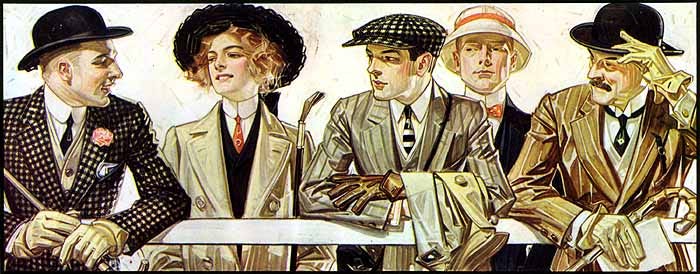

How a Gay Artist Defined the Perfect American Male in 1905
The story of the icon behind the Arrow Collar Man
Joseph Christian Leyendecker created one of the most iconic ideals of male beauty in the early 20th century. His ubiquitous illustrations of the Arrow Collar Man — an incredibly macho and well-built model were celebrated across America as a definition of masculinity.
From 1905–1931, the Arrow Man became synonymous with absolute male beauty. In these illustrative advertisements, The Arrow Man liked to spend most of his time with other extraordinarily handsome young men in curious poses or exchanging glances.
The same man appeared in hundreds of other illustrations for The Saturday Evening Post, Collier’s Weekly, and The Popular Magazine. In each of these images, the man appears with so much perfection to details that it feels voyeuristic to look at him.
But this icon came with a romantic twist.
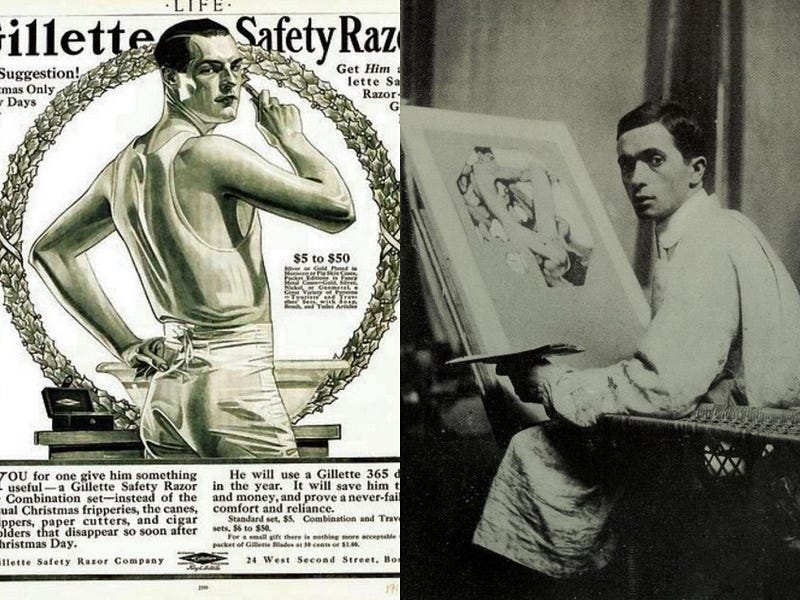

So who was the model behind Leyendecker’s iconic macho man? That would be his lover and muse, Charles Beach!
Leyendecker’s love letter to Beach were his illustrations and by making them immortal with his quintessential style, he basically made the whole world admire Beach just the way he did.
It was only after Leyendecker’s death in 1951 when people figured out that the man he’d been drawing and living with for decades, was actually his lover.
It is famously said that although all the ladies wanted the Arrow Leyendecker himself had him.
Leyendecker knew that it would be too risky to base the country’s most prominent symbol of masculinity on his own own gay lover. However, this taboo was hidden in plain sight — right in front of everyone’s face and on their skin in the form of the most prominent clothing brand of that day and age.
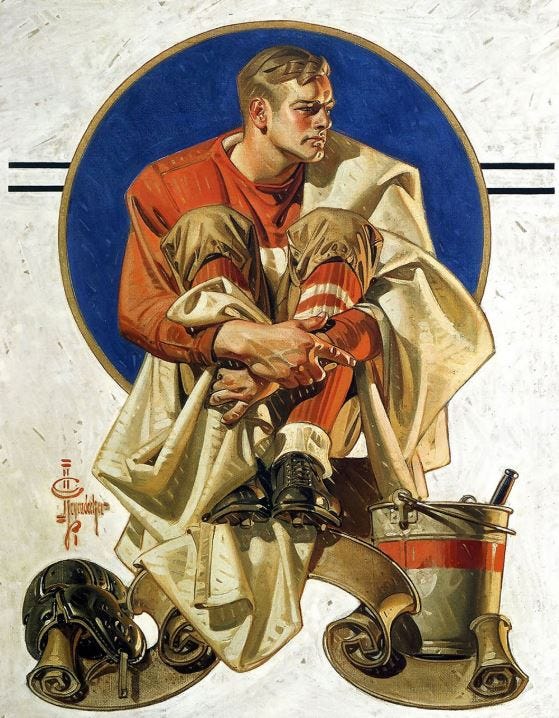
Very little is known about Leyendecker and his personal life and his relationship with Beach. Norman Rockwell, who later took over the mantle in the latter half of the 19th century is said to draw stylistic inspiration from Leyendecker’s work.
The image Leyendecker created was that of an American macho male before his aggrandizement as a killing machine— Alfredo Villanueva-Collado
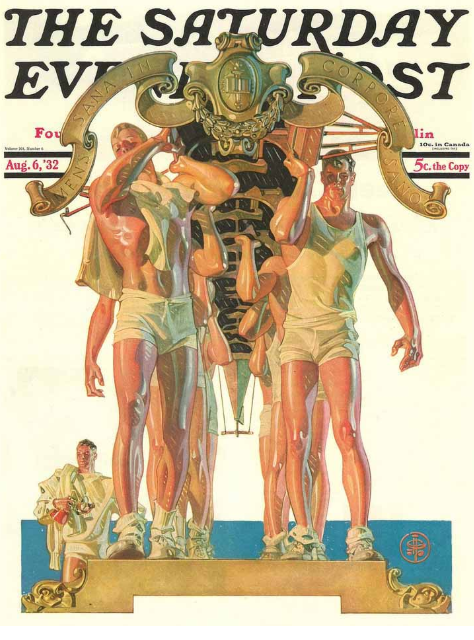
No biography of him exists —what remains today is his mental image of his lover's metropolitan sophistication and urban masculinity.
Leyendecker died in July of 1951 of heart failure. Within a year, Beach died as well.