
How a decade-lasting dream came true in three months — transforming ideas into an application
Was it always strategy? No, a constant negotiation in your mind.
What I want to share here is my first-hand experience.
Ideating, prototyping, actually creating and deploying an app in three months.
You may have heard or read people made their apps in 10 days or less than a month.
I’m not sure how they did that, so I cannot speak for them.
What I can say is this. I had a dream of creating an application about ten years ago. And I finally did it!!!!!
About ten years ago, it was more like learning how to use a new language for me half of the time or more.
Even back then, I was aiming to have simple pages. But still, the software or platform I tried did not let me create pages that were simple but attractive at least to me with my skills. I wasn’t capable of making a page I imagined.
Yap, you heard me right, not even a good one page. I felt it was so dull to continue, and I couldn’t make an application back then.
But why now in three months then?
It was because of the following four reasons.
1) Get the relevant information at the right time
To build an application, did I know where to start?
Unless you have built one, you would probably do a little search on how to start.
I saw a lot of information about application development last year. I couldn’t find something that would get me through visualizing my ideas right away and let me start and finish developing an application about ten years ago.
Do you remember anything you could not find ten years ago, but you could last year or now?
It was only a few years after the first release of the iPhone (January 2007). I was attempting to build an application for an iPhone. But, I didn’t because I didn’t have the right device and couldn’t get the relevant information back then.
I was glad I still kept my dream in the back of my head and had joined this platform to read. And I was lucky to bump into the type of information and software I needed.
You can constantly ask yourself to assess if that’s the right information for you. If that is something you can do.
2) I can easily visualize it
Let’s say, you have some ideas about cooking, sewing, exercising, or writing and want to have an application to help others do things. How would you go about it?
This is why I thought Figma was brilliant.
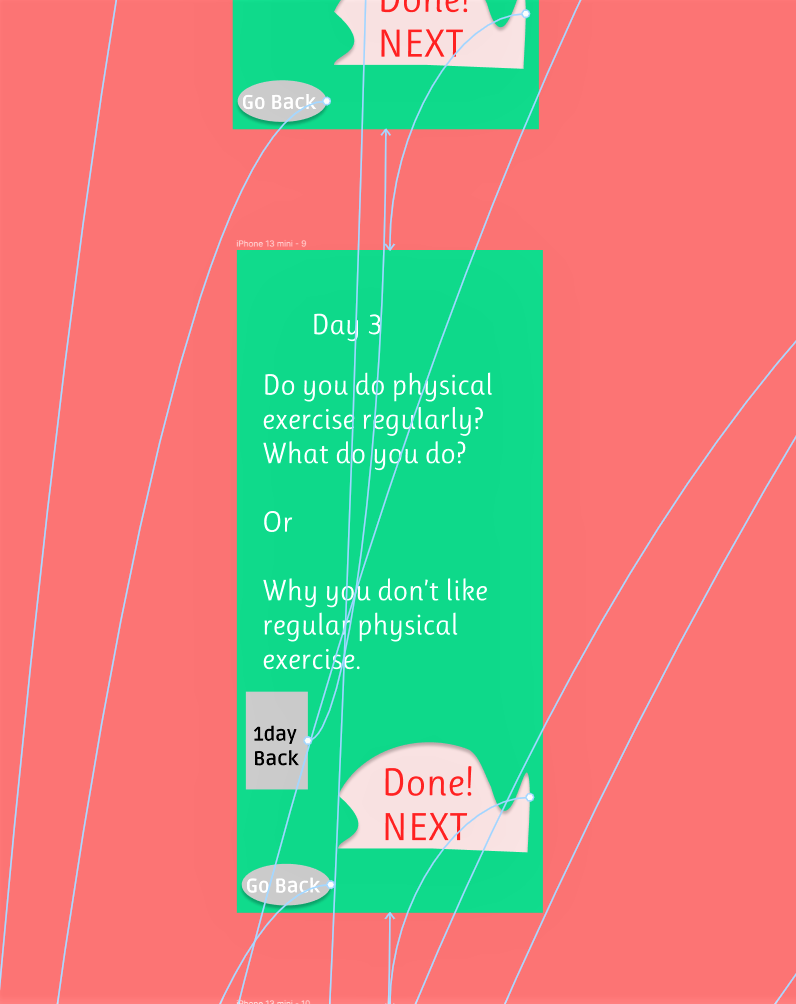
First, I put my words and prompts on Word and Grammarly.
Then, on Figma, I did this. On the same page, I made a few simple features as buttons.
One of the buttons, the fish is to move to the next. You see above, from the tail, it connects to another thing — I connected it to the next page by simply dragging a line to the next page.
I also made a button to go back to just one previous page and another button to the main page — as there are many ideas or pages, this is necessary.
The images below are screenshots of my actual application by me.
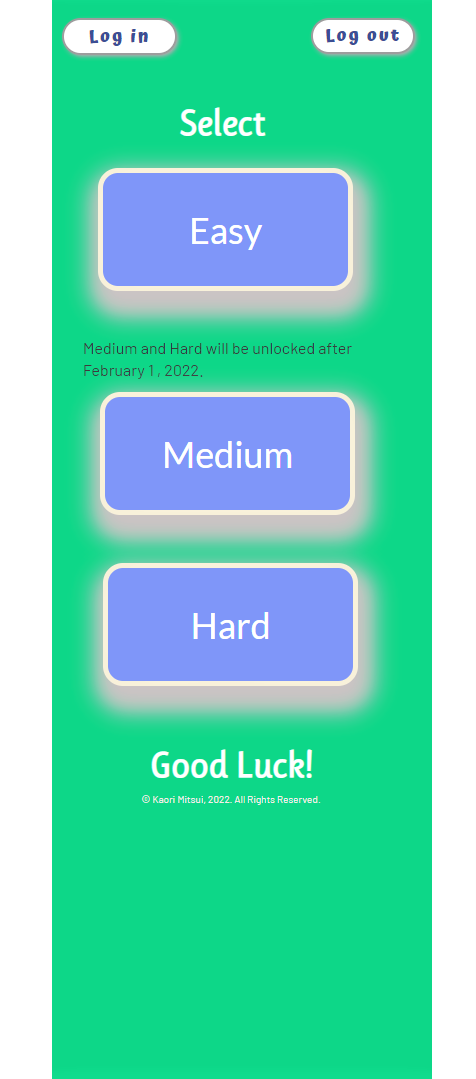
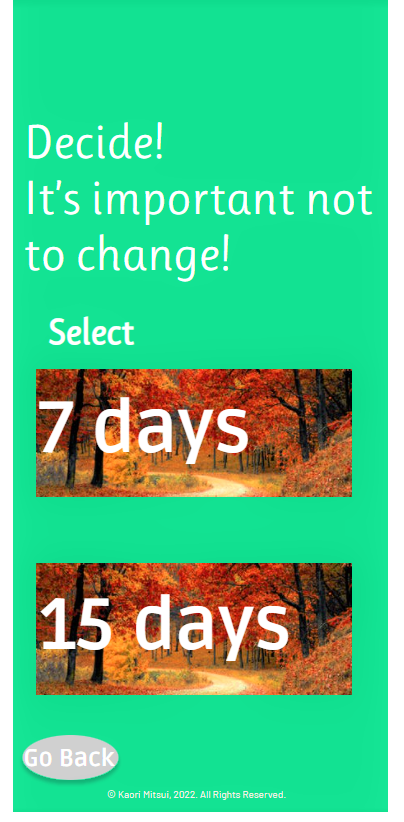
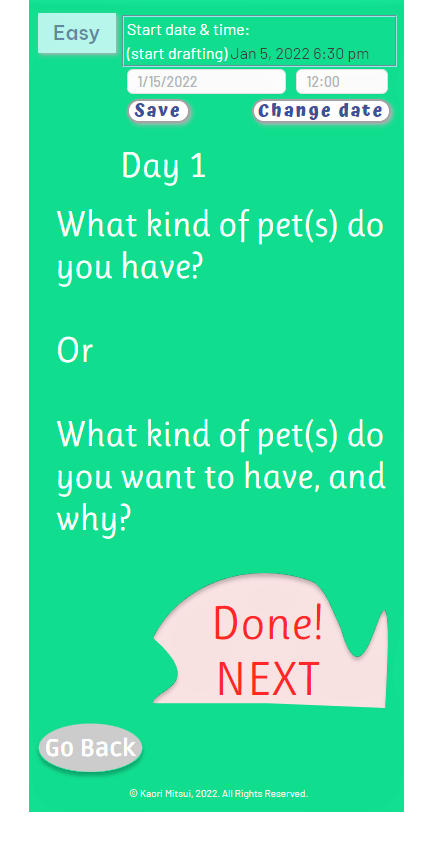
Note: The Easy 7-Day, Day 1 (You can select the date and time you start drafting, which is required to save but not required to move on to the next page.)
As you see below, the same pieces of designs can be used from Figma and imported to my actual application development on Bubble.
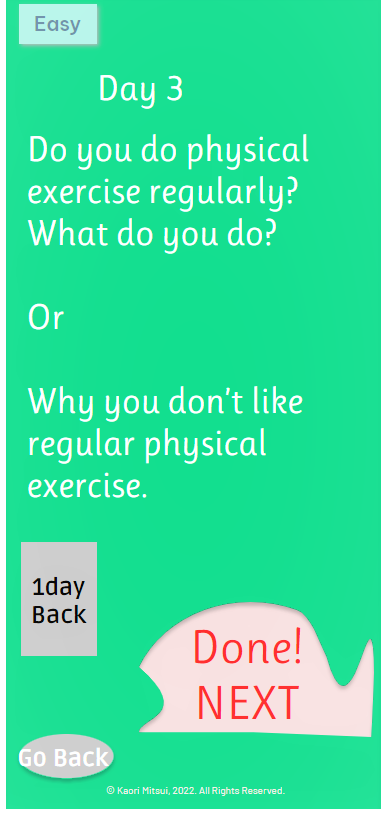
The page links on Bubble.io are made possible with a few clicks through the Workflow by simply selecting which page you want to link if a button is clicked.
We do it without thinking when using any application. As you do it by yourself, you realize the reality that there are so many pivot points you have to make so users can make choices as they like.
So the bottom line is you want to make your ideas visible and quick to check these things like checking news with a click of a button but not building a TV from scratch.
3) I can estimate the workload
If I were to learn a new programming language, I might be able to. But is it my priority?
Unlike the 10-year-ago me, I was not targeting Apple device users only. There is no way I could predict how many people would feel they need an application of writing prompts and tips.
Although many people choose to use Apple devices, and the small icon may seem attractive, I did not want to exclude those who preferred other brands and might want to try my application.
I got my favicon now!
So, learning a new language within a short amount of time equals a heavy workload and limits the number of users.
My answer was, thus, a low-code/no-code platform was a way to go.
4) Finally, the affordable cost
Considering 1) to 3), the total cost, time-wise and money-wise, I choose Bubble.io to develop and deploy my first application. It was an instant deployment after one click to make it Live.
Thus, launching an application and having people try it for free was the priority. The most affordable plan to make it Live is Personal Plan with $29/month (or $25 annually). It is for the purpose of the app — writers who may desperately need to help reduce their writing hassles and for myself to have it done and improve it if necessary.
I guess most applications go through the same stages. You have to make it available for people to try either at a low cost or for free. Because there are many applications out there already, and you want to let people know yours is out there before you can help users.
Unlike more than a decade ago, smartphones have become widely used now. So regardless of which smartphone you use, as long as web searching and viewing are possible, a Web Application can be relatively easy to use by many people.
That was what I thought. So my application is a Web Application — Writing Prompts & Tips. It lets you choose to do a 7-day or 15-day writing challenge. There are three plans, and for now, the first plan, the “Easy” one is free to try now.
Sum up
I wrote an article saying that I would work on my application in addition to other things I wanted to do and was published the last day of September. And I deployed my app during the first week of January 2022.
So these are how I made my long-lasting dream come true in about three months.
It was a constant negotiation in my mind.
1) Is it the relevant information for what I am trying to do?
2) Is it something I can visualize my content while working on it?
3) Am I capable of doing it?
4) Is this cost affordable to deploy?
If you have ideas, you can turn them into an application. Even if you are not an expert in programming and have never done it like me, it is doable to have it done in three months.
See what else I create: visit my Ko-fi page to see what’s going on behind my fiction stories.
If you like reading this one, you may also like my short fiction stories, and my referral link is here if you would like to support me with your membership fee.


