
How a Calculus Textbook Transformed My Life
What one fool can do, another can
I remember starting my first job in Finance. I spent 12 months living primarily in one emotion — Frustration.
I didn’t get it.
I didn’t get Finance, I didn’t get accounting, I didn’t get the business.
I couldn’t understand how some of these colleagues had got to where they were. They weren’t doing rocket science. It was accounting, and they kept telling me how easy it was. And even worse, it was obvious some of them were not doing an excellent job of it.
Then something came back to me. It was a quote that had resonated with me in my final year. And it wasn’t “Philosophy”.
It took me a failed Economics exam for me to realise, that I didn’t have a clue what I was doing.
I was struggling with Calculus (to put it lightly).
I had no idea what calculus was. Why does it help? What was the point?
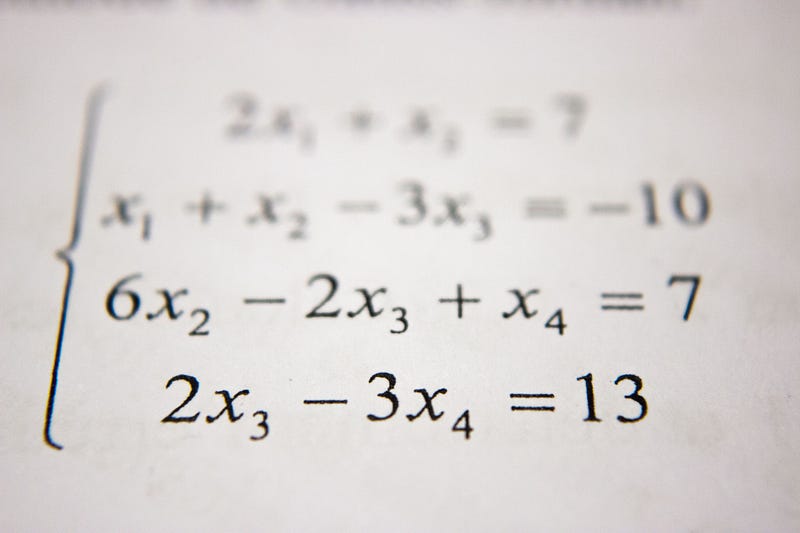
Tired of my incompetence, I skipped my Monday morning Economics class and headed straight to the Calculus section in the library. It was there I found a book called “Calculus made easy” by Silvanus P. Thompson.
Here is a section from the first page:
“Considering how many fools can calculate, it is surprising that it should be thought either a difficult or a tedious task for any other fool to learn how to master the same tricks. Some calculus-tricks are quite easy. Some are enormously difficult. The fools who write the textbooks of advanced mathematics — and they are mostly clever fools — seldom take the trouble to show you how easy the easy calculations are. On the contrary, they seem to desire to impress you with their tremendous cleverness by going about it in the most difficult way. Being myself a remarkably stupid fellow, I have had to unteach myself the difficulties, and now beg to present to my fellow fools the parts that are not hard. Master these thoroughly, and the rest will follow. What one fool can do, another can.”
This marked the beginning of a complete re-education of my calculus understanding. I had never heard anyone speak about Calculus or any Math subject like Silvanus P.Thompson.
The last sentence transformed my outlook on learning:
“What one fool can do, another can” — Silvanus P. Thompson.
I went step by step through this great book and achieved an understanding of Calculus above my peers. I didn’t worry about calculus again throughout my degree. I even enjoyed it.
Going Back to My Job
I had made acquaintance with a senior director from another department who would stop and chat from time to time. I would never burden him with my concerns in fear of coming across negative.
One day I couldn’t hold it in any longer and let rip. He remained completely straight-faced and waited for me to finish before saying:
“These people you work with are the same as the people you went to school with. They are the same people you went to university with, and they are the same people you hang around with on a Friday night. They’ve just got 15 years on you”.
I felt the echo of that calculus book — “What one fool can do, another can”.
I resolved myself to understand everything about the job, starting with what I didn’t know and what I should know. And it didn’t take 15 years, it took 18 months. I was running circles behind the same people who I was looking at like they were Einsteins before.
This principle is so powerful. It is a great reminder that nothing is out of your reach and that you should never let yourself believe otherwise.
No one jumped out of bed able to shred guitar, run a marathon or have a successful business.
Some people might let on that they were able to and even exaggerate so.
Take solace and motivation from:
“What one fool can do, another can” — Silvanus P. Thompson.


