
How a Broke Designer Turned His Twitter Into a 6-Figure Business
And the 9-step system he used

“One last try,” Jose told himself. For years, his goal had been to make money online, but, alas, he’d never earned a dime. In October 2018, he decided to try again, this time through Twitter.
One year and three months later, Jose’s annual revenue had grown from zero to $105,000. And all he needed were a laptop, a Twitter account, and a ton of perseverance.
Give, and you shall receive
“What the heck could I sell on Twitter?” Jose asked himself. “I’m a graphic designer. Perhaps I should start with a service. You know, like making fancy headers.” The idea sounded good so he brainstormed further, which led him to a question a bit harder to answer.
“How do I convince online strangers to hire me?” Jose wondered. Then he figured that getting social proof was a good place to start. He immediately reached out to popular Tweeters and offered to freshen up their profiles for free. In return, they’d praise his skills in public. Ever heard of a win-win agreement? That’s one for you.
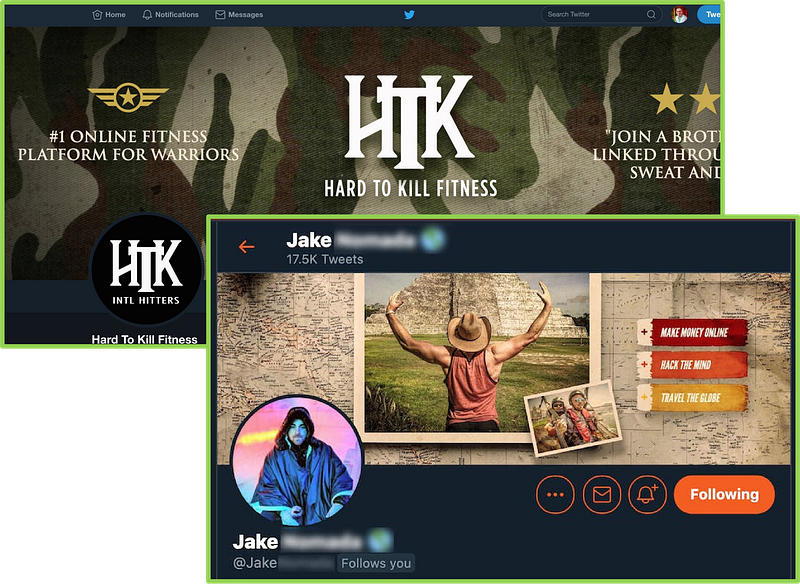
Four weeks and a bunch of fancy headers later, Jose mustered enough courage and social proof to share a paid offer. “I posted the tweet that changed my life,” he said.
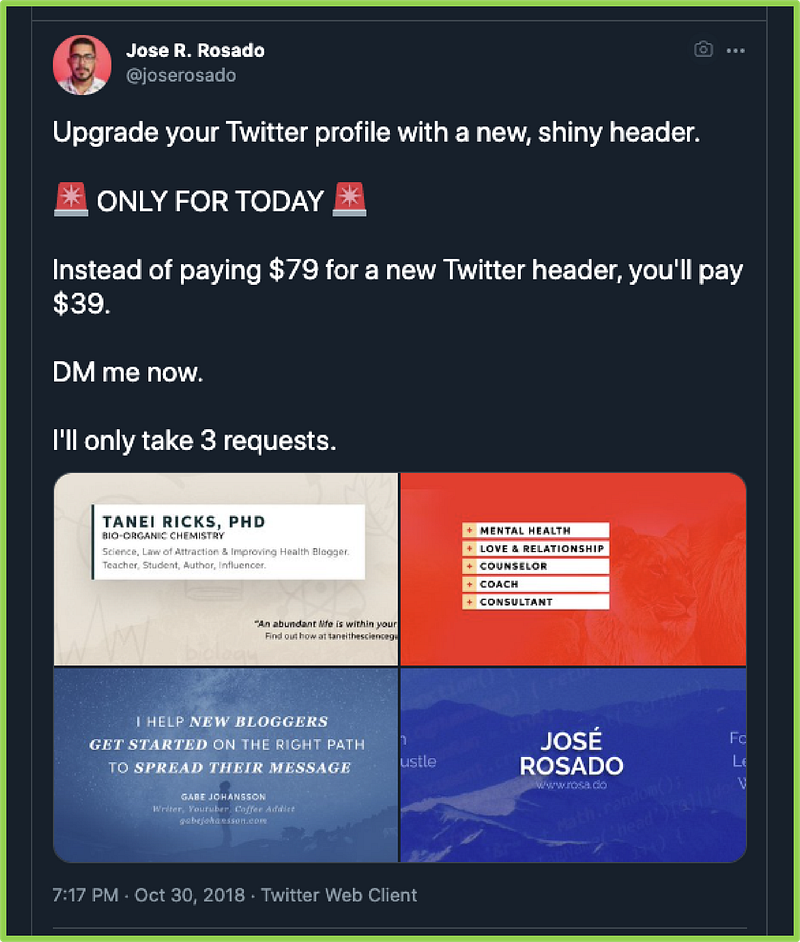
The tweet translated into a $117 payout and another wave of praise. The word spread, and the money wheel started to roll.
Over the following months, hundreds of requests jammed Jose’s inbox. The catch? Creative work is time-consuming, and there are only 24 hours in a day. The now-popular graphic designer knew he couldn’t scale his business if he only made Twitter headers.
It was time for an upgrade.
From Twitter headers to designing websites
“I now have Twitter clients,” Jose said. “It’s easier to sell to current clients than to get new ones.” And so he pitched his web design offer, and sure enough, many existing customers were interested.
At first, he charged $1,000 per website. For reference, designers charge up to $6,000, but then again, Jose's way of doing business is to build social proof first. The rest, meaning money, should take care of itself. And it did.
By the time he started to generate full-time revenue from websites, Jose had a new idea.
It wasn’t exactly an idea. It was a revelation that went something like this. “I have thousands of Twitter followers who seem interested in online business. Why not create a digital product to teach them how to do what I do?”
Jose got to work. At the time, his English wasn’t on point, so he had to record his lessons over and over again until he got the pronunciation and grammar right. “Painful! But worth it,” he said.
In 2019, Jose made nearly $60,000 selling courses on Gumroad — an online platform that allows direct sales from creators to consumers. He didn’t stop there though. Jose sought new partnerships, started a podcast, and offered one-to-one coaching sessions. With every new business venture, his English improved, and so did the quality of his work.
By the end of 2019, Jose’s online business brought him $105,000.
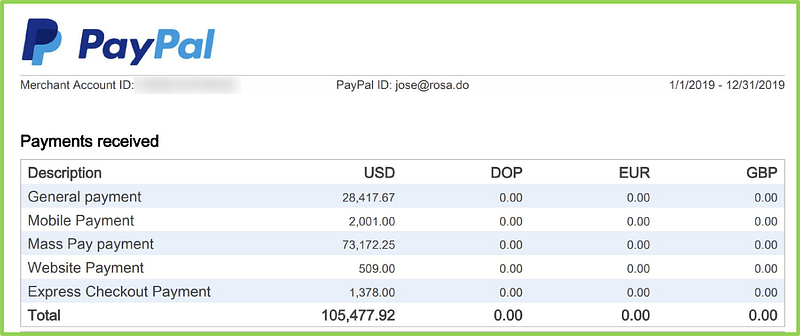
As of this writing, Jose has 54,900 followers, and his Twitter account is as active as ever. Every day, he shares thoughts and freebies, and on some days, he promotes his courses.
How to monetize your Twitter in nine steps
The system I’m about to share with you is a combination of Jose’s insights and my marketing knowledge. Also hey, it’s a system, not a shortcut. You’ll still have to work your ass off to make it work.
Ready?
1. Find an added value you can provide
Before you hop on Twitter, you might want to define what you’re going to sell there. You have four main options.
- Solve problems
- Teach skills
- Entertain
- Motivate
Pick one or a few activities you’re comfortable with, then add a personal touch to the lot. It’ll make you stand out from the crowd.
Here’s a quick example. Tim Urban uses funny stick figures to illustrate in-depth articles. Teach and Entertain? Check. Personal touch? Also, check.
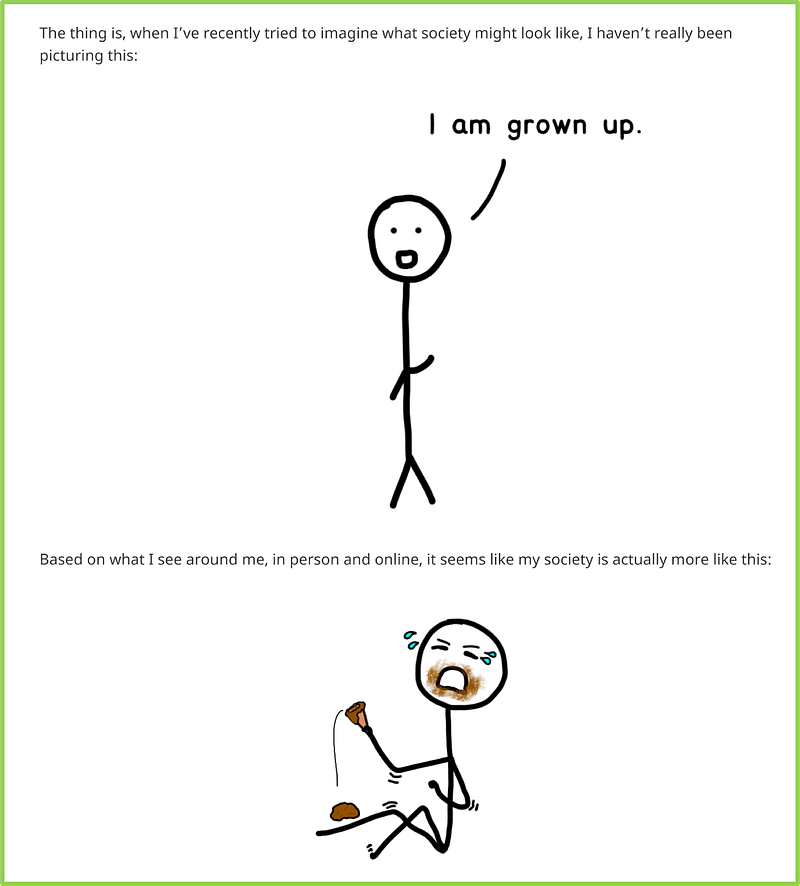
If you can’t come up with something off the top of your head, don’t panic. This first step is a continuous process. Try one thing or twenty-two, and once you settle on a formula, stick to it.
From there, you can work on your presence on Twitter.
2. Be yourself
Many people play a role to grab attention. They filter their opinions the same way they do with their pictures. Sure, it can work for a while, but it’s not viable long-term. Abraham Lincoln best explained why that is.
“You can fool some of the people all of the time, and all of the people some of the time, but you can not fool all of the people all of the time.”
Be yourself. It’s easier. It’s healthier. It works, and it attracts the right people.
3. Post a ton
“Post a ton” as in “post 15 to 20 times per day, every day.”
Also, it’s not only about quantity.
If you post to zero followers, you won’t get engagement. That’s why I believe the best way to start off is to engage with others.
Seek like-minded people with a decent Twitter following and interact with their content. You’ll grab the attention of your target audience.
4. Build an email list as soon as possible
There’s a reason why your favorite creator has an email list. It freaking works.
An email list allows you to build a close relationship with your followers which facilitates pitching. You’re not a generic ad that interrupts their show, nor a sponsored post that begs for attention. You’re in your followers’ inboxes, where they receive important messages from work, friends, and family.
Build a landing page for your email list as soon as you can, then promote it. If you have no idea how to do that, jump on YouTube.
5. Get social proof before you make your first paid offer
As Jose did, make free offers to influential people on Twitter and ask them for endorsement. It could be a post, a reshare, or a review on your website. Either way, make sure the praises are visible on your profile.
From there, you can work on your first paid offers.
6. Make limited offers
Remember how Jose limited his first offer to three people? It’s a marketing trick based on Loss Aversion.
In a nutshell, Loss Aversion means that we care about losses more than we care about gains. Let’s illustrate with two examples.
- “Benefit from a 50% discount on my course today!”
- “Only 12 spots left to join my course at $59 instead of $119.”
Which formulation would you click? Exactly. The fear of missing out on a promotion is a marketing tool you can leverage in your pitches and Calls To Action.
Also noteworthy, don’t abuse Loss Aversion. People will notice, and it’ll hurt your reputation, which is hard to recover from, especially on Twitter.
7. Reassure your clients through guarantees
When you buy a product from a new supplier, book a session with a new coach, or buy a book from a new author, you’re taking a risk. The same goes for your prospects.
Your job is to make your clients feel secure through guarantees. Here are four examples that can inspire you:
- Cancel subscription anytime without additional fees
- Get unlimited revisions until final delivery
- Pay 50% now and 50% on delivery
- Get a 100% refund in case of a missed deadline
In short, make working with you feel risk-free.
8. Learn from your mistakes and successes to improve your products
Every three months or so, review the performance of your products to spot your weaknesses and outline your strengths.
Most of your clients skipped past your offer? Read a marketing book and upgrade your sales pitch. Low engagement on your tweets? Study people with better stats. People loved your group coaching sessions? Do more of them.
Continuous improvement will allow you to upgrade your offers, and better offers translate into higher prices.
9. Repeat the previous steps every day for one year, or two
There are no shortcuts, remember?
Psst hey 👋🏻
I started to apply this system in late April 2021. If you want to see how it’ll go in the next months, follow me on Twitter here.
Also, you can follow Jose here.


