
If a $10 Software Cost You $10,000 Without Warning, Would You Buy It?
You are already doing it, and licensing is the root of the evil

“Purchasing this software might multiply the price by 30 at any random time”
You probably don’t recall reading that section in any End User License Agreement? Would you have purchased the software if that section was in there? No? Then why do we keep doing it?
We hire IT personnel and buy extra hardware to make sure things run, but if you think about it, that is absurd. More on that when we buy a car a bit later in the article.
The $7000 day at the office
Should we consider software license up-time warranties in the future?
With a coffee in my hand, I entered the front door to the office. I was ready to lead the team making great visuals. Little did I know that this day would cost the production $7000. Why? Because the software we paid for didn’t run.
When I arrived at the office, the artists didn’t have a working license and they didn’t know what to do. A single artist who can’t work for a full day could cost you $350–$800. Multiply that by 7–8 artists (or hundreds in a big company) and you might end up with a cost of around $4000. By adding the requested overtime, overtime food, and technical hiccups to catch up with the lost hours, and the hourly rate is suddenly 140% or 200%. Add in the Supervisor’s lost time, renting cloud computers to catch up with the output, and IT and that day cost you close to $7000. Those $7000 are for one incident. The scary part is that you can not plan for this. It can happen at any time.
After being on the phone with the reseller for hours we found there was an issue when we bought additional licenses. We, the client(!) had to find the software keys, concatenate them into new license files and point to them.
Is it fair that your company covers random downtime? If a new car breaks down on day 10, you would not accept paying $10,000 to get it back on its feet. Should we consider software license up-time warranties in the future?
I never got to enjoy the coffee that day… Another $5 down the drain.

“Piracy harms consumers”
The slogans “You wouldn’t steal a car” and “Piracy harms consumers” were made up by the entertainment industry to educate the consumers on the negative impact piracy had on the industry. The ones who used pirated material never had to watch those because it was stripped from the movies. The paying customer had to suffer through it though.
The paying customer suffered through most things. Not only 30 minutes of commercials but a more serious one — Digital Rights Management. DRM made sure you couldn’t play the music you purchased in your car or your dedicated portable player. If you were in an incorrect zone you wouldn’t be able to play the DVD you purchased either.
The handling of piracy with different licensing was a nightmare for the paying customers, and to some extent still is today, 25 years later.
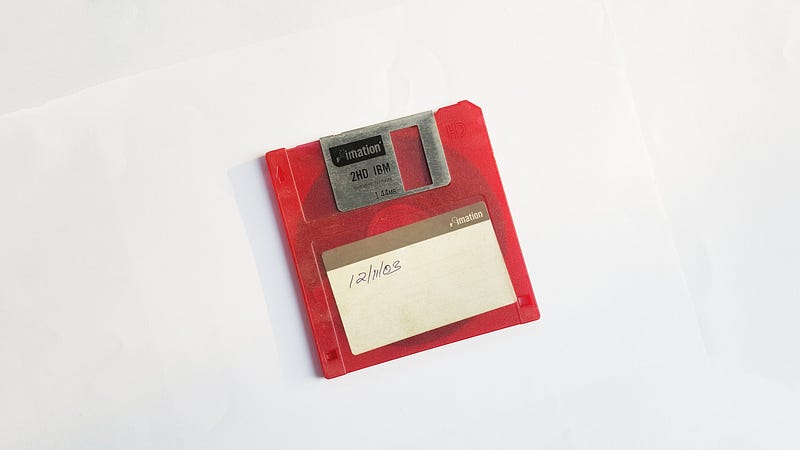
You could say piracy indirectly harms consumers because the industry spends an enormous amount of resources battling it — Which they wouldn’t need to do if there were no piracy. It costs money and that will have to be baked into the price of the product. The legal product is also horrible compared to the pirated one because of the attempt to prevent piracy. It is cluttering a product by adding all the methods to prevent piracy.
After decades of fighting its customers, the entertainment industry started to give in and allow paying customers to pay for working products. Spotify and Netflix are brilliant examples of how paying customers are finally allowed to pay for a service they have been asking for for years.
It’s not all rainbows and unicorns. Lately, we have seen how Disney started pulling material from Netflix to launch its own service. This shows that you are still not paying for a product. You are paying for the right to watch a movie as long as the publisher wants it to be available to you. Now that everything is digital, it can disappear overnight.
“You wouldn’t steal a car”
Of course not, but have you ever bought one? The process could be something like this.
- Visit the car dealer and go for a test ride
- Decide to order one.
- When the car is ready for you, go to pick it up
- Visit car-dealer, sign papers, drive away with car… But before you leave:
- Hire an additional full-time mechanic to be able to drive the car. Wheels might fall off the car at any time, so keep him in your trunk.
- Purchase the additional trailer and attach it to your car. You need this as well to make the engine work, obviously.
- The car stops if you drive to your cabin. There’s no Internet there.
- The car only starts if you drive it. Your wife is not allowed to drive it.
Point 1–4 makes sense. The rest is complete nonsense… Or is it? Point 5–8 is what you have to deal with when you purchase software licenses.

The Mechanic
The mechanic is your IT guy. Having staff to make sure licenses are running is a cost that is expected when you use software for production. Wouldn’t it be great if IT could work on machines, servers, and pipeline instead?
The Trailer
The additional trailer is your license server. Until recently it was expected that you host the license-server in-house. Some software still require this.
No Cabin Trip
The software can stop working because it can not check the license online. No Internet, no work. Thankfully, most software companies do checkups every N days so you can actually be offline as long as you are online within a certain time period.
Noone Else Can Drive The Car
Only you can drive the car. It will simply not start if your wife tries to turn on the engine. This is a Node-Locked car. If you want your wife to be able to drive when you are not using the car, you can buy a Floating Car. Then you can all drive, but it will cost twice as much.
Floating licenses usually cost up to twice as much as a node-locked license. You could argue that the cost of developing a floating license option for your software is higher, but companies charge double because they can. There is no reason a floating license should be more expensive in the first place. There is still ONE person using it at any given time. The implementation of node-locked licenses is like stabbing your customer in the kidney every time they buy your product.
License Types

There are many different types of licenses. It ranges from freeware to trade secret. Most of us are used to the one called proprietary license where you are granted the right to use the software. The software publisher retains all rights to the code while you may use it in your day-to-day production. [1]
The implementation of these licenses vary. There are many systems you can use when creating a licensing setup for your software. A few known tools are RML and FlexLM.
Thankfully, we see another type emerge these days, and that is user account licenses. When your company purchases a license, they add users to the licenses and whenever you log in as a user you have an active license. This means that there is a certain level of administration for the distribution, but nothing compared to setups where you need to work on getting the license to actually work.
The process of purchasing and installing software with its license should be like this:
- Purchase software
- Create a User Account
- Install
- Use
Everything else should be hidden from the user. Adobe has done some good work here lately where the user just logs in. Autodesk also has a similar approach now — We’re getting somewhere.
The discussion on subscription-based vs. owning a copy is a topic that needs its own article.
Final Thoughts

Licensing Harms Consumers…
I only have one question? Where do I send the bill every time license issues cost your company thousands of dollars?
-M
In Conclusion
[1]Software Licenses, https://en.wikipedia.org/wiki/Software_license