
Self-improvement | Stories
How a 3-Minute Teddy Roosevelt Speech Helped Cure My Fear of Failure
And forced me out of my comfort zone
I’m a sucker for procrastination.
It lures me in, gives me a big dirty hug and holds onto me for hours. Then it throws me away and leaves me feeling shame and regret.
My perfectionism and procrastination made me miserable. Every time I tried to do something my fears would bombard me.
This week’s going to be different, I’d say to myself. Yeah, this time things are really going to change.
Spoiler alert: nothing changed. It wasn’t long before I fell back into my old ways and resistance prevailed.
Every. Single. Time.
That was until a speech I stumbled across completely changed my mindset.
The speech that sparked the fire
Recently, I heard a speech that hit me like a fat cat fired from a cannon.
I know what you’re thinking: Really? Another one of these boring speeches that spew the same nonsense? You’ve gotta be kidding.
Don’t worry, It’s not like that!
It’s not the typical mum's basement, paycheck-to-paycheck, “now I’ve got a Lambo!!” story arc. There’s much more pizzazz.
It was The Man in the Arena speech, by the one and only Teddy Roosevelt, the 26th former US president. You can listen to the speech here.
Let me dive into the parts that impacted me the most.
Overcoming fear of critique and hate
The speech starts by addressing cynical people.
He describes people who are cynical and look at everything “with a sneer” as the poorest kind of people.
He expands on this by stating how pathetic these people are criticising others for acts they haven’t the courage to pursue.
There are many who confine themselves to criticism of the way others do what they themselves dare not even attempt.
This was the first part of the speech that struck me: the people who mock you for what you do hold no power; they lack the chutzpah to face the challenge, so they project their insecurities or anger onto you.
They don’t deserve to be taken seriously, for they are defined by being critical of what they can’t do.
Whereas you’re defined by being a go-getter. You have no reason to think of critics as worthy.
This part of the speech diminished my fear of critique and judgment, which were the main reasons I kept procrastinating.
Reinforcing how little the critic is
The cynics are not worth your worry.
Teddy continues reinforcing this point even more after stating how unadmirable it is to have sneering disbelief towards people’s achievements and their attempts at them:
It’s not the critic who counts; not the man who points out how the strong man stumbles, or where the door of deeds could have done them better.
It is not the critic that counts.
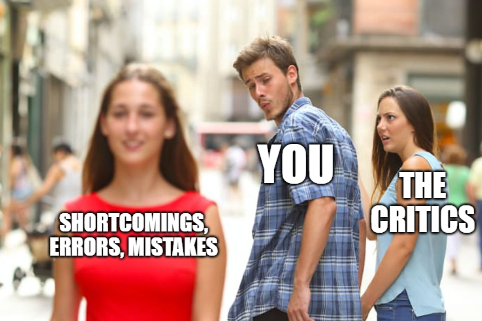
The focus is never on the fact you failed. The emphasis should be placed on how you tried — how you had the vigour to go through the trials of life.
Your efforts are what make you worthy
Being passive and observant is easy.
Sitting back and remaining complacent is addictive. Taking risks, chances, and opportunities is scary.
But it’s not the achievements that make you admirable; it’s not the achievements that define your worth.
It’s about being in the battle, regardless of the result. The power is in how you conduct yourself.
In the part of the speech that astounded me the most, Teddy said this about triumph:
The credit belongs to the man who is actually in the arena, whose face is marred by dust and sweat and blood;
There is no credit in being a critic.
There is credit when you are in the proverbial arena, taking on challenges and obstacles. Fighting through blood, sweat, and tears is what is honourable, not those who respond to the result with derision.
The credit belongs to:
[the man] who strives valiantly; who errs; who comes short again and again…
It’s the journey of being defeated that makes for a wholesome story — one worth being told.
Who remembers the story of critics?
Losing your fear of failing and coming short
I used to be petrified of starting things.
I was so used to sinking my teeth into a goal, brimming with motivation, just to end up faltering and moving on a few weeks later.
I got into the habit of expecting failure. As a result:
- I resisted starting anything meaningful because I thought I’d fail, therefore;
- I’d also resist sticking to things because I thought it would be a waste of time.
- I became scared of what people would think of me being continuously unsuccessful, so it felt better to neither succeed nor fail.
It was a nasty cycle.
Teddy addresses this problem in his speech:
There is no effort without error and shortcomings; [the man worthy of credit] actually strives to do the deeds; knows great enthusiasms; spends himself in a worthy cause…
There is no effort without error.
You should expect failure and error as an inevitable result of effort, and you should accept it with open arms.
If you are committing to a worthy cause, what do you have to worry about? Should you apologise for doing good, regardless of whether you succeed?
Let your errors make you proud; proud for standing up to challenges and adversity.
That’s something a “sneering” critic could never amount to.
Thus, all the power is with you.
There is no glory in being passive
Stationary water goes stagnant and starts to smell nasty.
Like water, if we don’t act on our desires and wants, we too become stagnant and nasty.
Moving in a direction — even if that direction fails — is better than no direction at all.
From shortcomings you can learn infinitely; from passivity, your only lesson is regret.
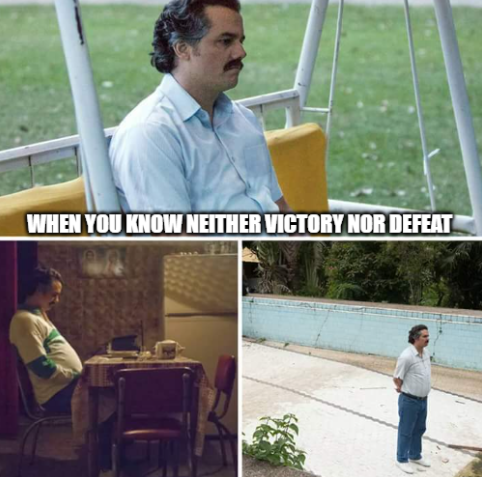
… his place shall never be with those cold and timid souls who neither know victory nor defeat.
To know neither victory nor defeat is, to Teddy, perhaps the most depressing type of existence, in both observation and experience.
From my own experience, I agree.
I had never been more miserable and indignant than during my greatest times of passivity.
I’d make fun of people for trying and failing.
I’d hold no hope for their dreams, thinking that what they were attempting was stupid and a fruitless endeavour.
It was a clear projection of my insecurities and inability to go into the arena — to have my face “marred by dust and sweat and blood”.
When I started to put in the effort, regardless of external opinions, that’s when I found the most peace.
If I succeed, it will be worth it. If I do not, at least I’ll have no regrets.
The most important lessons
Here are the key parts of the speech that are worth remembering the most put in a concise list
- Don’t worry about the little man. The critic holds no power over you when they fear the very act they’re critiquing.
- The credit belongs to the man who is actually in the arena, not the passive bundle of people who are too afraid of defeat.
- Become familiar with failure and ravish the idea of learning from your mistakes. There is no effort without error.
- Shoot your shot, even if you miss. Nothing is worse than never attempting — becoming one of those timid souls who know neither victory nor defeat.
So go into the arena.
Get blood and dust and sweat on your face. Mess up a few times. Think little of critics.
And do the best with what you’ve got.
If you enjoyed this article then you’ll love this one, possibly:


