
How 1990s English Music Put the Brit Back into Pop
The story of Britpop
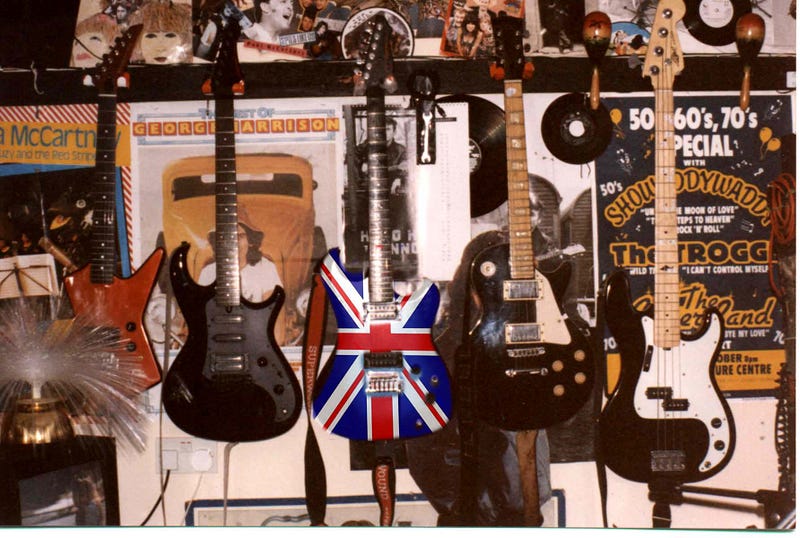
Picture it, Bradford, 1994. I was at a house party, talking to some guy about music. He gave me a piece of advice that sent my musical tastes in directions that’d bring me joy for years to come.
“Don’t listen to East 17 and Take That; they’re shite. Listen to Oasis and Blur.”
So I did, and thus my love affair with Britpop began.
Britpop is a subgenre of indie rock that became prominent in the UK between 1993 and 1997. Its primary influences were 1960s English guitar-based rock groups like the Kinks, the Rolling Stones, and the Beatles.
Back in Australia, I saved up and bought two CDs: (What’s the Story) Morning Glory? by Oasis and The Great Escape by Blur. The songs reminded me of the 1960s British Invasion bands I grew up hearing my parents play. The singers sang catchy lyrics in their accents, and I instantly fell in love with the sounds.
Britpop was the first music genre I liked because I liked it, not because some cooler kid I wanted to impress liked it.
Before Britpop, I hated nightclubs — tacky places full of dull, soulless dance music and creepy guys who’d pinch my butt. After Britpop, I frequented all the indie clubs in Melbourne. At last, there were places where I loved the music and felt comfortable with the crowd. That’s how I came to spend my early 20s dancing the night away to Blur, Pulp, Suede, Oasis, and the rest.
Britpop was cheeky, cheery, and more fun than the darker alternative music of previous years. It was still indie but embraced pop rather than punk or grunge.
As the final decade of the previous millennium dawned, a period of great musical drabness descended upon mainstream UK. The Stone Roses and the Happy Mondays were taking a break. And in those years before Jarvis Cocker mooned Michael Jackson, the Brit Awards were dominated by the likes of Phil Collins, Elton John, Simply Red, and Sting.
Fine musicians, but not fine for a 20-year-old girl who just wanted to be happy and dance in her Converse.
Early 1990s Western society reacted against the consumerism of the 1980s. Alternative music reflected this in the form of a long-haired trio from Seattle named Nirvana. The English charts were dominated by grunge, and Englishness was considered passé. In 1992, a Union Jack be-draped Morrissey was met with derision. The same Union Jack would become a fashion accessory a few years later.
Things started to change.
Young English musicians were sick of American cultural dominance in the UK. Blur’s lacklustre 1992 tour of the US fuelled frontman Damon Albarn to concentrate on writing songs that sounded like England.
Art school students and aspiring musicians drank at The Good Mixer in Camden, yearning for a day when radio stations would once again transmit music that sounded like the Kinks. They placed ads in Melody Maker seeking musicians who liked Morrissey. And the music scene around North London started to buzz.
An androgynous-looking Brett Anderson, the lead singer of Suede, appeared on the cover of a 1993 edition of Select magazine under the heading “Yanks Go Home.” With the death of Kurt Cobain in 1994, the grunge scene fizzled, and a new sort of music gained influence in the UK.
Suede was the first Britpop band to come to the attention of the mainstream when their single, “Animal Nitrate,” reached the Top 10 in 1993.
Both Blur and Suede started as middle-class art school bands, but this was also a time when English working classes and lad culture increased in popularity. Blur embraced the scene by donning tracksuit tops and using a photo of greyhound racing (traditionally regarded as a working-class pastime) on their Parklife album cover. This new preoccupation with “slumming it” was immortalised by Pulp’s 1995 hit Common People. Then the real deal emerged in the form of a couple of mono-browed brothers from Manchester who swaggered about full of coke-laden bravado.
These Britpop bands soon began competing for attention on the charts.
Blur and Suede had already become rivals of a sort. This wasn’t helped when Justine Frischmann of Elastica dated first Brett Anderson, then Damon Albarn.
But this was nothing compared to the infamous “Battle of Britpop” between Oasis and Blur.
Almost 30 years later, the Britpop scene is still remembered for the Oasis v. Blur battles, encapsulating England’s north/south, working-class/middle-class divide.
Unlike the Beatles and Rolling Stones, who cooperated with each other when releasing singles, Blur’s Country House and Oasis’s Roll With It were timed to be released on the same day in 1995. Country House sold more singles, but later that year, Oasis went on to achieve greater worldwide success with the release of their second studio album, (What’s the Story) Morning Glory?
But, like Echo and the Bunnymen sang two years later, nothing lasts forever.
In my opinion, Britpop lost its edge the day Noel Gallagher set foot in Number 10 Downing Street as part of New Labour’s Cool Britannia naff-fest.
Oasis’ 1997 album Be Here Now didn’t fit the mood of a country mourning the death of Princess Diana. The last Britpop hit was the Verve’s 1997 single, Bittersweet Symphony, but the genre lost its appeal soon after and became redundant once former boy band singer, Robbie Williams, worked out how to sound like a Gallagher.
Everyone seems to identify with a period in music trends. To this day, most of the music I like is either influenced by Britpop or was an influence on Britpop. When I hear this music, it makes me feel happy.
What are your memories and thoughts about Britpop?
If supporting writers is on your agenda, why not become a Medium member? I receive a wee commission, and your praises soon I’ll be a-whistlin’.