
How 11 Famous Webcomics Make Money Online
Including social media followers, websites, interviews, books, merchandise, and revenue sources

(Note: I’ve since updated this list to include a few more — and the legendary The Far Side by Gary Larson now that he’s returned!)
I’ve been on a weird mission these past few months: to learn how to draw digitally and start an odd webcomic about politically-minded cats.
As part of that endeavor, I’ve been learning anything and everything I can about existing popular webcomics.
This article is a look at how some of the most popular webcomics are able to earn a living today.
You might be surprised at some of the results. I’ve tried to include all public sources of income, as well as any reported numbers that exist on the internet.
I’ve looked in-depth at ten different popular webcomics: their interviews, websites, social media following, and any other relevant information I could find.
Below is the TLDR section of the deep dive, and the full webcomic analysis is after that.
Enjoy!
TLDR Webcomic Stats
Most followers
- Instagram — Strange Planet with 5.4 million followers
- Facebook — Cyanide & Happiness with 12.4 million followers
- Twitter — Sarah’s Scribbles with 773 thousand followers
Full list of revenue sources
- Books (All ten had one, and most had them on Amazon in print and digital versions.)
- Paypal donations (Some mentioned they used these at the beginning.)
- Patreon subscriptions (Most of these comics have one.)
- Website advertisements (This seems to be a tactic when just starting out, but many get rid of them later.)
- Newspaper and magazine commissions/series
- YouTube ad revenue and subscriptions
- Podcast ad revenue and subscriptions
- Merchandise (Many of these websites use Shopify to sell stuff.)
- Web video series (likely ad-based revenue)
- Kickstarter campaigns for various projects (often in huge amounts)
- Card and board games based on the comics
- GoComics revenue sharing
- Tapas revenue sharing
- Webtoon revenue sharing
- Deviantart donations
- Mobile games
Major money makers
It was difficult to find a lot of reported revenue from many of these, which is completely understandable. From what I can tell, the main money earners tend to be:
- Books
- Merchandise
- Website ads
- Patreon
It also appears that as comic creators become more popular through their series, they change up how they earn their money — from ads and donations at the beginning, moving to physical/digital goods later on.
Then there’s Kickstarter, which if you see below, has earned some of these creators hundreds of thousands of dollars. But it doesn’t seem too common.
There are also a handful of comic websites that have revenue sharing options. It’s difficult to guess how much money they’ve earned from these, but I’m sure it helps support them.
And now, here are the ten webcomics and their sources of revenue.
***If you haven’t signed up for Medium and would like to read millions of other amazing articles, please consider using my referral link to sign up at no cost to you. I’ll receive a small commission out of the normal payment. Thanks for any support!***
1. The Far Side — It’s returned!
Creators: Gary Larson
Website: https://www.thefarside.com/
Interviews: The New York Times, Rolling Stone, Forbes
How they got famous: In his own book chronicling the history of The Far Side (or as he had named it — Nature’s Way), Gary Larson mentions he was first working in a music store when he first tried drawing cartoons. He realized he hated his job and decided to draw several cartoons.
He got accepted into a publication called Pacific Search at the time. He later appeared in a local newspaper called The Seattle Times.
Somewhat randomly, he tried submitting his cartoons to the San Francisco Chronicle to increase his income.
They loved his work, syndicated it nationally, and changed the name to The Far Side. 15 years of syndicated cartoons followed and his fame was ensured. (And now he’s back with more on his website!)
Social Media: Unlike every other webcomic on this list, I couldn’t find a single verified account ran by The Far Side or Gary Larson. Of note, he’s previously resisted going online with his comic — until recently with his launch of The Far Side website!
(If you spot anything, please let me know in the comments section!)
Sources of revenue
- Newspaper cartoonist (formerly) — Pacific Search, The Seattle Times, San Francisco Chronicle
- Merchandise on his website
- Amazon books
- Book publishing
- Merchandise via The Far Side (sketchbooks, individual cartoon prints, collections, calendars)
Books
- Published on Amazon
- Prices from $9.99 to $49.99 for new versions
- Book titles and Amazon reviews — The Complete Far Side (1,474), The Far Side (39), The Prehistory of the Far Side (163), The Far Side Gallery 4 (133), The Far Side Gallery 5 (144), There’s a Hair in My Dirt! A Worm’s Story (215), The Far Side Gallery 2 (184), and many more volumes
Reported revenue: I cannot find any verified reported revenue sources for Gary Larson. Several websites claim he is worth between $50 to $75 million, though.
However, these aren’t backed up claims and it’s difficult to tell the truth. With over 20 volumes of the Far Side and a publishing deal for 15 years, he certainly has accumulated some significant wealth. How much remains to be determined.
2. Saturday Morning Breakfast Cereal
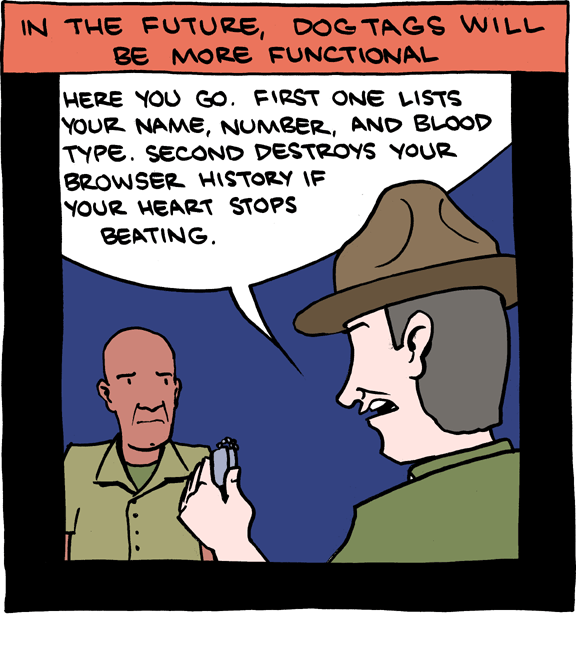
Creators: Zach Weinersmith
Website: https://www.smbc-comics.com/
Interviews: Thingsinsquares, Wildwomanfundraising
How they got famous: It’s been around since 2002 and has amazingly been published almost daily. It won a Web Cartoonists’ Choice award in 2006 and 2007. It’s also been featured on several large websites like The Economist, Glamour, and Freakonomics.
Social media: Facebook (572 K), Twitter (106 K), Instagram (31 K), RSS
Sources of revenue
- Ads on website (previously)
- Patreon (3,260 patrons paying between $1 to $100 per month)
- Merchandise on Hivemill (prints, t-shirts, greeting cards, stickers, posters, bookmarks)
- YouTube videos
- Kickstarter campaigns
Books
- Published on Amazon and Hivemill
- Prices from $8.99 to $24.95 (digital list prices)
- Book titles and Amazon reviews — Soonish: Ten Emerging Technologies That’ll Improve and/or Ruin Everything (213), Open Borders: The Science and Ethics of Immigration (263), Nerd Disses: A Significant Quantity of Disrespect (15), Save Yourself, Mammal!: A Saturday Morning Breakfast Cereal Collection (45), Science: Ruining Everything Since 1543: A Collection of Science-Themed Comics (46), Augie and the Green Knight (22)
Reported revenue
- Patreon (3,260 patrons paying $6,733 per month)
- Kickstarter book campaigns (1/8) (4,011 backers pledged $130,132)
- Kickstarter book campaigns (2/8) (8,016 backers pledged $341,667)
- Kickstarter book campaigns (3/8) (1,301 backers pledged $47,746)
- Kickstarter book campaigns (4/8) (9,044 backers pledged $384,410)
- Kickstarter novelty campaign (5/8) (5,093 backers pledged $127,155)
- Kickstarter book campaigns (6/8) (7,119 backers pledged $377,471)
- Kickstarter book campaigns (7/8) (8,394 backers pledged $331,378)
- Kickstarter book campaigns (8/8) (2,227 backers pledged $110,587)
3. Sarah’s Scribbles

Creators: Sarah Andersen
Website: https://sarahcandersen.com
Interviews: Thingsinsquares, RTOR
How they got famous: In an interview, Sarah mentions this as how her comic took off: “There were a couple things. Posting regularly and on a schedule helped, but when larger blogs like Tastefully Offensive took notice and started re-blogging my work, I slowly started gaining a following. There was also one comic, Waking Up, that was my first truly viral post, and it was sort of where I got my footing.”
Social Media: Twitter (773 K), Facebook (2.71 M), Tumblr, Instagram (3.6 M)
Sources of revenue
- Patreon (869 patrons paying $1 or $5 each per month)
- Gocomics revenue sharing
- Tapastic revenue sharing and subscription sales
- Merchandise via Shopify (apparel, notebooks, prints, cups, plushies, stickers, magnets, tote bags, calendars, planners, day-to-day calendars)
Books
- Published on Amazon
- Prices from $9.99 to $14.99 for Kindle and hardcover versions
- Book titles and Amazon reviews — Adulthood Is a Myth: A Sarah’s Scribbles Collection (1,829), Herding Cats: A Sarah’s Scribbles Collection (396), Big Mushy Happy Lump: A Sarah’s Scribbles Collection (459)
Reported revenue: Minimum $869 from Patreon
4. Cyanide & Happiness
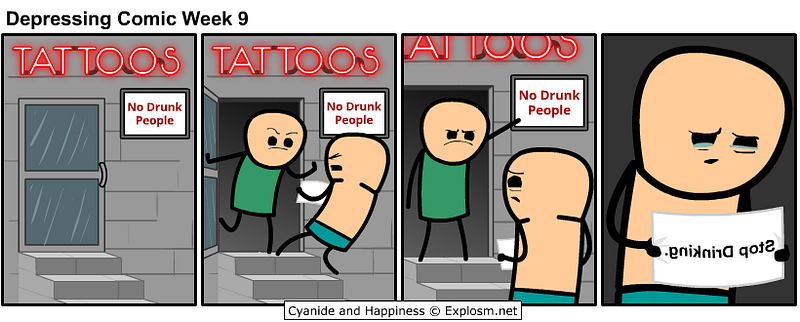
Creators: Kris Wilson, Rob DenBleyker, Dave McElfatrick, Matt Melvin (until 2015)
Website: http://explosm.net/
Interviews: New Yorker
How they got famous: They started posting on their website in 2004 and later on social media (Myspace, Quora, LiveJournal, and Facebook), with Facebook being the first big break for shares.
Social Media: Facebook (12.4 M), Instagram (2 M), Twitter (221 K), YouTube (10.4 M), RSS feedburner
Sources of revenue:
- Merchandise using Shopify and Amazon store (T-shirts, mugs, stress ball, key chain, stickers, glasses, phone case, mouse pad, bottle opener, plushies, posters, pins, greeting cards, bookmarks)
- Patreon (1,369 patrons paying between $2 and $100)
- Card games and expansions (Joking Hazard, Trial by Trolley)
- Podcasts ads and subscriptions
- YouTube videos (ads and view payments)
- Internet show funded by Kickstarter campaign (The Cyanide & Happiness Show)
- Videogame for PC and Nintendo (FREAKPOCALYPSE)
- Kickstarter campaigns
Books
- Published on their website, and two on Amazon
- Prices from $7.99 to $14.99 (digital list prices)
- Book titles and Amazon reviews — Cyanide and Happiness Book 1 (252), Cyanide & Happiness Stab Factory (74), Cyanide & Happiness Ice Cream & Sadness (Volume 2)(178), Cyanide & Happiness Punching Zoo (Volume 3) (79), A Guide to Parenting by Three Guys with No Kids (112)
Reported revenue
- Kickstarter campaign for Joking Hazard in 2016 ($3.2 million)
- Kickstarter campaign for Freakpocalypse in 2017 ($575,000)
- Kickstarter campaign for Trial by Trolley ($3.5 million)
- YouTube estimate $660,000 per year (2018 estimate, would likely be higher now)
5. The Oatmeal
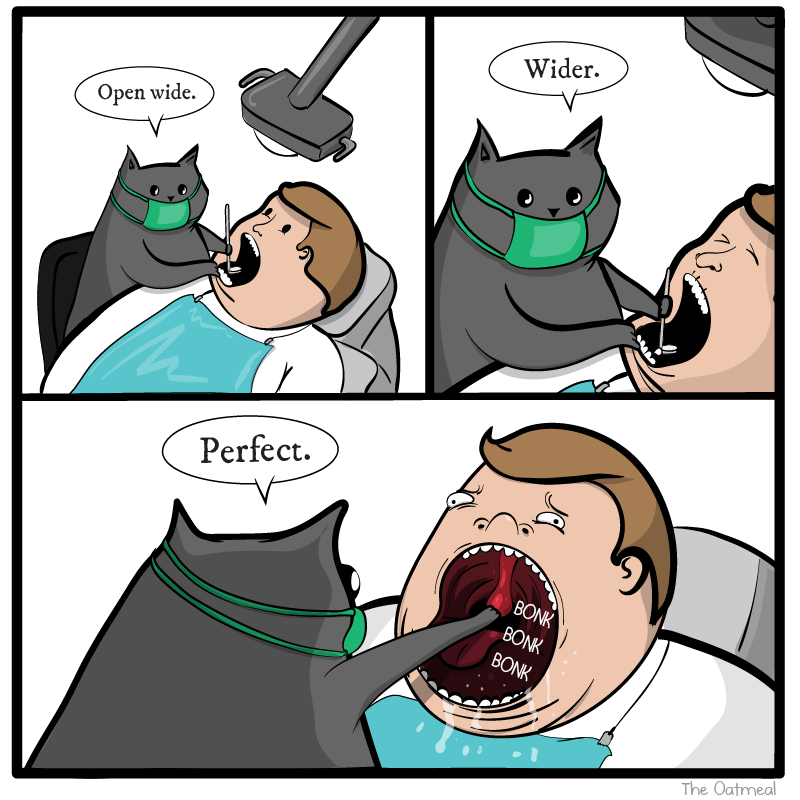
Creators: Matthew Boyd Inman
Website: https://theoatmeal.com/
Interviews:RunnersWorld, Reddit AMA, Daily Dot
How they got famous: He started a dating site in 2007 to compete with eHarmony. As part of that, he made a blog posting funny dating articles to drive traffic to it. After being moderately successful and selling the dating site, he focused on humor and comics. He started The Oatmeal website in 2009 and had 5 million monthly visits after a year. He also credits initial traction through sites like StumbleUpon and Digg.
Social Media: Facebook (3.9 M), Instagram (1 M), Twitter (643 K)
Sources of revenue
- Paypal donations (at the beginning)
- Patreon (1,188 paying $1 to $15 but for the creator’s alternative comic)
- Merchandise using Shopify (T-shirts, puzzles, mugs, prints, beer stein, posters, greeting cards, mugs, stocking stuffers, pins, stickers, water bottle, hats, stress balls, boxer briefs, dog shirts)
- Card game (Exploding Kittens)
Books
- Published on their website and Amazon
- Book prices from $4.99 to $9.99
- Book titles and Amazon reviews — If My Dogs Were A Pair of Middle-Aged Men (119), Why Grizzly Bears Should Wear Underpants Book 4 (356), 404 Not Found: A Coloring Book by The Oatmeal Volume 6, How to Be Perfectly Unhappy (139), My Dog: The Paradox: A Lovable Discourse about Man’s Best Friend Book 3 (812), How to Tell If Your Cat Is Plotting to Kill You Book 2 (4,207), 5 Very Good Reasons to Punch a Dolphin in the Mouth (And Other Useful Guides) Book 1(637)
Reported revenue:
- Reported revenue for 2012 was $500,000, three-quarters from merchandise and one-quarter from advertising (based on 7 million visitors per month)
- Paypal donations (at the beginning) of $100 to $400 per day
- Matthew Inman says he makes the most money from his educational posters: “The highest-selling item in my store are the posters. The educational ones, like the grammar posters, are funny but good to have up on your wall. [In fact] the entire public-school system in Sydney, Australia put hundreds of my posters in their classrooms.”
6. Amazing Super Powers
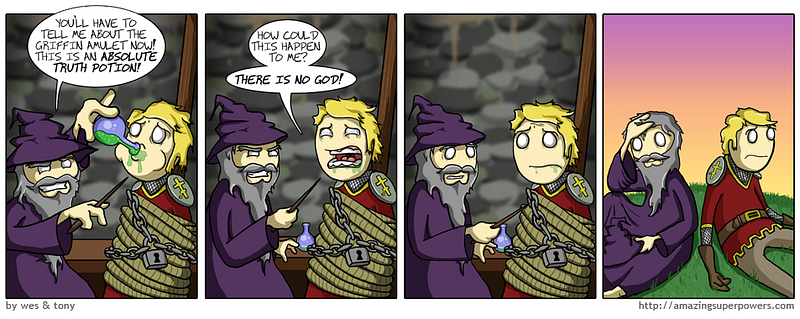
Creators: Wes Citti and Tony (no last names available)
Website: http://www.amazingsuperpowers.com
Interviews: ASP website
How they got famous: I’m not sure, as I can’t find many serious comments from the duo, but this is how they say they started: “Tony wanted to become a comic while Wes wanted to strip for a living, so we combined our talents.” They also state that CollegeHumor and Funny or Die websites featured them previously.
Social Media: Facebook (9.5 K), Instagram (1 M), Twitter (7.2 K), YouTube (8.2 K), RSS
Sources of revenue
- Paypal donations
- Patreon (20 patrons paying $1 per comic update; not the usual subscription model)
- Merchandise on Topatco.com (T-Shirts and prints)
- YouTube videos ad revenues and subscriptions
- A mobile game called Waynesaw
- Kickstarter campaign
Books
- Published on Topatoco
- Prices of $12
- Book title — AmazingSuperPowers: Catalog of Regrets Book
Reported revenue
- Kickstarter campaign for Waynesaw mobile video game ($44,000)
7. Perry Bible Fellowship
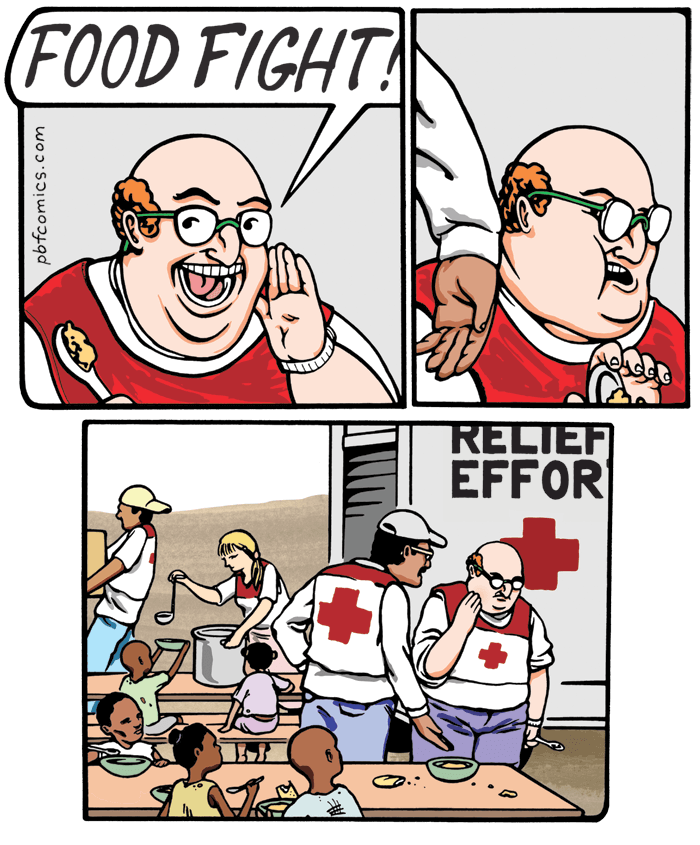
Creators: Nicholas Gurewitch
Website: https://pbfcomics.com/
Interviews: Verge, Thingsinsquares
How they got famous: PBF started way back in 2002 as a comic strip in the Syracuse University newspaper, The Daily Orange.
Social Media: Twitter (38 K), Facebook (140 K), Instagram (285 K)
Sources of revenue
- Newspaper payments initially
- Patreon (11 patrons paying $1 to $25 per creation, not per month)
- Merchandise on their website (T-shirts, prints, original art)
- Kickstarter campaign for a new book
Books:
- Published on Amazon, Barnes & Noble, and Indigo
- Prices $7.34 to $150 for Kindle version and list price for hardcover. (The prices are a bit strange for some of them; perhaps they’re out of stock and being resold at a higher price.)
- Book titles and Amazon reviews — The Perry Bible Fellowship Almanack (131), The Trial of Colonel Sweeto and Other Stories (97), The Perry Bible Fellowship Almanack (10th Anniversary Edition) (34)
Reported revenue:
- Kickstarter book campaign (2,272 backers pledged $101,591)
8. Strange Planet
Creators: Nathan W. Pyle
Website: https://www.nathanwpyle.art/ (but check his Instagram for free comics)
How they got famous: They started an Instagram that became very popular after a few months.
Social Media: Facebook (1.7 M), Instagram (5.4 M), Twitter (247 K)
Sources of revenue
- Patreon (967 patrons from $1 to $5 per month)
- Merchandise on Threadless (T-shirts, stickers, mugs, prints, magnets, buttons, bags, pillows, zip pouches, onesies, phone cases, skateboards, water bottles, notebooks, beach towels)
Books
- Published by Harper Collins with William Morrow and available on Amazon, Barnes and Noble, and Indiebound
- Prices from $7.49 to $14.99 (digital list prices)
- Book titles and Amazon reviews — 99 Stories I Could Tell (48), NYC Basic Tips and Etiquette (265), Strange Planet Collection (5,537)
Reported revenue: I couldn’t find any reported revenue as of the time of this writing.
9. The Adventures of Business Cat
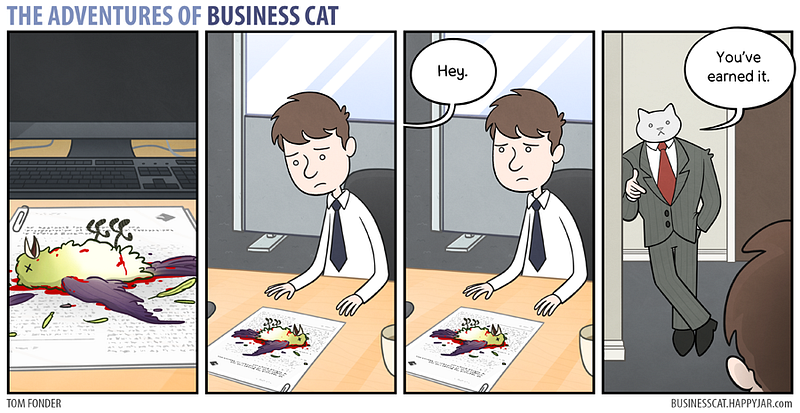
Creators: Tom Fonder
Website: https://www.businesscatcomic.com/
Interviews: Catster
How they got famous: The Adventures of Business Cat started a few years ago as an interlude to Tom’s other existing main comic, Hot Jar.
Social Media: Facebook (237 K), Twitter (13.2 K), Deviantart (5.1 K), Tumblr
Sources of revenue
- Patreon (unknown if previously used; there is an account but not active)
- Deviantart
- Merchandise on their website (T-shirts, prints, pins, mugs, tote bags, phone cases, wall calendars)
Books
- Published on Amazon and Comixology
- Prices $7.97 to $9.12 for Kindle versions
- Book titles and Amazon reviews — Business Cat: Hostile Takeovers (8),and Business Cat: Money, Power, Treats (66)
Reported revenue: I cannot find any distinctive sources as of the time of writing.
10. Poorly Drawn Lines

Creators: Reza Farazmand
Website: http://www.poorlydrawnlines.com/
Interviews: Thingsinsquares
How they got famous: Reza says in the above interview that “deciding to draw the comic on a regular three-a-week schedule was the first big milestone. That’s when my audience really started to grow. The next milestone was when I went full-time with Poorly Drawn Lines in 2013, and the latest milestone has been publishing my book.”
Social Media: Facebook (1.07 M), Twitter (208 K), Instagram (1.7 M), Feedburner
Sources of revenue
- Website advertisements
- Patreon (398 paying between $1 and $5 per month)
- Merchandise via Shopify (T-shirts, prints, stickers, mugs, pins, tote bags)
- Comedy Central commissioned them, and they made five episodes of the series Trip Tank.
- In development: videos, likely on YouTube
Books
- Published on Amazon
- Prices $14.55 to $19.41 (digital list prices)
- Book titles and Amazon reviews — Comics for a Strange World: A Book of Poorly Drawn Lines (93), Poorly Drawn Lines: Good Ideas and Amazing Stories (231), Poorlier Drawn Lines (146)
Reported revenue: I have not found any reported revenue sources yet.
11. Safely Endangered
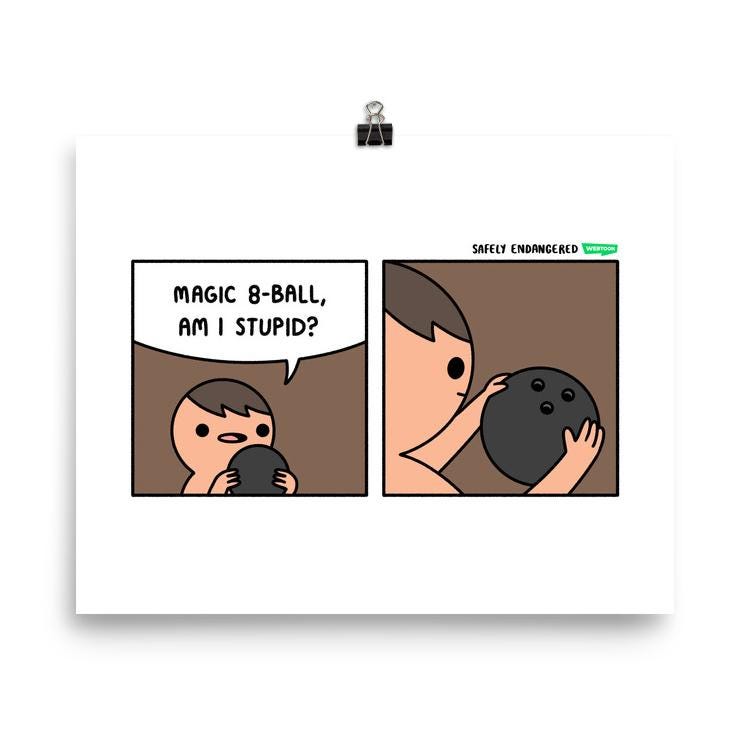
Creators: Chris McCoy
Website: https://www.safelyendangered.com/comic/surprise/
Interviews: Journalix, Ohh Deer, Fabulous Nothing
How they got famous: In an interview, Chris doesn’t think he had one big break before becoming popular, as in, it was more gradual. He initially started on Tumbler. “After that,” he says, “one of my early comics about vegetarianism gained some traction, which helped me to start building an audience. I think joining Line Webtoon as a permanent contributor has been the highlight of my comic career so far!”
Social Media: Facebook (373 K), Instagram (1.4 M), Twitter (60 K), Tumblr, RSS
Sources of revenue
- Patreon (145 patrons paying $1 per month)
- Merchandise via Shopify (Prints, mugs, magnets, greeting cards)
- Featured cartoonist at Webtoon, where they have a revenue sharing program if people opt-in (unsure if opted or not)
Books:
- Published on Amazon and Book Depository
- Prices $9.23 (digital list price)
- Book titles and Amazon reviews — Safely Endangered Comics (100)
Reported revenue:
- $145 per month from Patreon
Wrap up
I hope the above has been a good insight into the world of webcomics for anyone who’s curious about the subject.
If you spot any mistakes or want me to add any to the list, please let me know in the comments!
For other interesting deep dives and how-to guides, please follow me on my free newsletter!
The Amazon links above are affiliate links, which means I’ll earn a small commission if you purchase anything, at no cost to you. Thanks for your support!


