
A VETERINARIAN’S LIFE
House Calls African Style
The Lady Doctor returns
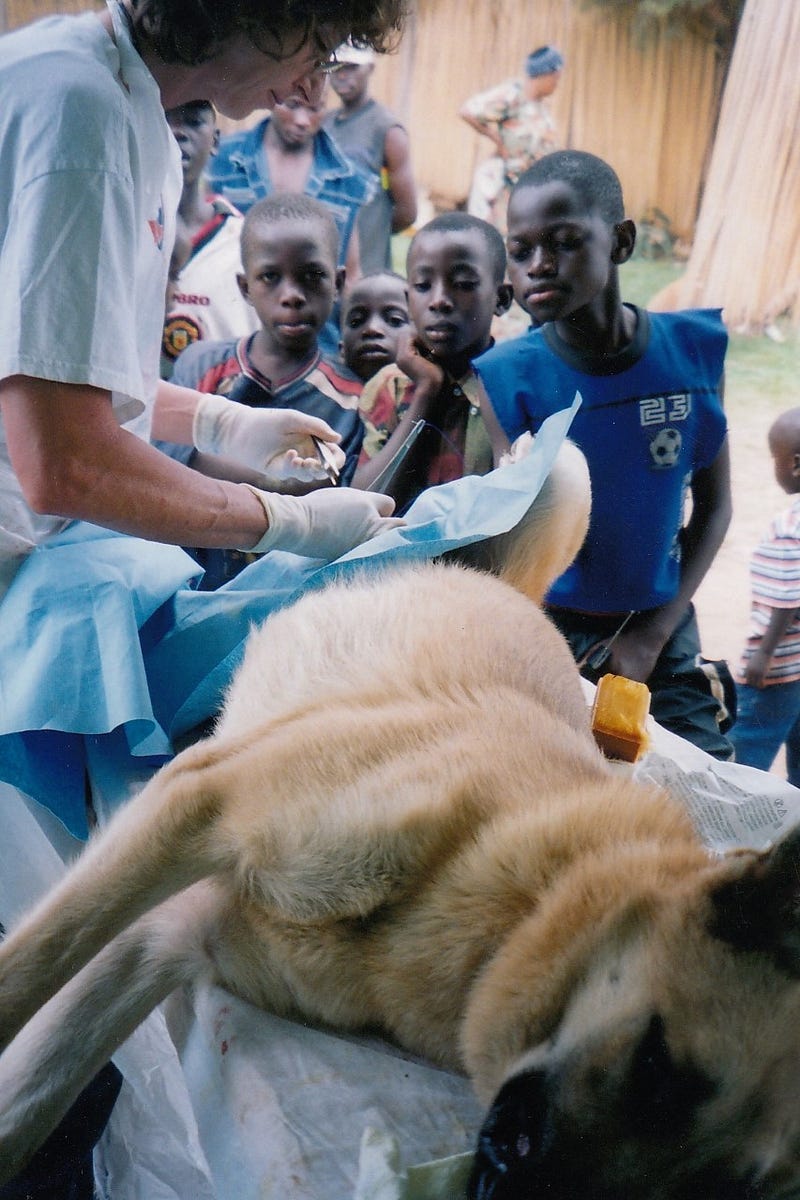
In 2006 I returned to Uganda with my second daughter, Robin. Our travel odyssey took us first to London where we spent a night with my future son-in-law's family, then on to Dubai.
We had an eight-hour layover and hired a taxi to see some of the sites. The driver could not understand why we did not want to see the fancy hotels or the indoor ski hill and instead, kept asking to go to an open-air market.
The last straw was when we insisted he pull over so we could race across the scorching sand and dip our toes in the Gulf. It was a silent ride back to the airport, all of us relieved the tour was over.
Finally, we arrived in Kampala and were reunited with my eldest, Justine, Dr. Berna and Ibra. They had planned a busy itinerary and there was a dedicated group of young veterinarians from the university to lend a hand.
This time I had brought along extra boxes of syringes with an exercise in mind.
When an animal was sedated I would ask the students to get blood samples from two or three different veins — this tested their knowledge of anatomy and gave them a chance to perfect their venipuncture skills. It was a big hit!
After my first trip, I had joked to everyone back home that our obsession with “sterility” might be over-rated. Doing surgery in open rooms and even outdoors had resulted in no post-op infections.
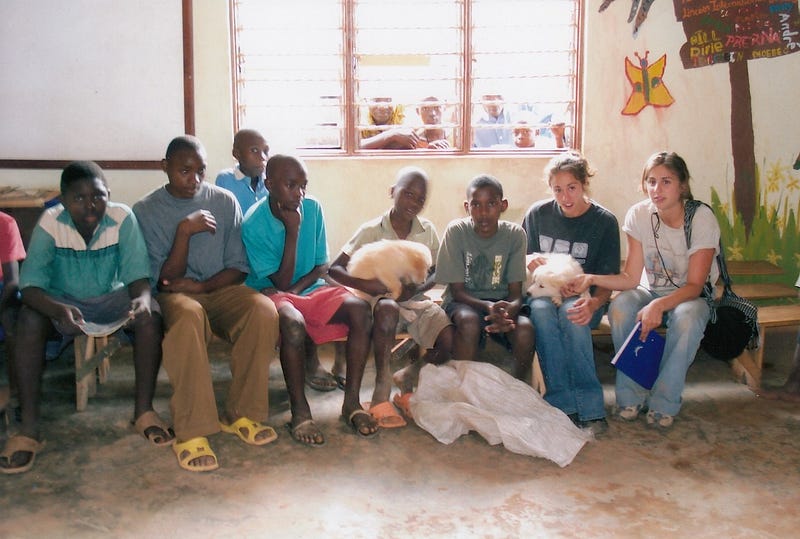
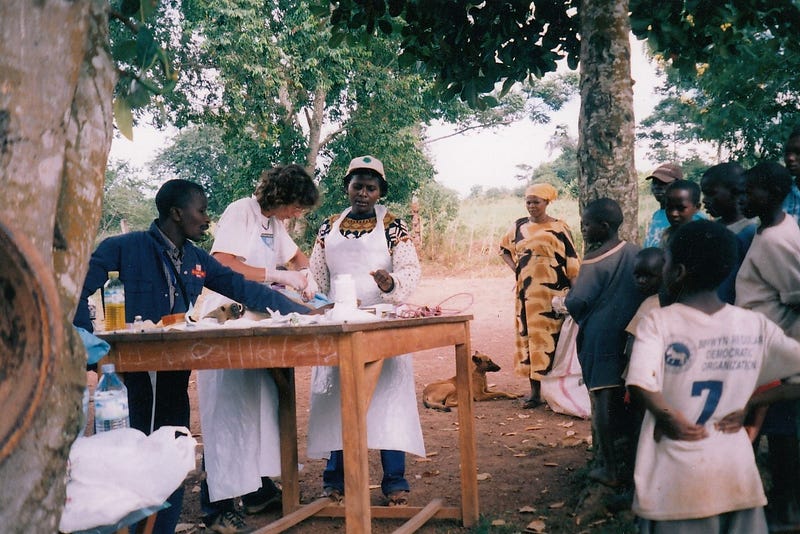
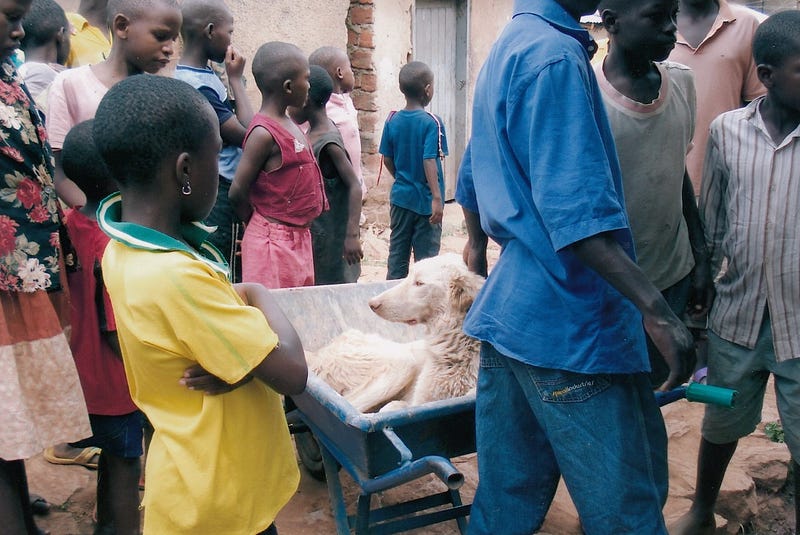
We had finished our planned workshops; 165 surgeries, over 500 animals vaccinated and dewormed. This was a substantial increase from the first trip and the entire team was feeling great.
There were still some supplies left and we decided to run a vaccine-only clinic in the large refugee settlement where Justine had been working for several months.
On the assigned day we mustered a small group of volunteers and set up in an open field: a few folding tables, coolers for the vaccines, syringes, and certificates to be given to the owners.
At all the previous clinics we had been deluged with both animals and people, everyone excited to see what was going on. But, here, we sat and sat and sat.
Finally, a lone figure emerged from over the railway tracks. The man dragged one goat on a rope tether and cradled a chicken in his arms.
I looked at everyone confused.
It turned out we were on the wrong side of the tracks. Most of the dogs were strays and it was not possible to get them to cross.
Not one to give up easily, I insisted we pack our stuff and head into Numowongo and do some house calls.
What ensued was a riotous afternoon, literally. We went up and down the alleys asking people if they had a dog or cat and learned quickly to dodge the “flying toilets”.
Pretty soon there was a trail of kids on our heels. They took turns leading us by the hand to the next patient. There was a competition for naming the street dogs. Again, Police was the most popular.
With the dogs, we came up with a unique restraint technique. One brave soul would straddle their chest and hold the dog's head while we did the poking and prodding at the other end.
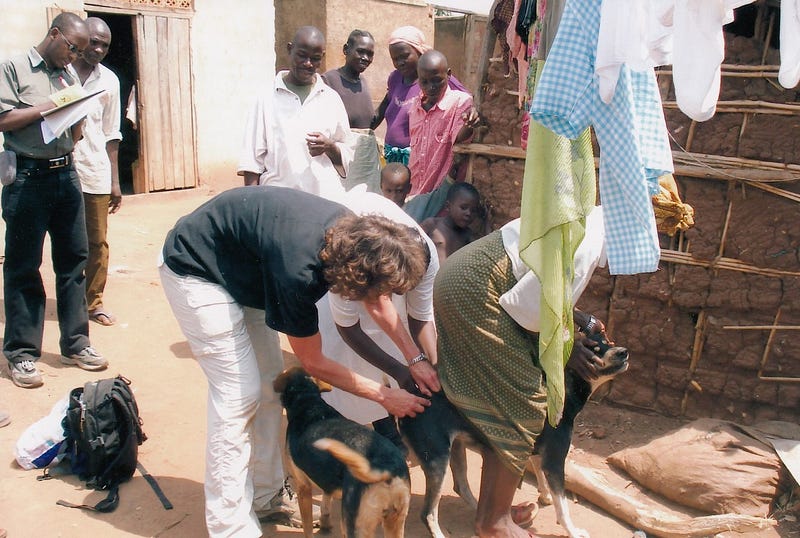
At first, no one was keen to help-touching these dogs was not the norm. But soon there was no shortage of volunteers wanting to be part of the fun.
In truth, the dogs were all pretty cooperative. I think they realized their moment in the spotlight would be short-lived and dared not do anything to spoil it.
Cats were a different story. In most cases, someone held them by the scruff while I gave the needle. One wily little creature escaped before I had finished and a dozen children gave chase.
Ten minutes later the kids reappeared, yelling and screaming as if it was a national holiday, and proudly holding the shocked little cat by his hind legs.
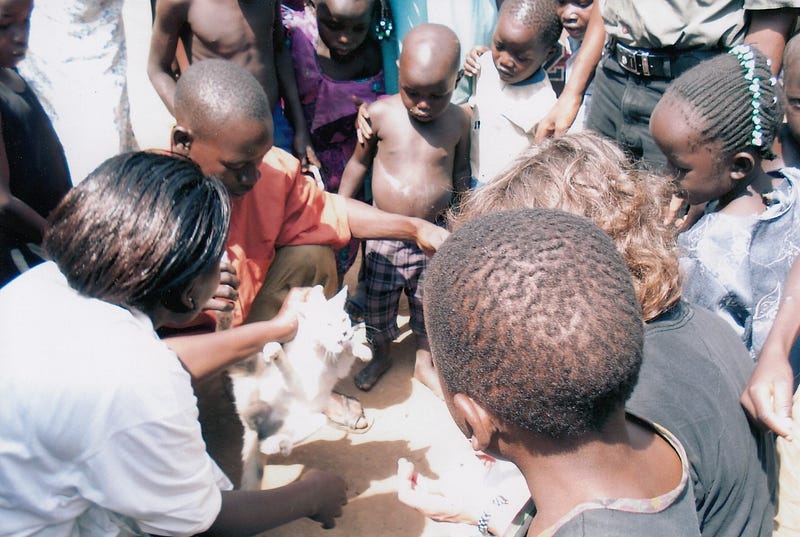
We filled out a yellow vaccination certificate for each animal. These were handed out and carefully stored in shirt pockets.
As we made our way home at the end of the day, dozens of people waved their yellow cards — all of us smiling ear to ear.
© Dr. Jackie Greenwood 2021
Hope you enjoyed this story:)
In case you missed these :


