
LGBTQIA+
Hot Topic: You Can’t be Transgender without Gender Dysphoria
I disagree and here’s why
It’s all TikTok’s fault. Completely and utterly. Without TikTok and its uncanny ability to clock me while I was still trying to work out how to clock myself, my understanding of gender dysphoria and my own relationship to it may have taken even longer than it already had. Hell, without TikTok, I may have allowed the gatekeepers to lengthen my journey by another decade, maybe more. Maybe I would never have made it as far as I have.
From Merriam-Webster:
Definition of gender dysphoria: a distressed state arising from conflict between a person’s gender identity and the sex the person has or was identified as having at birth.
Definition of gender identity: a person’s internal sense of being male, female, some combination of male and female, or neither male nor female
Definition of gatekeeper: 1. one that tends or guards a gate 2. a person who controls access
So what does TikTok have to do with gender dysphoria? Well, on there, I found so many transgender people (including a nice chunk of health professionals) sharing that gender dysphoria is not a requirement of being transgender. Their comments were often filled with arguments and insistence that it is required, claiming the TikTok creator was invalidating ‘real’ transgender individuals who suffered from gender dysphoria. Sometimes, the comments were rather, disgusting. No less disgusting than any other troll.
None of those TikTok creators were claiming that a person who experienced gender dysphoria was any less trans, just that someone could identify as transgender (and that is a huge blanket term for anyone who is not cisgender) without experiencing gender dysphoria. The community members who argue, these gatekeepers, take it upon themselves to decide who shall and who shall not be a part of the community based on ‘how trans they are’.
From Merriam-Webster:
Definition of transgender: of, relating to, or being a person whose gender identity differs from the sex the person had or was identified as having at birth
Definition of cisgender: of, relating to, or being a person whose gender identity corresponds with the sex the person had or was identified as having at birth
Now, let me explain why I believe you do not need to have gender dysphoria to identify as transgender.
When I first began to question my own identity, I heard this term, gender dysphoria, for the first time and I didn’t quite get it. I listened to story after story of transgender individuals (usually young adults in their late teens or early twenties) talking about looking in the mirror and the reflecting image not matching what they saw for themselves. That part, I understood, but at the time, I thought they meant it in a strictly physical way — I confused gender dysphoria with body dysmorphia.
From Merriam-Webster:
Medical Definition of body dysmorphic disorder: pathological preoccupation with an imagined or slight physical defect of one’s body to the point of causing significant stress or behavioral impairment in several areas (as work and personal relationships)
I decided I didn’t ‘suffer’ from gender dysphoria. This is where the gatekeepers become problematic. If I believed their rhetoric that I needed to have gender dysphoria to be trans (enough), it would have delayed my journey and experience. I was already in my 40’s, I’d already wasted enough time. Thank goodness for the TikTok creators that fought against that and told me that I was valid. That what I was feeling was real. That I was ‘trans enough’ and that I was welcome. I love the transgender community — I’ve met some of my favorite people there.
Fast forward six months and I realized something. I do have gender dysphoria. It took me six months to realize, or perhaps, to accept that. The first thing I identified as gender dysphoria was my voice. It hit me out of the blue. I walked past a stranger in the street who greeted me. I returned the greeting and that was when I heard myself. My voice pitched up, really high — like I was overcompensating. Like I was, performing femininity. That was the moment I understood gender dysphoria. I’d always hated my voice. I’d always thought it was too high and yet, I’d pitch it up when I met new people or in stressful situations to adhere to the expectations of the voice I was ‘supposed to have’. After that, I began relaxing my voice but awareness is a prickly bitch.
Then there were the shoulders. Yes, gender dysphoria affects everyone differently. I’d always hated my arms, always hid them. It seemed like everything I wore never sat right. But it was never my arms, it was my too thin shoulder width that bothered me.
I won’t go into details but let’s just say that I now understand that I have experienced gender dysphoria for as long as I can remember. I have dysphoria around my chest, my shoulders, my voice, my head shape, my hands, my chin (yeah, that chin cleft that I associated with masculinity so tried to hide because I had to hide all of my masculine parts), and ‘other’ areas (like I said, no details). And wouldn’t you know it, in just writing this, another one showed itself. Apparently, I have throat dysphoria. No wonder I was always so fascinated with Adam’s apples and would rub my throat trying to feel my own.
But aren’t I just proving that gender dysphoria is a part of being transgender? Not at all. Yes, I’ve discovered I’ve always experienced gender dysphoria but I didn’t have the language for it. I also thought it was completely natural and ‘normal’ — I had no idea that these things I felt meant anything other than that I was perhaps a bit eccentric. That sounded like a good excuse at the time.
My point is, I didn’t know it was gender dysphoria. Even now, I don’t feel like I ‘suffered’. In fact, I feel like it was just with me, waiting for me to acknowledge its presence. Now that I have, it makes me smile because it’s my sign that even though I was lost to the societal pressures of cis-normative behaviors, the real me was always there, just waiting for a chance to live.
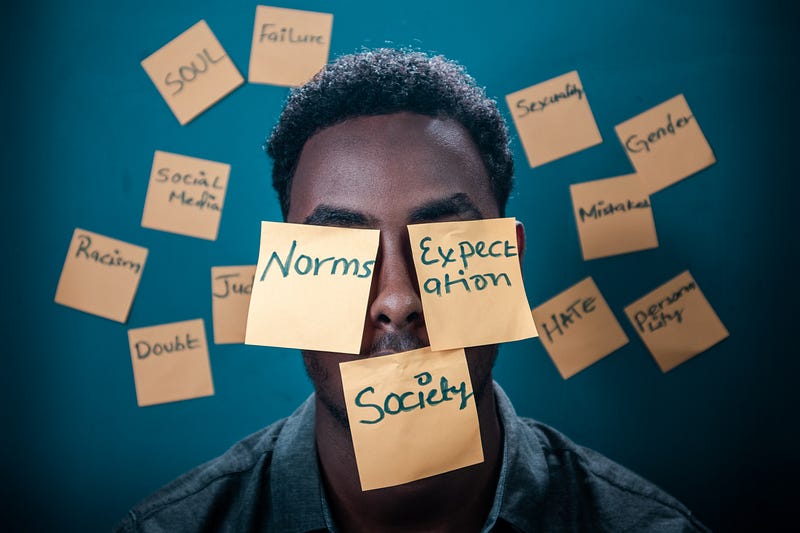
Even if gender dysphoria was an inherent part of the transgender experience, enforcing this as a rule on those exploring is damaging and could be deadly. What harm does it do to allow everyone their own experience and their own exploration in their own time? If I had listened to the gatekeepers, if I had believed that I could not be ‘trans enough’ without gender dysphoria, who knows if I would have continued my journey or simply returned to the mask I was barely existing behind. I doubt I would have survived much longer.
- Do not gatekeep trans identities.
- Gender dysphoria does not equal transgender.
- Gender dysphoria does not equal suffering.
Let’s focus more on gender euphoria. Isn’t that what being transgender is really all about?
Merriam-Webster.com. 2021, viewed, 26 Sept 2021, <https://www.merriam-webster.com>


